

Cervicogenic headache
Headaches that start in your neck can be treated
The pain builds at the base of your skull, creeps over one side of your head, and gets worse the longer you sit at a screen. When a headache comes from the neck, treating the neck is what changes it.
Medicare, NDIS, DVA, WorkCover and private health funds accepted.
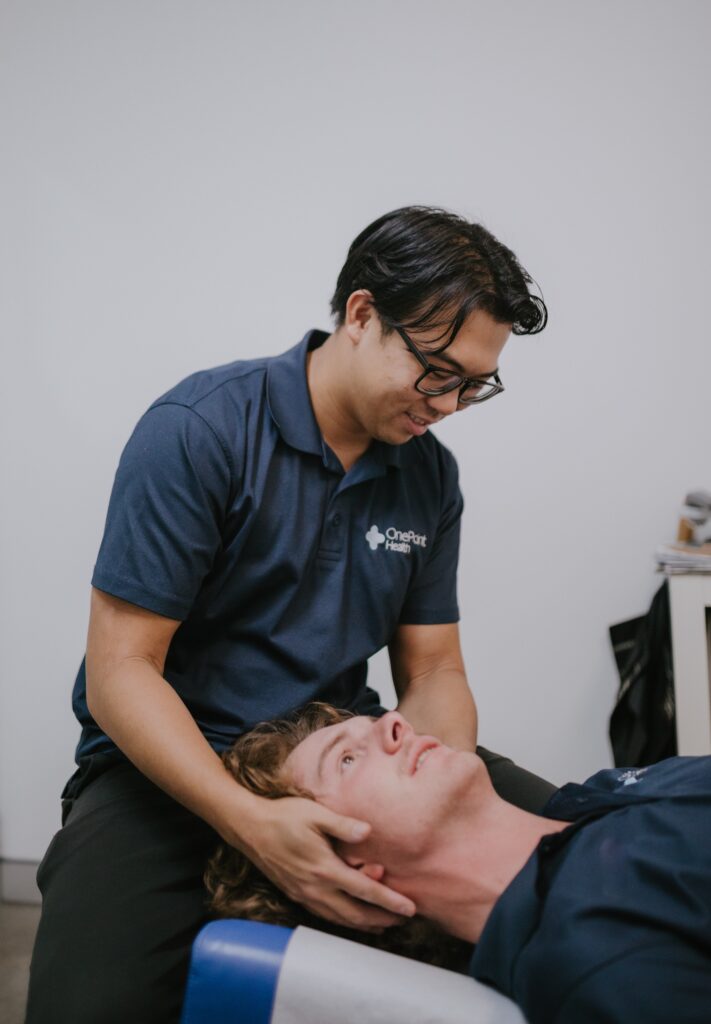
Understanding Cervicogenic headache
A cervicogenic headache is a headache that comes from the joints, muscles and nerves of your neck. The pain is referred, which means you feel it in your head even though the source sits lower down.
It often responds well to hands-on treatment and exercise, because the structures causing it can be tested and changed. Your chiropractor or physiotherapist works out which parts of your neck are involved, then treats them directly.
Who does it affect?
adults who spend long hours at a desk, driving or looking down at a phone, and anyone recovering from a neck injury.
How common is it?
cervicogenic headache is thought to account for a small but significant share of ongoing headaches [CONFIRM: prevalence figure and source].
What's recovery like?
varies with how long you have had symptoms, your work demands and how the neck responds to treatment.
Who should I see for treatment?
our chiropractors and physiotherapists.
What are my funding options?
Medicare, NDIS, DVA, WorkCover and private health funds accepted.
What is a cervicogenic headache?
A cervicogenic headache is head pain that is generated by the top three joints of your neck and the muscles around them. Nerves from that region share pathways with nerves that supply your head and face, so pain is felt above the neck.
It usually builds slowly rather than arriving suddenly. Stiffness and irritation develop in the upper neck over weeks or months, and headaches start appearing on the days your neck is most loaded.
Common contributing factors include:
Long periods in one position at a desk, in a car or on a device
A past neck injury, including whiplash from a car accident or sport
Weakness in the deep neck and shoulder blade muscles
Jaw clenching or grinding that loads the upper neck
Poor sleep set-up, including a pillow that leaves your neck at an angle
Sudden increases in training load, particularly overhead or cycling
Symptoms of Cervicogenic headache
Cervicogenic headache tends to present in a recognisable pattern:
Pain that starts at the base of the skull and spreads over one side of the head
Pain behind or above one eye, or across the forehead on the same side
Neck stiffness and reduced movement, especially turning your head
Headache that builds through the day or after long screen sessions
Aching that runs into the shoulder or arm on the same side
Mild nausea or light sensitivity, usually less intense than a migraine
Your treatment plan comes from what the assessment finds in your neck, not from the label on the headache.
What to expect at your first appointment
Tell us what is going on
Where the pain starts, where it travels, how often it happens and what makes it worse.
A full assessment
We test your neck movement, joint mobility and muscle strength, and check whether pressing the upper neck reproduces your headache.
A clear plan
You leave knowing what is driving the headache, what treatment involves and what you do at home.
Review and adjust
We track your headache frequency and intensity, then change the plan based on how you respond.

When to book an appointment
Your headaches have been happening most weeks for more than a month
They are affecting your work, sleep, or driving
Stretching, heat and over the counter medication are not holding them off
You are not sure whether your headaches come from your neck or something else
Book an assessment if:
Looking after yourself at home
These steps sit alongside treatment and help you keep the gains between visits.
Long periods in one position at a desk, in a car or on a device
A past neck injury, including whiplash from a car accident or sport
Weakness in the deep neck and shoulder blade muscles
Jaw clenching or grinding that loads the upper neck
Poor sleep set-up, including a pillow that leaves your neck at an angle
Sudden increases in training load, particularly overhead or cycling

Meet the team who treat this
Behind every appointment is a team of practitioners who know each other, trust each other and work together for you. Across seven clinics and nine disciplines, our team shares expertise, coordinates treatment plans and celebrates your progress together.

Aimee Fuller
Healthcare Support Officer
Available at Blaxland

Alicia Whiticker
Healthcare Support Officer
Available at Blaxland

Amanda Banks
Healthcare Support Officer
Available at Blaxland

Amanda Duggan
Healthcare Support Officer
Available at Blaxland

Amy Meekings
Healthcare Support Officer
Available at Blaxland

Anita Beerapu
Healthcare Support Officer
Available at Blaxland

Benjamin Tucker
Healthcare Support Officer
Available at Blaxland

Blake Cossar
Healthcare Support Officer
Available at Blaxland

Bronte Tupper
Healthcare Support Officer
Available at Blaxland

Chris Farrugia
Healthcare Support Officer
Available at Blaxland

Corrina Aitken
Healthcare Support Officer
Available at Blaxland

David Logue
Healthcare Support Officer
Available at Blaxland

Dean Gresser
Healthcare Support Officer
Available at Blaxland

Emma Nassif
Healthcare Support Officer
Available at Blaxland

Esha Sharma
Healthcare Support Officer
Available at Blaxland

Fatima Hussaini
Healthcare Support Officer
Available at Blaxland

Felicity Spencer-Davey
Healthcare Support Officer
Available at Blaxland

Frankie Raikadroka
Healthcare Support Officer
Available at Blaxland

Hannah Norrie
Healthcare Support Officer
Available at Blaxland

Heather Edwards
Healthcare Support Officer
Available at Blaxland

Isaac Vella
Healthcare Support Officer
Available at Blaxland

Jarrah Nesbitt
Healthcare Support Officer
Available at Blaxland

Jonathan Lopez
Healthcare Support Officer
Available at Blaxland

Justin Hanna
Healthcare Support Officer
Available at Blaxland

Kasey Collins
Healthcare Support Officer
Available at Blaxland

Katrina Gauci
Healthcare Support Officer
Available at Blaxland

Kennedy Touet
Healthcare Support Officer
Available at Blaxland

Kristy Edwards
Healthcare Support Officer
Available at Blaxland

Kyle Perry
Healthcare Support Officer
Available at Blaxland

Lorna Nicastri
Healthcare Support Officer
Available at Blaxland

Maja Bosic
Healthcare Support Officer
Available at Blaxland

Marxy Koronel
Healthcare Support Officer
Available at Blaxland

Matt Barton
Healthcare Support Officer
Available at Blaxland

Michael Todd
Healthcare Support Officer
Available at Blaxland

Mr Jeffery Jenkins FACPS
Healthcare Support Officer
Available at Blaxland

Nathan Cavanagh
Healthcare Support Officer
Available at Blaxland

Patrick Celeban
Healthcare Support Officer
Available at Blaxland

Praise Khin
Healthcare Support Officer
Available at Blaxland

Sarah Bonnici
Healthcare Support Officer
Available at Blaxland

Shannon Smith
Healthcare Support Officer
Available at Blaxland

Siobhan Kelly
Healthcare Support Officer
Available at Blaxland

Taleisha Bozzi
Healthcare Support Officer
Available at Blaxland

Trystan Singh
Healthcare Support Officer
Available at Blaxland

Uty Kotwal
Healthcare Support Officer
Available at Blaxland

Yoni Hochberg
Healthcare Support Officer
Available at Blaxland

Zak Lloyd
Healthcare Support Officer
Available at Blaxland
EPC, DVA, NDIS and WorkCover welcome
Nearly half of our appointments are funded through Medicare, DVA, NDIS or WorkCover. We manage the paperwork so you can focus on your health.


NDIS
We support eligible NDIS participants across podiatry, physiotherapy, exercise physiology, dietetics and psychology, depending on your plan and goals. Eligibility and funding are set by your plan.

Medicare
Medicare may rebate podiatry, physiotherapy, exercise physiology, dietetics and chiropractic sessions when your GP refers you under a chronic condition management plan, and psychology sessions under a Mental Health Treatment Plan. The number of sessions is set by your plan.

DVA
Gold and White card holders can access DVA-funded podiatry, physiotherapy, exercise physiology, dietetics and chiropractic with a valid referral.

WorkCover
If you have been injured at work, we accept WorkCover referrals for podiatry, physiotherapy, exercise physiology, dietetics and chiropractic, and manage the paperwork with your insurer, with a clear return-to-work plan.
Seven clinics across three regions
Find a clinic near you. Each location is staffed by local practitioners who know your community.
Penrith
Western SydneyOur largest centre, with our full range of services under one roof.
Ropes Crossing
Western SydneyPodiatry, at Ropes Crossing Village.
Blaxland
Blue MountainsPodiatry, physiotherapy, exercise physiology and group classes.
Springwood
Blue MountainsPodiatry, dietetics and a boutique footwear store.
Katoomba
Blue MountainsPodiatry, physiotherapy and dietetics, in a restored 1914 cottage.
Ryde
North ShorePodiatry, physiotherapy, dietetics and exercise physiology, with a footwear store and gait analysis.
Lindfield
North ShorePodiatry, with mobile podiatry across the North Shore and Northern Beaches.
Ready to sort out headaches that start in your neck?
Book an assessment and find out what is actually driving them.
















Frequently asked questions
Can whiplash cause cervicogenic headaches?
Yes. Whiplash from a car accident, a fall or a sporting collision is one of the most common triggers. Headaches sometimes appear weeks after the event, once the initial neck pain has settled and you return to normal work and screen hours. If you have been through a motor vehicle accident, treatment may be claimable through your insurer [CONFIRM: CTP and workers compensation process at OnePointHealth].
Will changing my pillow help?
It can, if your current pillow leaves your neck at an angle for hours each night. The aim is to keep your head in line with your spine, so side sleepers usually need more height than back sleepers, and front sleeping tends to load the upper neck most. A pillow change alone rarely fixes headaches, but it removes one nightly trigger.
How long does it take for cervicogenic headaches to improve?
This varies. People who have had symptoms for a few weeks often notice change faster than people who have had daily headaches for years. Your work demands, sleep, past neck injuries and how consistently you do your exercises all influence the pace. Your chiropractor or physiotherapist tracks headache frequency and intensity so you can see whether the plan is working.
Can cervicogenic headaches cause dizziness or blurred vision?
Mild dizziness, light-headedness and a feeling of visual strain can occur, because the upper neck feeds balance and eye movement systems with position information. These symptoms are usually mild and come and go with the headache. Sudden vertigo, double vision, slurred speech or numbness in the face is different and needs urgent medical assessment.
Should I keep taking pain medication during treatment?
Keep taking anything your GP or pharmacist has prescribed, and tell us what you are using. Medication can be useful for getting through a bad day, but frequent use of over the counter painkillers for headaches can cause medication overuse headache, which changes the picture. If you are taking something most days, that is worth raising with your GP.
Can training at the gym trigger a cervicogenic headache?
It can, particularly overhead pressing, heavy shrugging, long cycling sessions and any exercise where you hold your head back or brace through your neck. The trigger is usually load or position rather than exercise itself. We look at what you are doing, adjust technique and volume, and keep you training rather than stopping you.