
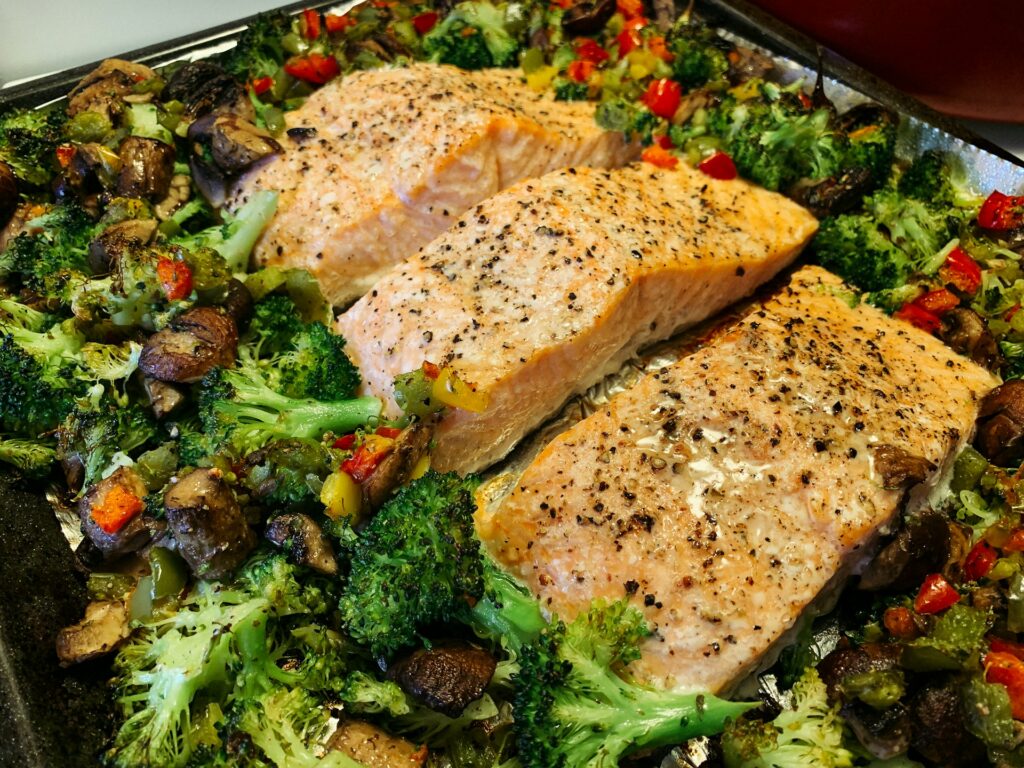

A Gut-Friendly Dinner Built Around Real Food
For anyone managing IBS or working through a low FODMAP protocol, weeknight dinners can feel like a puzzle. This salmon and roast vegetable traybake keeps things simple: one tray, familiar ingredients, and a nutrient profile that supports digestion and steady everyday energy.
What Makes This Recipe Low FODMAP
FODMAPs are a group of short-chain carbohydrates that some people struggle to absorb in the small intestine, and for those with irritable bowel syndrome they can trigger bloating, wind, and abdominal discomfort. A low FODMAP diet, developed by researchers at Monash University, involves temporarily reducing these carbohydrates to help identify individual triggers under the guidance of a qualified dietitian.
Every ingredient in this traybake has been chosen with Monash serving sizes in mind. Zucchini, red capsicum, and green beans are all well tolerated in standard portions, the recipe skips onion and garlic in the base, and chives (green tips only) deliver the aromatic lift usually handled by alliums. The result is a dinner that fits neatly into the elimination phase without feeling restrictive.
The Nutritional Case for Salmon
Salmon is one of the more nutrient-dense proteins on the shelf. Each 150g fillet provides roughly 30g of complete protein alongside a meaningful dose of long-chain omega-3 fatty acids (EPA and DHA), which are consistently linked to cardiovascular health, cognitive function, and a healthy inflammatory response.
It is also a natural source of vitamin D and vitamin B12, both of which contribute to energy metabolism and immune function. For clients working on gut recovery, the anti-inflammatory profile of oily fish makes it a useful weekly staple.
Vegetables That Do the Heavy Lifting
Roasting draws out natural sweetness without needing added sugar or high-FODMAP sauces:
- Zucchini adds moisture and a light dose of vitamin C, potassium, and folate.
- Red capsicum is among the highest vitamin C foods per gram and supplies beta-carotene for skin and eye health.
- Green beans contribute plant fibre in a form that is generally well tolerated on a low FODMAP plan.
Together they provide colour, texture, and a broad micronutrient spread from a single tray.
Balanced Macros for Everyday Eating
At around 650 calories per serve with 30g of protein, 25g of carbohydrates, and just 7g of total fat, this meal sits comfortably within the kind of balanced dinner most Australian dietary guidelines recommend. The low saturated fat and low sodium profile also makes it suitable for clients managing cardiovascular risk factors alongside digestive symptoms.
When to Reach for This Recipe
This traybake is a strong option for:
- The elimination phase of a low FODMAP diet
- Post-training meals that need protein without feeling heavy
- Busy weeknights when digestion feels sensitive
- Meal prep, since the components reheat well the next day
If you are new to low FODMAP eating or unsure whether it is right for you, we recommend working with an accredited practising dietitian before starting the elimination phase.