
Pain under the ball of your foot, and a toe that is starting to drift
The pain sits right under the ball of your foot at the base of the second toe, and it is worse barefoot or in thin shoes. A plantar plate tear responds well to treatment, and the earlier it is picked up, the more options you have.
Medicare, NDIS, DVA and private health funds accepted.

A plantar plate tear is damage to the thick ligament that sits under the joint at the base of your toe, most often the second toe. That ligament holds the toe down against the ground and stops the joint spreading apart when you push off.
When it is strained or torn, the toe loses its anchor. You get pain and swelling under the ball of the foot, and over time the toe can lift or drift towards the big toe. Treatment focuses on taking load off the joint and holding the toe in a better position while the tissue settles.
Who does it affect?
adults over 40, runners, and people with a long second toe, a bunion or high-heeled shoe use.
How common is it?
a frequent cause of forefoot pain, and often mistaken for Morton's neuroma.
What is the recovery like?
varies from person to person, and depends on how much the toe has drifted.
Who should I see for treatment?
your podiatrist, with referral for imaging or a surgical opinion where it is needed.
What funding options are available?
Medicare, NDIS, DVA and private health funds accepted.
What is a plantar plate tear?
The plantar plate is a strong band of fibrous tissue under each of the small toe joints in the forefoot. It acts like a hammock, keeping the toe flat and absorbing pressure every time you push off.
Most tears are not a single dramatic injury. The tissue is loaded thousands of times a day, and small amounts of damage build up until it stretches, frays or splits. Pain usually comes first, and toe drift follows later.
Things that increase the load on the plantar plate include:
A second toe that is longer than your big toe, which forces it to take more push-off pressure.
A bunion, which shifts weight sideways onto the second and third toe joints.
High heels and thin, flexible shoes, which hold the toes in an extended position.
A sudden rise in running, walking, court sport or standing hours.

Symptoms of Plantar plate tear
Pain under the ball of the foot, usually at the base of the second toe.
A feeling of walking on a pebble, or of your sock bunching under the joint.
Swelling on the top and underside of the joint.
Pain that is worse barefoot, in thin shoes or when pushing off.
Aching that lingers after activity rather than easing straight away.
Tenderness when you press directly under the joint, not between the toes.
Your plan comes out of the assessment, not off a shelf
What to expect at your first appointment
Tell us what is going on
How the pain started, where it sits, what makes it worse, and whether the toe has changed position.
A full assessment
Your podiatrist tests joint stability, checks toe alignment and watches how you load the forefoot when you walk.
A clear plan
You leave knowing what is damaged, what needs to change first, and what treatment we are starting today.
Review and adjust
We recheck toe position and pain response, then progress or change the plan based on what we find.
When to book an appointment
Pain under the ball of your foot has lasted more than three weeks.
You are cutting back walking, running or sport because of it.
Rest, gel pads and softer shoes have not settled it.
You are not sure whether it is a joint, nerve or bone problem.
Book an assessment if:
Looking after your lower back at home
These strategies suit most people with recent, uncomplicated back pain, and work alongside treatment rather than replacing it.
A second toe that is longer than your big toe, which forces it to take more push-off pressure.
A bunion, which shifts weight sideways onto the second and third toe joints.
High heels and thin, flexible shoes, which hold the toes in an extended position.
A sudden rise in running, walking, court sport or standing hours.
Meet the team who treat this
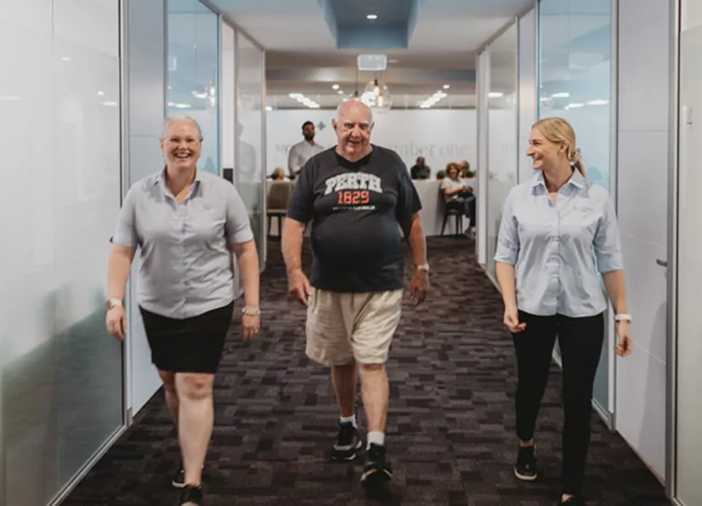
Behind every appointment is a team of practitioners who know each other, trust each other and work together for you. Across seven clinics and nine disciplines, our team shares expertise, coordinates treatment plans and celebrates your progress together.

Abijith Anand
Healthcare Support Officer
Available at Blaxland

Aimee Fuller
Healthcare Support Officer
Available at Blaxland

Alicia Whiticker
Healthcare Support Officer
Available at Blaxland

Amanda Banks
Healthcare Support Officer
Available at Blaxland

Amanda Duggan
Healthcare Support Officer
Available at Blaxland

Amy Meekings
Healthcare Support Officer
Available at Blaxland

Anita Beerapu
Healthcare Support Officer
Available at Blaxland

Benjamin Tucker
Healthcare Support Officer
Available at Blaxland

Blake Ciscato
Healthcare Support Officer
Available at Blaxland

Blake Cossor
Healthcare Support Officer
Available at Blaxland

Bronte Tupper
Healthcare Support Officer
Available at Blaxland

Callum Thorpe
Healthcare Support Officer
Available at Blaxland

Carin Bloom
Healthcare Support Officer
Available at Blaxland

Charli Haddow
Healthcare Support Officer
Available at Blaxland

Chris Farrugia
Healthcare Support Officer
Available at Blaxland

Chris Moulds
Healthcare Support Officer
Available at Blaxland

Ciara O’Kane
Healthcare Support Officer
Available at Blaxland

Claudia Thomas
Healthcare Support Officer
Available at Blaxland

Corrina Aitken
Healthcare Support Officer
Available at Blaxland

David Logue
Healthcare Support Officer
Available at Blaxland

Dean Gresser
Healthcare Support Officer
Available at Blaxland

Emma Nassif
Healthcare Support Officer
Available at Blaxland

Emma Scanlon
Healthcare Support Officer
Available at Blaxland

Erin Burns
Healthcare Support Officer
Available at Blaxland

Esha Sharma
Healthcare Support Officer
Available at Blaxland

Ester Iskandar
Healthcare Support Officer
Available at Blaxland

Evangelina Papalia
Healthcare Support Officer
Available at Blaxland

Fatima Hussaini
Healthcare Support Officer
Available at Blaxland

Felicity Spencer-Davey
Healthcare Support Officer
Available at Blaxland

Frankie Raikadroka
Healthcare Support Officer
Available at Blaxland

Hannah Norrie
Healthcare Support Officer
Available at Blaxland

Harrison Gregson
Healthcare Support Officer
Available at Blaxland

Heather Edwards
Healthcare Support Officer
Available at Blaxland

Isaac Vella
Healthcare Support Officer
Available at Blaxland

Jarrah Nesbitt
Healthcare Support Officer
Available at Blaxland

Jasmine Apap
Healthcare Support Officer
Available at Blaxland

Jessica Orchard
Healthcare Support Officer
Available at Blaxland

Jonathan Lopez
Healthcare Support Officer
Available at Blaxland

Justin Hanna
Healthcare Support Officer
Available at Blaxland

Kasey Collins
Healthcare Support Officer
Available at Blaxland

Katrina Gauci
Healthcare Support Officer
Available at Blaxland

Kennedy Touet
Healthcare Support Officer
Available at Blaxland

Kristy Edwards
Healthcare Support Officer
Available at Blaxland

Kurt White
Healthcare Support Officer
Available at Blaxland

Kyle Perry
Healthcare Support Officer
Available at Blaxland

Kylie Saba
Healthcare Support Officer
Available at Blaxland

Lorna Nicastri
Healthcare Support Officer
Available at Blaxland

Lucas Barglik
Healthcare Support Officer
Available at Blaxland

Mackenzie Gleeson
Healthcare Support Officer
Available at Blaxland

Madeleine Vella
Healthcare Support Officer
Available at Blaxland

Maja Bosic
Healthcare Support Officer
Available at Blaxland

Marxy Koronel
Healthcare Support Officer
Available at Blaxland

Matt Barton
Healthcare Support Officer
Available at Blaxland

Mia Nikic
Healthcare Support Officer
Available at Blaxland

Michael Todd
Healthcare Support Officer
Available at Blaxland

Mr Jeffery Jenkins FACPS
Healthcare Support Officer
Available at Blaxland

Nathan Cavanagh
Healthcare Support Officer
Available at Blaxland

Oren Schulze
Healthcare Support Officer
Available at Blaxland

Patience Namiiro
Healthcare Support Officer
Available at Blaxland

Patrick Celeban
Healthcare Support Officer
Available at Blaxland

Paul Sawaqed
Healthcare Support Officer
Available at Blaxland

Phillip Hartshorne
Healthcare Support Officer
Available at Blaxland

Praise Khin
Healthcare Support Officer
Available at Blaxland

Rebecca Samuels
Healthcare Support Officer
Available at Blaxland

Rianna Nicotera
Healthcare Support Officer
Available at Blaxland

Sarah Bonnici
Healthcare Support Officer
Available at Blaxland

Sarah Fenter
Healthcare Support Officer
Available at Blaxland

Shannon Smith
Healthcare Support Officer
Available at Blaxland

Shara Percival
Healthcare Support Officer
Available at Blaxland

Sherie Casson
Healthcare Support Officer
Available at Blaxland

Siobhan Kelly
Healthcare Support Officer
Available at Blaxland

Summer Watson
Healthcare Support Officer
Available at Blaxland

Taleisha Bozzi
Healthcare Support Officer
Available at Blaxland

Tori McLean
Healthcare Support Officer
Available at Blaxland

Trystan Singh
Healthcare Support Officer
Available at Blaxland

Uty Kotwal
Healthcare Support Officer
Available at Blaxland

Veronica Theiss
Healthcare Support Officer
Available at Blaxland

Yoni Hochberg
Healthcare Support Officer
Available at Blaxland

Zak Lloyd
Healthcare Support Officer
Available at Blaxland

Zane Awik
Healthcare Support Officer
Available at Blaxland
EPC, DVA, NDIS and WorkCover welcome
Nearly half of our appointments are funded through Medicare, DVA, NDIS or WorkCover. We manage the paperwork so you can focus on your health.


NDIS
We support eligible NDIS participants across podiatry, physiotherapy, exercise physiology, dietetics and psychology, depending on your plan and goals. Eligibility and funding are set by your plan.

Medicare
Medicare may rebate podiatry, physiotherapy, exercise physiology and dietetics sessions when your GP refers you under an Enhanced Primary Care (EPC) or Chronic Disease Management (CDM) plan, and psychology sessions under a Mental Health Care Plan. The number of sessions is set by your plan.

DVA
Gold and White card holders can access DVA-funded care across our services with a valid referral.

WorkCover
If you have been injured at work, we accept WorkCover referrals for physiotherapy, exercise physiology and psychology, and manage the paperwork with your insurer, with a clear return-to-work plan.
Made by us. Stocked by us. Worn by you
Great care is not just what happens in your appointment. It is what supports you in the thousands of steps you take between visits. Our footwear store and orthotics lab are both part of the OnePointHealth team, designed to keep your treatment working long after you have walked out the door.
Shoes our podiatrists wear and recommend
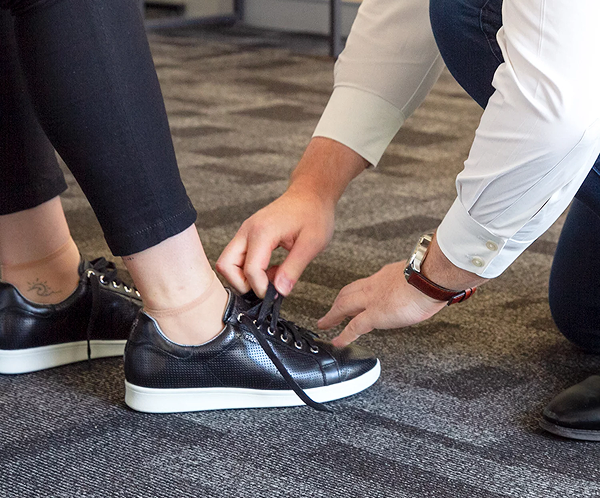
Footwear shapes how you move, how you recover and how comfortable you feel at the end of the day. Our podiatry team chooses the range stocked at our footwear store, which means the shoes on the shelf are the ones we genuinely recommend to our patients.
- Selected and reviewed by our podiatry team
- Fitted in person with biomechanical advice on hand
- Refreshed each season to reflect what is working for our patients
Featured products

Ziera Delilah XF Leather Sneaker
Ziera,
$269.99

Secra Poppy
Secra,
$129.99

Archies Arch Support Thongs Kids Pink
Archies,
$30.0

Mizuno Wave Rider 29
Mizuno,
$249.99
Seven clinics across three regions
Find a clinic near you. Each location is staffed by local practitioners who know your community.
Penrith
Western SydneyOur largest centre, with our full range of services under one roof.
TBD
Ropes Crossing
Western SydneyPodiatry, at Ropes Crossing Village.
TBD
Blaxland
Western SydneyPodiatry, physiotherapy, exercise physiology and group classes.
TBD
Springwood
Western SydneyPodiatry, dietetics and a boutique footwear store.
TBD
Katoomba
Western SydneyPodiatry, physiotherapy, dietetics and psychology, in a restored 1914 cottage.
TBD
Ryde
Western SydneyPodiatry, physiotherapy, dietetics, exercise physiology and psychology, with a footwear store and gait analysis.
TBD
Lindfield
Western SydneyPodiatry, with mobile podiatry across the North Shore and Northern Beaches.
TBD
Ready to sort out that pain under the ball of your foot?
Book a podiatry assessment and find out exactly what is going on in that toe joint.






Frequently asked questions
How do I know if it is a plantar plate tear or Morton's neuroma?
Location is the biggest clue. A plantar plate tear is tender directly under the toe joint, while a neuroma is tender between the toe bones and often causes burning, numbness or tingling into the toes. Squeezing the forefoot sideways tends to reproduce neuroma pain, whereas lifting and stressing the toe reproduces plantar plate pain. Your podiatrist uses both tests, plus toe position, to tell them apart.
Why is my second toe lifting or drifting sideways?
The plantar plate is the main structure stopping that toe from lifting and sliding. Once it stretches or tears, the tendons on top of the toe pull unopposed, so the toe rises and gradually angles towards the big toe. It is a mechanical consequence of the injury rather than a separate problem, and it usually appears months after the pain starts.
Can a plantar plate tear happen suddenly, or does it build up?
Both, though gradual onset is far more common. Most people describe a vague ache under the ball of the foot that builds over weeks after a change in training, footwear or standing hours. A smaller number tear it sharply, usually pushing off hard in sport or landing awkwardly with the toe bent upwards. Sudden tears tend to swell quickly and bruise.
Is a plantar plate tear connected to my bunion?
Often, yes. When the big toe angles inwards, it stops carrying its share of push-off load and can press against the second toe. That extra pressure is transferred to the second toe joint, where the plantar plate takes the strain. This is why treating the tear may also involve managing the bunion, and why the two conditions frequently appear on the same foot.
What happens if a plantar plate tear is left untreated?
Pain may fluctuate, but the toe position rarely improves on its own. The joint can keep spreading, allowing the toe to sit higher and cross over. A raised toe rubs on shoes, forms corns and pushes even more load onto the neighbouring joints. Earlier treatment gives conservative options a better chance, which is the main reason not to wait it out.
Can taping hold the toe in place on its own?
Taping is effective at reducing pain and protecting the joint, but it works as part of a plan rather than a standalone fix. It needs to be applied in the right position, reapplied regularly, and paired with footwear and offloading changes so the joint is not reloaded the moment the tape comes off. Your podiatrist will show you the technique to use at home.