

ACL reconstruction
Rebuild your knee after ACL reconstruction, step by step
Your surgeon has repaired the ligament, and now the hard part is yours: strength, control and confidence. A structured rehabilitation program guides that work from your first week through to return to sport.
Medicare, NDIS, DVA and private health funds accepted.
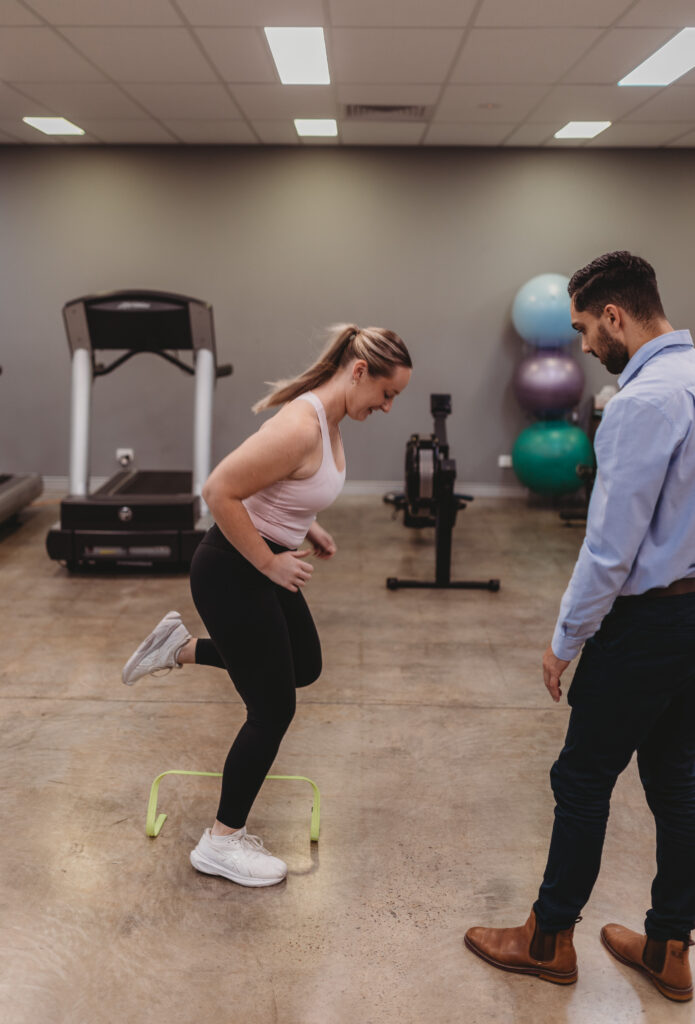
Understanding ACL reconstruction
ACL reconstruction is surgery to replace a torn anterior cruciate ligament, one of the main stabilising ligaments inside your knee. The surgery restores the structure. Rehabilitation restores the strength, movement and control that builds your trust in the knee again.
Your program starts with swelling and range of motion, builds through progressive strength work, then moves into running, hopping and sport-specific loading. Progress is measured against what your knee can do, not the date on the calendar.
Who does it affect?
most often people who play pivoting sports such as football, netball, basketball and skiing, but also anyone who twists or lands awkwardly
How common is it?
ACL reconstruction is one of the most frequently performed knee operations in Australia, and rates in young Australians have risen over the past two decades
What is the recovery like?
rehabilitation runs across many months and varies with your surgery, your goals and how your knee responds
Who should I see for treatment?
your physiotherapist, working alongside your surgeon
What funding options are available?
Medicare, NDIS, DVA and private health funds accepted
What is ACL reconstruction?
The anterior cruciate ligament sits inside your knee and stops your shin bone sliding forward or rotating too far on your thigh bone. When it tears, the knee can give way during turning, landing or changing direction.
A torn ACL does not always heal reliably on its own. When reconstruction is recommended, a surgeon replaces the damaged ligament with a graft, commonly using tendon from the hamstring, patellar or quadriceps tendon. The graft is fixed into tunnels drilled in the bone, then your body gradually remodels it into a working ligament. That remodelling takes many months, which is why rehabilitation is staged rather than rushed.
Things that shape how your rehabilitation runs:
The graft used and whether the meniscus or cartilage was also repaired
How much quadriceps strength and knee extension you lost before surgery
Your age, training history and the demands of your sport or job
Any restrictions your surgeon has placed on weight bearing or bending
Symptoms of ACL reconstruction
Common experiences after ACL reconstruction:
Swelling around the kneecap that rises and falls with activity
Difficulty straightening the knee fully or bending it past 90 degrees
Marked quadriceps weakness and visible thigh muscle wasting
Numbness around the scar or the outside of the shin
A knee that feels unreliable when you turn, step down or land
Your program is built from your assessment, your surgeon's protocol and the sport or work you are heading back to.
What to expect at your first appointment
Tell us what is going on
Bring your operation report, your surgeon’s protocol and any imaging. We ask about your sport, your work and what you want your knee to do.
A full assessment
Your physiotherapist measures swelling, range of motion, strength, walking pattern and single-leg control, and checks the knee alongside your hip and ankle.
A clear plan
You leave with a staged program, a home exercise routine you understand, and criteria for moving to the next phase.
Review and adjust
Progress is retested at each stage, and the program changes as your strength, control and confidence change.
When to book an appointment
Your surgery date is set and you want to build strength before the operation
You have finished your hospital physiotherapy and need a program to carry you forward
Your knee still swells, gives way or feels weak months after surgery
You are unsure whether your knee is ready for running, training or full contact
Book an assessment if:
Looking after yourself at home
Your home program is the part that drives most of your progress between appointments.
The graft used and whether the meniscus or cartilage was also repaired
How much quadriceps strength and knee extension you lost before surgery
Your age, training history and the demands of your sport or job
Any restrictions your surgeon has placed on weight bearing or bending

Meet the team who treat this
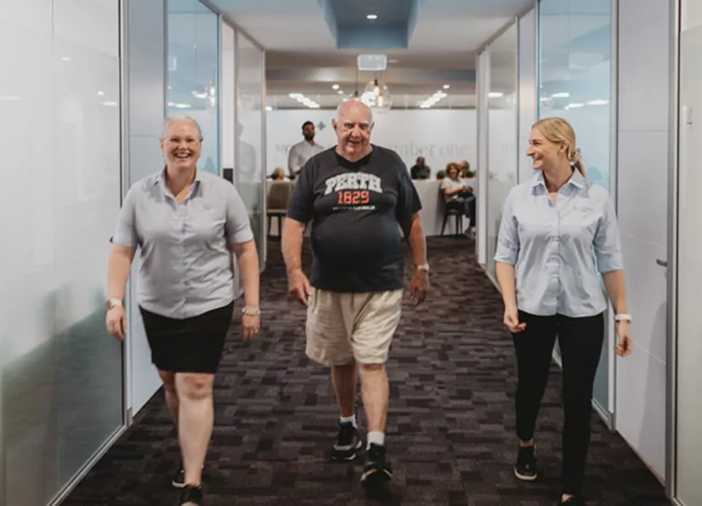
Behind every appointment is a team of practitioners who know each other, trust each other and work together for you. Across seven clinics and nine disciplines, our team shares expertise, coordinates treatment plans and celebrates your progress together.

Aimee Fuller
Healthcare Support Officer
Available at Blaxland

Alicia Whiticker
Healthcare Support Officer
Available at Blaxland

Amanda Banks
Healthcare Support Officer
Available at Blaxland
Amanda Duggan
Healthcare Support Officer
Available at Blaxland
Amy Meekings
Healthcare Support Officer
Available at Blaxland

Anita Beerapu
Healthcare Support Officer
Available at Blaxland
Benjamin Tucker
Healthcare Support Officer
Available at Blaxland

Blake Cossar
Healthcare Support Officer
Available at Blaxland

Bronte Tupper
Healthcare Support Officer
Available at Blaxland

Chris Farrugia
Healthcare Support Officer
Available at Blaxland

Corrina Aitken
Healthcare Support Officer
Available at Blaxland

David Logue
Healthcare Support Officer
Available at Blaxland
Dean Gresser
Healthcare Support Officer
Available at Blaxland
Emma Nassif
Healthcare Support Officer
Available at Blaxland
Esha Sharma
Healthcare Support Officer
Available at Blaxland
Fatima Hussaini
Healthcare Support Officer
Available at Blaxland
Felicity Spencer-Davey
Healthcare Support Officer
Available at Blaxland
Frankie Raikadroka
Healthcare Support Officer
Available at Blaxland
Hannah Norrie
Healthcare Support Officer
Available at Blaxland
Heather Edwards
Healthcare Support Officer
Available at Blaxland
Isaac Vella
Healthcare Support Officer
Available at Blaxland
Jarrah Nesbitt
Healthcare Support Officer
Available at Blaxland
Jonathan Lopez
Healthcare Support Officer
Available at Blaxland

Justin Hanna
Healthcare Support Officer
Available at Blaxland
Kasey Collins
Healthcare Support Officer
Available at Blaxland

Katrina Gauci
Healthcare Support Officer
Available at Blaxland
Kennedy Touet
Healthcare Support Officer
Available at Blaxland

Kristy Edwards
Healthcare Support Officer
Available at Blaxland
Kyle Perry
Healthcare Support Officer
Available at Blaxland
Lorna Nicastri
Healthcare Support Officer
Available at Blaxland
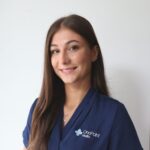
Maja Bosic
Healthcare Support Officer
Available at Blaxland

Marxy Koronel
Healthcare Support Officer
Available at Blaxland

Matt Barton
Healthcare Support Officer
Available at Blaxland

Michael Todd
Healthcare Support Officer
Available at Blaxland
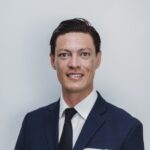
Mr Jeffery Jenkins FACPS
Healthcare Support Officer
Available at Blaxland
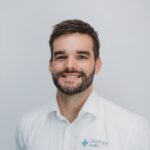
Nathan Cavanagh
Healthcare Support Officer
Available at Blaxland
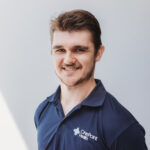
Patrick Celeban
Healthcare Support Officer
Available at Blaxland

Praise Khin
Healthcare Support Officer
Available at Blaxland
Sarah Bonnici
Healthcare Support Officer
Available at Blaxland
Shannon Smith
Healthcare Support Officer
Available at Blaxland
Siobhan Kelly
Healthcare Support Officer
Available at Blaxland
Taleisha Bozzi
Healthcare Support Officer
Available at Blaxland

Trystan Singh
Healthcare Support Officer
Available at Blaxland

Uty Kotwal
Healthcare Support Officer
Available at Blaxland
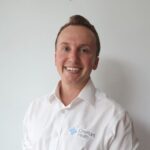
Yoni Hochberg
Healthcare Support Officer
Available at Blaxland

Zak Lloyd
Healthcare Support Officer
Available at Blaxland
EPC, DVA, NDIS and WorkCover welcome
Nearly half of our appointments are funded through Medicare, DVA, NDIS or WorkCover. We manage the paperwork so you can focus on your health.

NDIS
We support eligible NDIS participants across podiatry, physiotherapy, exercise physiology, dietetics and psychology, depending on your plan and goals. Eligibility and funding are set by your plan.

Medicare
Medicare may rebate podiatry, physiotherapy, exercise physiology and dietetics sessions when your GP refers you under an Enhanced Primary Care (EPC) or Chronic Disease Management (CDM) plan, and psychology sessions under a Mental Health Care Plan. The number of sessions is set by your plan.

DVA
Gold and White card holders can access DVA-funded care across our services with a valid referral.

WorkCover
If you have been injured at work, we accept WorkCover referrals for physiotherapy, exercise physiology and psychology, and manage the paperwork with your insurer, with a clear return-to-work plan.
Seven clinics across three regions
Find a clinic near you. Each location is staffed by local practitioners who know your community.
Penrith
Western SydneyOur largest centre, with our full range of services under one roof.
Ropes Crossing
Western SydneyPodiatry, at Ropes Crossing Village.
Blaxland
Blue MountainsPodiatry, physiotherapy, exercise physiology and group classes.
Springwood
Blue MountainsPodiatry, dietetics and a boutique footwear store.
Katoomba
Blue MountainsPodiatry, physiotherapy and dietetics, in a restored 1914 cottage.
Ryde
North ShorePodiatry, physiotherapy, dietetics and exercise physiology, with a footwear store and gait analysis.
Lindfield
North ShorePodiatry, with mobile podiatry across the North Shore and Northern Beaches.
Ready to get your knee back to full strength?
Book an assessment and get a staged ACL rehabilitation plan built around your surgery and your goals.














Frequently asked questions
Do I always need surgery after an ACL tear?
No. Some people manage a torn ACL well without reconstruction, particularly if they do not play pivoting sports and their knee stays stable with strong surrounding muscles. Surgery is more often recommended for people returning to cutting and landing sports, or for knees that keep giving way. Either path involves the same serious strengthening work, so rehabilitation starts before that decision is final.
What is prehabilitation, and does it help before ACL reconstruction?
Prehabilitation is the strength and movement work you do between the injury and the operation. Going into surgery with a knee that straightens fully, has minimal swelling and has good quadriceps strength is linked with better function afterwards. Even a few weeks helps. Your physiotherapist also uses that time to teach you the early post-operative exercises, so you are not learning them on crutches.
Which graft is used, and does the choice change my rehabilitation?
Surgeons most often use a hamstring tendon, part of the patellar tendon or the quadriceps tendon from your own leg. Donor tissue is sometimes used. The graft affects the early stages: hamstring grafts mean careful hamstring loading, while patellar tendon grafts often mean more attention to kneecap pain and quadriceps recovery. Your surgeon’s protocol sets those early limits.
Why is my quadriceps still weak months after surgery?
Quadriceps weakness after ACL reconstruction is partly muscle loss and partly a protective response, where the nervous system reduces how strongly the muscle switches on. That is why it lingers even once the knee looks normal. It responds to heavy, progressive resistance training, not to walking or light exercise alone. Measuring both legs shows you where the gap really is.
Should teenagers have ACL reconstruction?
Often yes, but the decision is more complex because the growth plates near the knee are still open. Surgeons use techniques that work around them, and timing may be adjusted. Teenagers also carry a higher risk of injuring an ACL again, so their rehabilitation places extra weight on landing technique, change of direction skill and completing the full program before returning to sport.
Why does my knee still swell after training?
Swelling that appears after a session usually means the load was more than the knee could handle that day, not that something has been damaged. Physiotherapists treat it as useful feedback: it guides how much to progress next time. Swelling that appears without a clear trigger, or comes with locking, catching or heat, should be reviewed before you keep training.