

Coeliac dietitian
Make gluten free simple, safe and something you can actually live with
A coeliac diagnosis can make every meal, label and menu feel like a risk. A dietitian can turn that into a clear, workable plan you understand.
Medicare, NDIS, DVA and private health funds accepted.
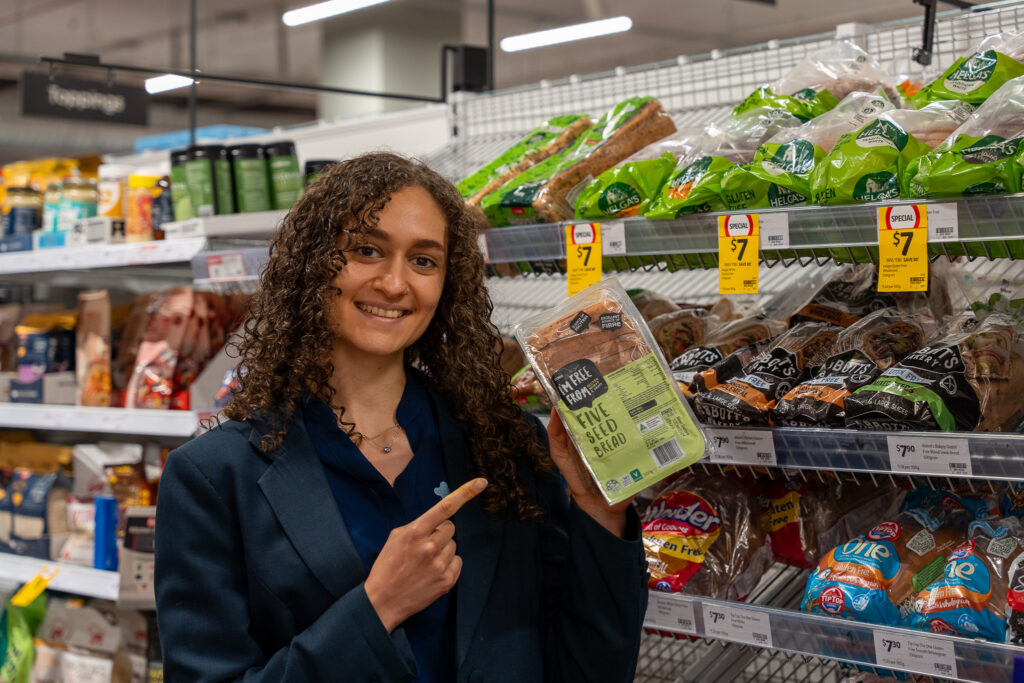
Understanding Coeliac dietitian
Coeliac disease is an autoimmune condition where gluten damages the lining of the small bowel. The only treatment is a strict, lifelong gluten free diet, and doing that well takes more than swapping bread. It means knowing labels, hidden sources, cross-contact and the nutrients that commonly run low.
Your dietitian helps you get it right from the start, or fix the gaps if you have been gluten free for years and still feel unwell or have elevated readings in your blood test. You get a plan built around your budget, your household and the way you actually eat.
Who does it affect?
around 1 in 70 Australians, though many are undiagnosed
How common is it?
it can start at any age, including childhood and after 60 years of age
What is the recovery like?
gut healing varies, and symptoms often settle well before the bowel lining does
Who should I see for treatment?
your dietitian, alongside your GP and gastroenterologist
What funding options are available?
Medicare, NDIS, DVA and private health funds accepted
What is coeliac disease?
Coeliac disease is an autoimmune disease where your body has an immune reaction to gluten, a protein found in wheat, rye, barley and oats. When you eat gluten, your immune system attacks the lining of your small bowel. That lining flattens over time, so you absorb less iron, calcium, folate and other nutrients from your food.
It is not an allergy and it is not an intolerance. Even small amounts of gluten keep the reaction going, including amounts you cannot see or taste.
Things that raise your chance of having it include:
A first-degree relative with coeliac disease
Type 1 diabetes, autoimmune thyroid disease or other autoimmune conditions
Down syndrome or Turner syndrome
Unexplained iron deficiency, low bone density or early osteoporosis
Symptoms of Coeliac dietitian
Coeliac disease looks different from person to person, and some people have almost no gut symptoms at all.
Bloating, wind, cramping or abdominal pain
Diarrhoea, constipation or a pattern that swings between both
Nausea, reflux or feeling full very quickly
Fatigue that does not improve with rest
Iron deficiency symptoms
Unexplained weight loss
Your plan comes out of the assessment, so it reflects your diagnosis, your blood results and what you eat now.
What to expect at your first appointment
Tell us what is going on
You talk through your diagnosis, test results, symptoms, medications and how confident you feel about gluten free right now.
A full assessment
Your dietitian reviews what you eat across a normal week, your kitchen setup, your nutrient results and your growth or weight history.
A clear plan
You leave with safe foods, swaps, label rules and a short list of first changes, written down rather than rattled off.
Review and adjust
Follow-up appointments check symptoms, bloods and confidence, then troubleshoot anything still causing reactions.
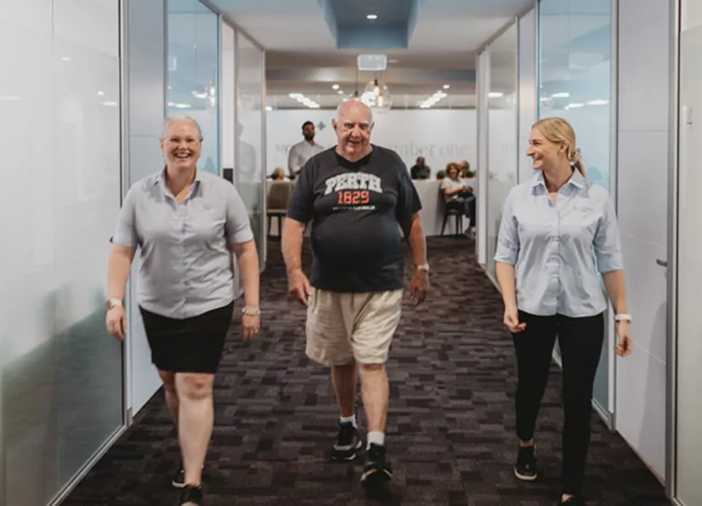
When to book an appointment
You have been diagnosed with coeliac disease
Gluten free eating is limiting your work, travel, sport or social life
You have been strictly gluten free for six months and symptoms or blood results have not settled
You are unsure whether foods, medications or supplements you use are safe
Book an assessment if:
Looking after yourself at home
These habits reduce accidental gluten between appointments.
A first-degree relative with coeliac disease
Type 1 diabetes, autoimmune thyroid disease or other autoimmune conditions
Down syndrome or Turner syndrome
Unexplained iron deficiency, low bone density or early osteoporosis

Meet the team who treat this
Behind every appointment is a team of practitioners who know each other, trust each other and work together for you. Across seven clinics and nine disciplines, our team shares expertise, coordinates treatment plans and celebrates your progress together.

Aimee Fuller
Healthcare Support Officer
Available at Blaxland

Alicia Whiticker
Healthcare Support Officer
Available at Blaxland

Amanda Banks
Healthcare Support Officer
Available at Blaxland
Amanda Duggan
Healthcare Support Officer
Available at Blaxland
Amy Meekings
Healthcare Support Officer
Available at Blaxland

Anita Beerapu
Healthcare Support Officer
Available at Blaxland
Benjamin Tucker
Healthcare Support Officer
Available at Blaxland

Blake Cossar
Healthcare Support Officer
Available at Blaxland

Bronte Tupper
Healthcare Support Officer
Available at Blaxland

Chris Farrugia
Healthcare Support Officer
Available at Blaxland

Corrina Aitken
Healthcare Support Officer
Available at Blaxland

David Logue
Healthcare Support Officer
Available at Blaxland

Dean Gresser
Healthcare Support Officer
Available at Blaxland
Emma Nassif
Healthcare Support Officer
Available at Blaxland

Esha Sharma
Healthcare Support Officer
Available at Blaxland

Fatima Hussaini
Healthcare Support Officer
Available at Blaxland

Felicity Spencer-Davey
Healthcare Support Officer
Available at Blaxland

Frankie Raikadroka
Healthcare Support Officer
Available at Blaxland
Hannah Norrie
Healthcare Support Officer
Available at Blaxland
Heather Edwards
Healthcare Support Officer
Available at Blaxland

Isaac Vella
Healthcare Support Officer
Available at Blaxland
Jarrah Nesbitt
Healthcare Support Officer
Available at Blaxland

Jonathan Lopez
Healthcare Support Officer
Available at Blaxland

Justin Hanna
Healthcare Support Officer
Available at Blaxland

Kasey Collins
Healthcare Support Officer
Available at Blaxland

Katrina Gauci
Healthcare Support Officer
Available at Blaxland
Kennedy Touet
Healthcare Support Officer
Available at Blaxland

Kristy Edwards
Healthcare Support Officer
Available at Blaxland

Kyle Perry
Healthcare Support Officer
Available at Blaxland
Lorna Nicastri
Healthcare Support Officer
Available at Blaxland

Maja Bosic
Healthcare Support Officer
Available at Blaxland

Marxy Koronel
Healthcare Support Officer
Available at Blaxland

Matt Barton
Healthcare Support Officer
Available at Blaxland

Michael Todd
Healthcare Support Officer
Available at Blaxland

Mr Jeffery Jenkins FACPS
Healthcare Support Officer
Available at Blaxland

Nathan Cavanagh
Healthcare Support Officer
Available at Blaxland

Patrick Celeban
Healthcare Support Officer
Available at Blaxland

Praise Khin
Healthcare Support Officer
Available at Blaxland

Sarah Bonnici
Healthcare Support Officer
Available at Blaxland

Shannon Smith
Healthcare Support Officer
Available at Blaxland

Siobhan Kelly
Healthcare Support Officer
Available at Blaxland
Taleisha Bozzi
Healthcare Support Officer
Available at Blaxland

Trystan Singh
Healthcare Support Officer
Available at Blaxland

Uty Kotwal
Healthcare Support Officer
Available at Blaxland

Yoni Hochberg
Healthcare Support Officer
Available at Blaxland

Zak Lloyd
Healthcare Support Officer
Available at Blaxland
EPC, DVA, NDIS and WorkCover welcome
Nearly half of our appointments are funded through Medicare, DVA, NDIS or WorkCover. We manage the paperwork so you can focus on your health.

NDIS
We support eligible NDIS participants across podiatry, physiotherapy, exercise physiology, dietetics and psychology, depending on your plan and goals. Eligibility and funding are set by your plan.

Medicare
Medicare may rebate podiatry, physiotherapy, exercise physiology and dietetics sessions when your GP refers you under an Enhanced Primary Care (EPC) or Chronic Disease Management (CDM) plan, and psychology sessions under a Mental Health Care Plan. The number of sessions is set by your plan.

DVA
Gold and White card holders can access DVA-funded care across our services with a valid referral.

WorkCover
If you have been injured at work, we accept WorkCover referrals for physiotherapy, exercise physiology and psychology, and manage the paperwork with your insurer, with a clear return-to-work plan.
Seven clinics across three regions
Find a clinic near you. Each location is staffed by local practitioners who know your community.
Penrith
Western SydneyOur largest centre, with our full range of services under one roof.
Ropes Crossing
Western SydneyPodiatry, at Ropes Crossing Village.
Blaxland
Blue MountainsPodiatry, physiotherapy, exercise physiology and group classes.
Springwood
Blue MountainsPodiatry, dietetics and a boutique footwear store.
Katoomba
Blue MountainsPodiatry, physiotherapy and dietetics, in a restored 1914 cottage.
Ryde
North ShorePodiatry, physiotherapy, dietetics and exercise physiology, with a footwear store and gait analysis.
Lindfield
North ShorePodiatry, with mobile podiatry across the North Shore and Northern Beaches.
Ready to feel confident about what is on your plate?
Get a gluten free plan built around your diagnosis, your budget and your kitchen.















Frequently asked questions
Should I keep eating gluten before I am tested for coeliac disease?
Yes. Coeliac blood tests and biopsy both rely on an active immune reaction, so cutting gluten first can produce a false negative. Australian guidelines generally suggest eating the equivalent of around two-four slices of wheat bread daily for at least four-six weeks before testing. If you have already gone gluten free, talk to your GP before restarting, and ask your dietitian how to manage symptoms during the challenge.
Are oats safe if I have coeliac disease?
Not automatically. Most Australian oats are contaminated with wheat during growing and milling, and roughly 1 in 5 people with coeliac disease also react to the oat protein avenin itself. Oats cannot be labelled gluten free in Australia.
What is the difference between "gluten free" and "low gluten" on Australian labels?
In Australia, “gluten free” means no detectable gluten, which is the standard to look for. “Low gluten” allows up to 20mg per 100g and is not suitable for coeliac disease. Products labelled “wheat free” may still contain rye, barley or malt. Ingredient lists must declare cereals containing gluten, so check the allergen statement as well as the front of the pack.
Do my family members need to be tested?
First-degree relatives, meaning parents, siblings and children, have around a 1 in 10 chance of having coeliac disease, so testing is usually recommended even without symptoms. Because it can develop at any age, one clear result does not rule it out for life, and repeat testing may be suggested later. Ask your GP about screening for your household.
Why do I still have symptoms on a strict gluten free diet?
Ongoing symptoms usually have a reason worth chasing. Common causes include small amounts of hidden gluten, temporary lactose intolerance while the bowel lining heals, other food triggers, medication or supplement ingredients, or a separate condition. Persistent symptoms after 12 months of strict eating should be reviewed by your GP or gastroenterologist as well as your dietitian.
Do I need follow-up tests once I am gluten free?
Yes. Coeliac antibody levels are usually rechecked at intervals after diagnosis to confirm the diet is working, because they fall when gluten exposure stops. Iron studies, B12, folate, calcium and vitamin D are commonly monitored too, and a bone density scan may be arranged. Bring recent results to your appointment so your food plan can target what is actually low.