

Diabetic foot care
Keep small foot problems from becoming serious ones
You have been told that diabetes can affect your feet, and you are not sure what to watch for or how often they should be checked. Regular podiatry care picks up changes early, while they are still easy to treat.
Medicare, NDIS, DVA and private health funds accepted.
Understanding Diabetic foot care
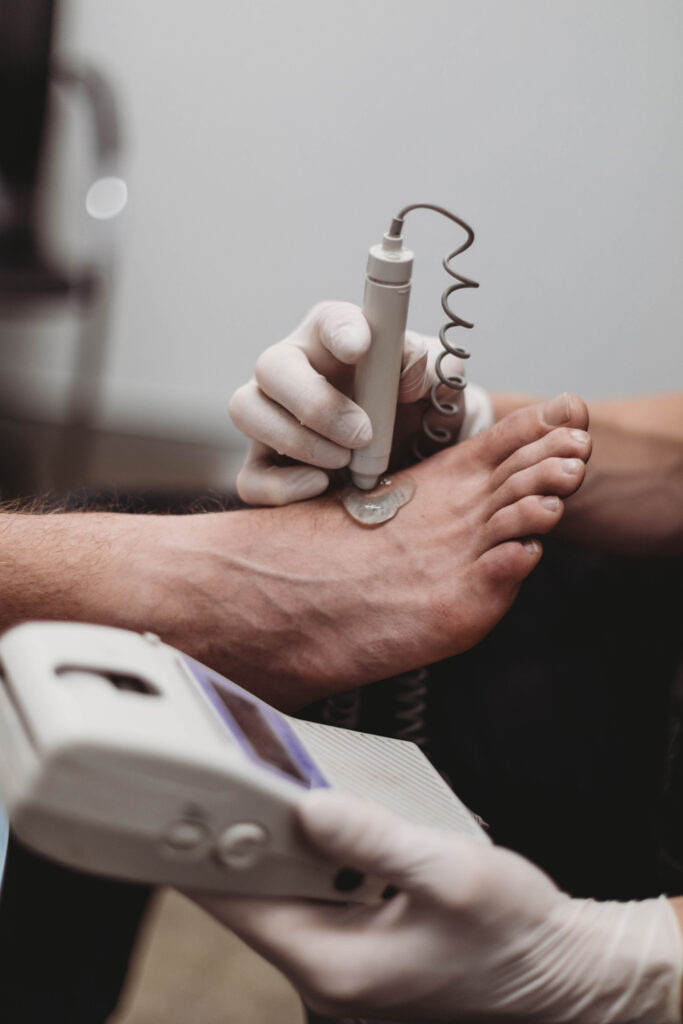
Diabetic foot care is regular podiatry assessment and treatment for feet affected by type 1 or type 2 diabetes. Your podiatrist tests the nerves and blood supply in your feet, treats skin and nail problems safely, and gives you a plan based on your level of risk.
Over time, diabetes can reduce sensation and blood flow in the feet. That means a blister, cut or thick callus can break down into a wound without ever hurting. Checking your feet on a schedule is how those changes get found early.
Who does it affect?
anyone living with type 1 or type 2 diabetes, at any age and at any stage.
How common is it?
nerve damage in the feet is one of the most common complications of diabetes [CONFIRM: prevalence statistic and source].
What is the recovery like?
foot risk is managed on an ongoing basis. Skin and nail problems often settle quickly, while wounds vary from person to person.
Who should I see for treatment?
your podiatrist, working alongside your GP and diabetes team.
What funding options are available?
Medicare, NDIS, DVA and private health funds accepted.
What is diabetic foot care?
Diabetic foot care is the ongoing checking and treatment of feet at risk of damage from diabetes. It covers three things: how well your nerves are working, how well blood is reaching your feet, and the condition of your skin and nails.
High blood glucose over a long period can damage the small nerves in the feet, a condition called peripheral neuropathy. It can also narrow the arteries that supply the legs, which slows healing. Lose sensation and blood supply together, and an injury you cannot feel takes far longer to repair.
Things that raise your risk:
Living with diabetes for many years, or glucose levels that have been high for long stretches
Smoking, high blood pressure or high cholesterol, which all affect circulation
A previous foot ulcer, wound or amputation
Changes in foot shape, such as clawed toes or a collapsed arch, that create high-pressure spots
Kidney or eye complications from diabetes, which often travel with nerve damage
Reduced eyesight or limited movement, making it hard to see or reach your own feet
Symptoms of Diabetic foot care
Numbness, or a feeling that you are walking on carpet or padding
Burning, tingling or shooting pain, often worse at night
Dry, cracked skin, particularly around the heels
Thick callus building up under the ball of the foot or the big toe
Cold feet, colour changes, or cramping in the calves when you walk
Cuts, blisters or nail problems that are slow to heal
Your treatment starts with a full diabetes foot assessment, and what your podiatrist recommends comes from what that assessment finds.
What to expect at your first appointment
Tell us what is going on
You explain how long you have had diabetes, how your glucose has been tracking, and anything you have noticed in your feet.
A full assessment
Your podiatrist tests sensation and pulses, checks your skin, nails and foot shape, looks at how you load your feet, and inspects your shoes.
A clear plan
You get your risk category explained in plain terms, immediate treatment for anything that needs it, and a review schedule that matches your risk.
Review and adjust
At each visit your podiatrist re-checks your feet, compares them to last time, and changes the plan if anything has shifted.
When to book an appointment
You have had diabetes for 12 months or more and have never had a foot check
Numbness, burning or night pain is affecting your sleep, walking or balance
You have been filing calluses or treating a nail yourself and it keeps coming back
You are not sure whether a mark, blister or colour change on your foot matters
Book an assessment if:
Looking after yourself at home
Daily habits do most of the work between appointments.
Living with diabetes for many years, or glucose levels that have been high for long stretches
Smoking, high blood pressure or high cholesterol, which all affect circulation
A previous foot ulcer, wound or amputation
Changes in foot shape, such as clawed toes or a collapsed arch, that create high-pressure spots
Kidney or eye complications from diabetes, which often travel with nerve damage
Reduced eyesight or limited movement, making it hard to see or reach your own feet

Meet the team who treat this
Behind every appointment is a team of practitioners who know each other, trust each other and work together for you. Across seven clinics and nine disciplines, our team shares expertise, coordinates treatment plans and celebrates your progress together.

Aimee Fuller
Healthcare Support Officer
Available at Blaxland

Alicia Whiticker
Healthcare Support Officer
Available at Blaxland

Amanda Banks
Healthcare Support Officer
Available at Blaxland

Amanda Duggan
Healthcare Support Officer
Available at Blaxland

Amy Meekings
Healthcare Support Officer
Available at Blaxland

Anita Beerapu
Healthcare Support Officer
Available at Blaxland

Benjamin Tucker
Healthcare Support Officer
Available at Blaxland

Blake Cossar
Healthcare Support Officer
Available at Blaxland

Bronte Tupper
Healthcare Support Officer
Available at Blaxland

Chris Farrugia
Healthcare Support Officer
Available at Blaxland

Corrina Aitken
Healthcare Support Officer
Available at Blaxland

David Logue
Healthcare Support Officer
Available at Blaxland

Dean Gresser
Healthcare Support Officer
Available at Blaxland

Emma Nassif
Healthcare Support Officer
Available at Blaxland

Esha Sharma
Healthcare Support Officer
Available at Blaxland

Fatima Hussaini
Healthcare Support Officer
Available at Blaxland

Felicity Spencer-Davey
Healthcare Support Officer
Available at Blaxland

Frankie Raikadroka
Healthcare Support Officer
Available at Blaxland

Hannah Norrie
Healthcare Support Officer
Available at Blaxland

Heather Edwards
Healthcare Support Officer
Available at Blaxland

Isaac Vella
Healthcare Support Officer
Available at Blaxland

Jarrah Nesbitt
Healthcare Support Officer
Available at Blaxland

Jonathan Lopez
Healthcare Support Officer
Available at Blaxland

Justin Hanna
Healthcare Support Officer
Available at Blaxland

Kasey Collins
Healthcare Support Officer
Available at Blaxland

Katrina Gauci
Healthcare Support Officer
Available at Blaxland

Kennedy Touet
Healthcare Support Officer
Available at Blaxland

Kristy Edwards
Healthcare Support Officer
Available at Blaxland

Kyle Perry
Healthcare Support Officer
Available at Blaxland

Lorna Nicastri
Healthcare Support Officer
Available at Blaxland

Maja Bosic
Healthcare Support Officer
Available at Blaxland

Marxy Koronel
Healthcare Support Officer
Available at Blaxland

Matt Barton
Healthcare Support Officer
Available at Blaxland

Michael Todd
Healthcare Support Officer
Available at Blaxland

Mr Jeffery Jenkins FACPS
Healthcare Support Officer
Available at Blaxland

Nathan Cavanagh
Healthcare Support Officer
Available at Blaxland

Patrick Celeban
Healthcare Support Officer
Available at Blaxland

Praise Khin
Healthcare Support Officer
Available at Blaxland

Sarah Bonnici
Healthcare Support Officer
Available at Blaxland

Shannon Smith
Healthcare Support Officer
Available at Blaxland

Siobhan Kelly
Healthcare Support Officer
Available at Blaxland

Taleisha Bozzi
Healthcare Support Officer
Available at Blaxland

Trystan Singh
Healthcare Support Officer
Available at Blaxland

Uty Kotwal
Healthcare Support Officer
Available at Blaxland

Yoni Hochberg
Healthcare Support Officer
Available at Blaxland

Zak Lloyd
Healthcare Support Officer
Available at Blaxland
EPC, DVA, NDIS and WorkCover welcome
Nearly half of our appointments are funded through Medicare, DVA, NDIS or WorkCover. We manage the paperwork so you can focus on your health.


NDIS
We support eligible NDIS participants across podiatry, physiotherapy, exercise physiology, dietetics and psychology, depending on your plan and goals. Eligibility and funding are set by your plan.

Medicare
Medicare may rebate podiatry, physiotherapy, exercise physiology and dietetics sessions when your GP refers you under an Enhanced Primary Care (EPC) or Chronic Disease Management (CDM) plan, and psychology sessions under a Mental Health Care Plan. The number of sessions is set by your plan.

DVA
Gold and White card holders can access DVA-funded care across our services with a valid referral.

WorkCover
If you have been injured at work, we accept WorkCover referrals for physiotherapy, exercise physiology and psychology, and manage the paperwork with your insurer, with a clear return-to-work plan.
Seven clinics across three regions
Find a clinic near you. Each location is staffed by local practitioners who know your community.
Penrith
Western SydneyOur largest centre, with our full range of services under one roof.
Ropes Crossing
Western SydneyPodiatry, at Ropes Crossing Village.
Blaxland
Blue MountainsPodiatry, physiotherapy, exercise physiology and group classes.
Springwood
Blue MountainsPodiatry, dietetics and a boutique footwear store.
Katoomba
Blue MountainsPodiatry, physiotherapy and dietetics, in a restored 1914 cottage.
Ryde
North ShorePodiatry, physiotherapy, dietetics and exercise physiology, with a footwear store and gait analysis.
Lindfield
North ShorePodiatry, with mobile podiatry across the North Shore and Northern Beaches.
Ready to get your feet checked properly?
Book a diabetes foot assessment with a podiatrist and know exactly where your feet stand.
















Frequently asked questions
How often should my feet be checked if I have diabetes?
At least once a year for everyone with diabetes, and more often if your risk is higher. People with reduced sensation, poor circulation, foot deformity or a history of ulceration are usually reviewed every three to six months. Your podiatrist sets your interval after testing, then reviews it each visit, because risk categories change in both directions over time.
Can nerve damage in my feet be reversed?
Most established diabetic peripheral neuropathy cannot be fully reversed, but its progression can often be slowed. Keeping blood glucose, blood pressure and cholesterol stable, along with quitting smoking, helps protect remaining nerve function. Symptoms such as burning, tingling or night pain may be managed with medications prescribed by your GP. Once sensation is significantly reduced, the priority becomes protecting numb feet from injury, as wounds may go unnoticed and heal more slowly.
Should I worry about a foot that is hot and swollen but not painful?
Yes, get it looked at the same day. A warm, swollen, red foot with little or no pain in someone with neuropathy can indicate a Charcot foot, where bones weaken and the joints collapse under normal walking loads. Early immobilisation makes a significant difference. It is easily mistaken for a sprain, infection or gout, so it should be assessed rather than watched.
Am I still at risk if my blood glucose is well controlled?
Yes, though your risk is lower. Damage accumulates over years, so someone with a long history of diabetes can have nerve changes even after glucose levels improve. Good control slows progression but does not undo existing neuropathy or arterial narrowing. Annual foot checks are recommended for everyone with diabetes, regardless of how good the recent numbers look.
Can I claim diabetic foot care through Medicare?
Often, yes. Your GP can prepare a Chronic Disease Management plan, which covers up to five allied health visits per calendar year with a Medicare rebate [CONFIRM: current visit allowance and rebate wording]. Veterans may be covered through DVA, and NDIS participants may fund podiatry through their plan. Private health extras cover podiatry depending on your level of cover.
Why should I not treat my own corns and calluses?
Because a small nick you cannot feel can turn into a wound that will not heal. Blades, files and medicated corn pads all remove or burn living skin as well as hard skin. In a foot with reduced sensation and slower blood supply, that break in the skin is the usual starting point for an ulcer. Debridement takes minutes in the clinic and is done with sterile instruments.