

Exercise and diabetes
Take control of your blood glucose with exercise that suits you
You know exercise is meant to help your diabetes, but you are not sure what is safe, how much to do, or what it will do to your levels. An accredited exercise physiologist can build a plan around your medication, your health and your week.
Medicare, NDIS, DVA and private health funds accepted.
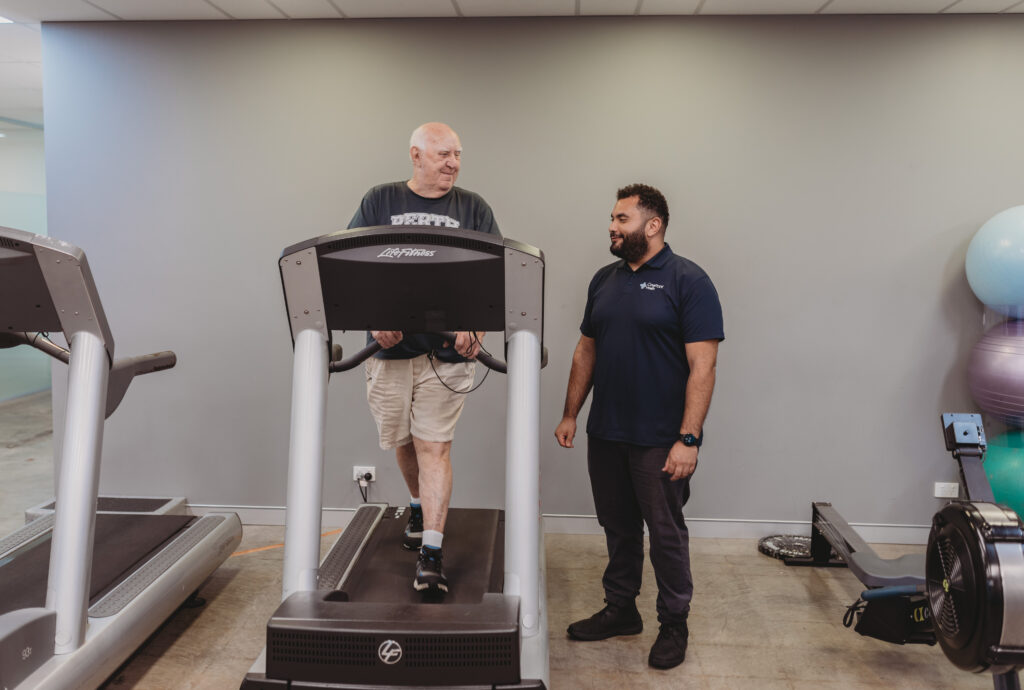
Understanding Exercise and diabetes
Exercise is one of the most effective tools you have for managing type 1 diabetes, type 2 diabetes, prediabetes and gestational diabetes. Working muscle pulls glucose out of your bloodstream, and regular training makes your body respond better to insulin.
The tricky part is doing it safely when medication, food and activity all move your levels. Your exercise physiologist sets the type, timing and intensity around your diabetes, and your dietitian helps with what you eat before and after.
Who does it affect?
anyone living with type 1, type 2, gestational diabetes or prediabetes
How common is it?
around 1 in 20 Australians live with diabetes [CONFIRM: current Diabetes Australia prevalence figure]
What is the recovery like?
blood glucose responses can shift within weeks, though changes to HbA1c usually take longer and vary between people
Who should I see for treatment?
exercise physiologists and dietitians, alongside your GP or endocrinologist
What funding options are available?
Medicare, NDIS, DVA and private health funds accepted
What does exercise do for diabetes?
Diabetes means your body cannot keep blood glucose in a healthy range on its own, either because it makes little or no insulin, or because your cells stop responding to it properly. Exercise works on both problems.
When you contract a muscle, it takes glucose from your blood without needing insulin. Train regularly and your muscles hold more glucose and respond better to the insulin you have, often for a day or two after each session. Muscle is also where most of that glucose is stored, so building it changes your capacity.
Several things make glucose harder to control:
Long periods of sitting, which reduce insulin sensitivity within days
Loss of muscle mass through ageing, illness or inactivity
Weight carried around the abdomen
Medication, sleep, stress and illness, which all shift your daily readings
Symptoms of Exercise and diabetes
Diabetes is diagnosed on blood tests, not on how you feel. Still, these signs often mean your levels are running higher than they should:
Tiredness that hits hard after meals
Increased thirst and needing to urinate more often
Blurred vision that comes and goes
Cuts and grazes that heal slowly
Tingling, burning or numbness in your feet
A rising HbA1c result at your last GP review
Your program is built from your assessment, your current fitness and how your levels behave.
What to expect at your first appointment
Tell us what is going on
Your diabetes type, how long you have had it, your medications, recent HbA1c and what activity you do now.
A full assessment
Strength, fitness, balance, joints and any complications affecting your feet, eyes, kidneys or heart.
A clear plan
The exercises, the intensity, how often, and exactly what to do about food and monitoring around each session.
Review and adjust
We track your response over the following weeks and change the plan as your fitness and glucose control shift.
When to book an appointment
Your HbA1c has been above target for three months or more
Diabetes is stopping you doing things you want to do, like work, travel or play with your grandchildren
You have tried to start exercising on your own and stopped, or your levels went everywhere
You are unsure what is safe with your medication, neuropathy or eye complications
Book an assessment if:
Looking after yourself at home
Between appointments, small habits do a lot of the work.
Long periods of sitting, which reduce insulin sensitivity within days
Loss of muscle mass through ageing, illness or inactivity
Weight carried around the abdomen
Medication, sleep, stress and illness, which all shift your daily readings

Meet the team who treat this
Behind every appointment is a team of practitioners who know each other, trust each other and work together for you. Across seven clinics and nine disciplines, our team shares expertise, coordinates treatment plans and celebrates your progress together.

Aimee Fuller
Healthcare Support Officer
Available at Blaxland

Alicia Whiticker
Healthcare Support Officer
Available at Blaxland

Amanda Banks
Healthcare Support Officer
Available at Blaxland

Amanda Duggan
Healthcare Support Officer
Available at Blaxland

Amy Meekings
Healthcare Support Officer
Available at Blaxland

Anita Beerapu
Healthcare Support Officer
Available at Blaxland

Benjamin Tucker
Healthcare Support Officer
Available at Blaxland

Blake Cossar
Healthcare Support Officer
Available at Blaxland

Bronte Tupper
Healthcare Support Officer
Available at Blaxland

Chris Farrugia
Healthcare Support Officer
Available at Blaxland

Corrina Aitken
Healthcare Support Officer
Available at Blaxland

David Logue
Healthcare Support Officer
Available at Blaxland

Dean Gresser
Healthcare Support Officer
Available at Blaxland

Emma Nassif
Healthcare Support Officer
Available at Blaxland

Esha Sharma
Healthcare Support Officer
Available at Blaxland

Fatima Hussaini
Healthcare Support Officer
Available at Blaxland

Felicity Spencer-Davey
Healthcare Support Officer
Available at Blaxland

Frankie Raikadroka
Healthcare Support Officer
Available at Blaxland

Hannah Norrie
Healthcare Support Officer
Available at Blaxland

Heather Edwards
Healthcare Support Officer
Available at Blaxland

Isaac Vella
Healthcare Support Officer
Available at Blaxland

Jarrah Nesbitt
Healthcare Support Officer
Available at Blaxland

Jonathan Lopez
Healthcare Support Officer
Available at Blaxland

Justin Hanna
Healthcare Support Officer
Available at Blaxland

Kasey Collins
Healthcare Support Officer
Available at Blaxland

Katrina Gauci
Healthcare Support Officer
Available at Blaxland

Kennedy Touet
Healthcare Support Officer
Available at Blaxland

Kristy Edwards
Healthcare Support Officer
Available at Blaxland

Kyle Perry
Healthcare Support Officer
Available at Blaxland

Lorna Nicastri
Healthcare Support Officer
Available at Blaxland

Maja Bosic
Healthcare Support Officer
Available at Blaxland

Marxy Koronel
Healthcare Support Officer
Available at Blaxland

Matt Barton
Healthcare Support Officer
Available at Blaxland

Michael Todd
Healthcare Support Officer
Available at Blaxland

Mr Jeffery Jenkins FACPS
Healthcare Support Officer
Available at Blaxland

Nathan Cavanagh
Healthcare Support Officer
Available at Blaxland

Patrick Celeban
Healthcare Support Officer
Available at Blaxland

Praise Khin
Healthcare Support Officer
Available at Blaxland

Sarah Bonnici
Healthcare Support Officer
Available at Blaxland

Shannon Smith
Healthcare Support Officer
Available at Blaxland

Siobhan Kelly
Healthcare Support Officer
Available at Blaxland

Taleisha Bozzi
Healthcare Support Officer
Available at Blaxland

Trystan Singh
Healthcare Support Officer
Available at Blaxland

Uty Kotwal
Healthcare Support Officer
Available at Blaxland

Yoni Hochberg
Healthcare Support Officer
Available at Blaxland

Zak Lloyd
Healthcare Support Officer
Available at Blaxland
EPC, DVA, NDIS and WorkCover welcome
Nearly half of our appointments are funded through Medicare, DVA, NDIS or WorkCover. We manage the paperwork so you can focus on your health.


NDIS
We support eligible NDIS participants across podiatry, physiotherapy, exercise physiology, dietetics and psychology, depending on your plan and goals. Eligibility and funding are set by your plan.

Medicare
Medicare may rebate podiatry, physiotherapy, exercise physiology and dietetics sessions when your GP refers you under an Enhanced Primary Care (EPC) or Chronic Disease Management (CDM) plan, and psychology sessions under a Mental Health Care Plan. The number of sessions is set by your plan.

DVA
Gold and White card holders can access DVA-funded care across our services with a valid referral.

WorkCover
If you have been injured at work, we accept WorkCover referrals for physiotherapy, exercise physiology and psychology, and manage the paperwork with your insurer, with a clear return-to-work plan.
Seven clinics across three regions
Find a clinic near you. Each location is staffed by local practitioners who know your community.
Penrith
Western SydneyOur largest centre, with our full range of services under one roof.
Ropes Crossing
Western SydneyPodiatry, at Ropes Crossing Village.
Blaxland
Blue MountainsPodiatry, physiotherapy, exercise physiology and group classes.
Springwood
Blue MountainsPodiatry, dietetics and a boutique footwear store.
Katoomba
Blue MountainsPodiatry, physiotherapy and dietetics, in a restored 1914 cottage.
Ryde
North ShorePodiatry, physiotherapy, dietetics and exercise physiology, with a footwear store and gait analysis.
Lindfield
North ShorePodiatry, with mobile podiatry across the North Shore and Northern Beaches.
Ready to make exercise work for your diabetes?
Book an assessment and get a plan built around your medication, your levels and your week.















Frequently asked questions
What should my blood glucose be before I start exercising?
As a general guide, many people aim for a reading above 5.0 mmol/L before starting, with fast-acting carbohydrate on hand. Very high readings with ketones, or levels below 4.0mmol/L are a reason to delay training. Your safe range depends on your diabetes type, medication and how long the session will be, so your exercise physiologist sets your personal thresholds at your first visit.
Do I need to change my insulin or diabetes medication on days I exercise?
Possibly, and only your prescriber can make that change. Insulin and sulfonylureas raise hypo risk around exercise, so doses or timing sometimes need adjusting. Metformin and most other tablets do not usually need changing. We share your glucose data and session details with your GP or endocrinologist so any adjustment is based on what actually happens.
Is resistance training or aerobic exercise better for type 2 diabetes?
Both help, and doing both helps most. Aerobic exercise lowers glucose during and shortly after the session. Resistance training builds muscle, which increases your long-term storage capacity for glucose. Current guidelines suggest 150 minutes of moderate aerobic activity plus two or three resistance sessions each week, built up gradually from wherever you are now.
Can exercise put type 2 diabetes into remission?
Remission is possible for some people with type 2 diabetes, usually through significant weight loss combined with exercise and dietary change, and it is more likely earlier after diagnosis. It is not guaranteed and it is not the goal for everyone. Better glucose control, more strength and lower cardiovascular risk are worthwhile results on their own.
I have nerve damage in my feet. Is exercise still safe?
Yes, with the right exercise selection. Peripheral neuropathy reduces sensation, so blisters and pressure injuries can go unnoticed. Your exercise physiologist may favour cycling, swimming, seated or supported work over long walks while your feet settle, and we check your footwear. Daily foot checks matter, and we can refer you to a podiatrist if anything looks wrong.
Does exercise help type 1 diabetes as well as type 2?
Yes, though the goals differ. In type 1 diabetes, exercise improves cardiovascular fitness, strength, bone health and insulin sensitivity, but it will not replace insulin. The main focus is managing glucose around sessions, because different intensities push levels in different directions. Sprint and heavy resistance work can raise glucose, while steady aerobic work tends to lower it.