

Foot corn removal
Walk without that sharp pressure under your toe
That hard, tender spot feels like you are standing on a stone, and every step in a closed shoe makes it worse. Corns are common, treatable, and most people walk out of the appointment feeling the difference.
Medicare, NDIS, DVA and private health funds accepted.
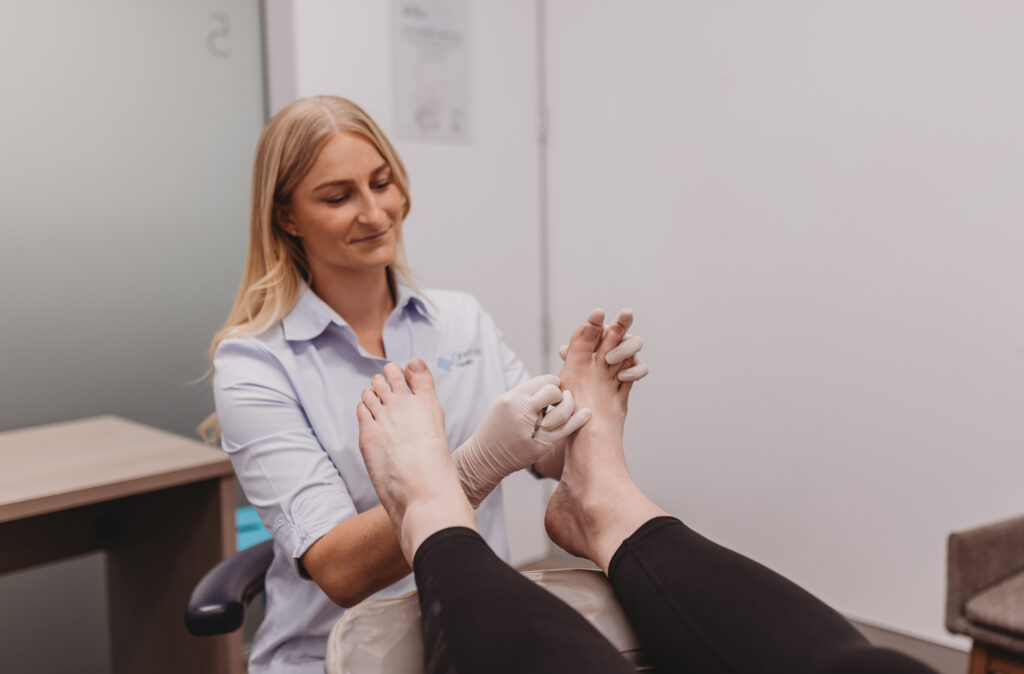
Understanding Foot corn removal
A corn is a small, dense plug of hardened skin that forms where a bone repeatedly presses skin against a shoe or the ground. It builds a hard central core that pushes inwards, which is why it hurts when you stand on it.
Your podiatrist removes the thickened skin and the core with sterile instruments, then works out what is loading that spot. Removing the corn relieves the pain. Changing the pressure is what keeps it away.
Who does it affect?
adults of any age, more often people with prominent toe joints, bunions or hammer toes
How common is it?
corns and callus are among the most common reasons people see a podiatrist
What is the recovery like?
relief is often immediate, though corns can return if the pressure continues
Who should I see for treatment?
your podiatrist
What funding options are available?
Medicare, NDIS, DVA and private health funds accepted
What is a foot corn?
A corn is a focused area of thickened skin with a hard core at its centre. Skin thickens to protect itself from friction and pressure. When that pressure lands on one small point, the thickening turns inwards into a cone shape that presses on the tissue underneath.
Corns build up slowly. You may notice a patch of hard skin first, then a tender spot, then pain with every step in certain shoes. Callus is the flatter, more spread-out version of the same process and often sits around a corn.
Common contributing factors include:
Shoes that are tight across the toes, too shallow, or slip at the heel
Toe shape and joint position, such as hammer toes, claw toes or a bunion
The way you load your foot when you walk, including high pressure under the ball of the foot
Dry skin, thin fat padding under the forefoot, and reduced joint movement
Symptoms of Foot corn removal
A small, hard, well-defined area of skin with a tender centre
Sharp or burning pain when you stand, walk or press on the spot
A feeling like there is a stone or pebble in your shoe
Yellow or grey thickened skin, sometimes with a visible core
Skin that softens and turns white between the toes
Pain that eases in soft shoes and returns in firm or narrow ones
Your treatment plan comes out of the assessment, because the corn is the symptom and the pressure is the cause
What to expect at your first appointment
Tell us what is going on
You describe where it hurts, how long it has been there, what you have tried, and which shoes make it worse.
A full assessment
Your podiatrist examines the skin, checks toe position, joint movement and pressure areas, and looks at your circulation and sensation.
A clear plan
In most cases the corn is removed at that first visit, then you get padding, footwear advice and a plan for the pressure behind it.
Review and adjust
You come back if the corn starts to rebuild, so the offloading or the device can be changed before the pain returns.
When to book an appointment
The pain has been building for more than a few weeks
It is changing how you walk, or stopping you wearing work or sport shoes
Chemist pads, files or pumice stones have not kept it under control
You are not sure whether it is a corn, a callus or a wart
Book an assessment if:
Looking after yourself at home
Between appointments, these habits help keep the pressure down.
Shoes that are tight across the toes, too shallow, or slip at the heel
Toe shape and joint position, such as hammer toes, claw toes or a bunion
The way you load your foot when you walk, including high pressure under the ball of the foot
Dry skin, thin fat padding under the forefoot, and reduced joint movement

Meet the team who treat this
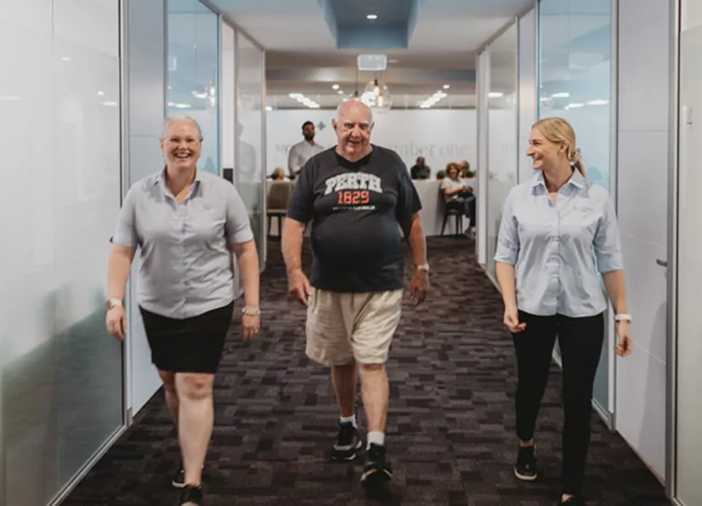
Behind every appointment is a team of practitioners who know each other, trust each other and work together for you. Across seven clinics and nine disciplines, our team shares expertise, coordinates treatment plans and celebrates your progress together.

Aimee Fuller
Healthcare Support Officer
Available at Blaxland

Alicia Whiticker
Healthcare Support Officer
Available at Blaxland

Amanda Banks
Healthcare Support Officer
Available at Blaxland

Amanda Duggan
Healthcare Support Officer
Available at Blaxland

Amy Meekings
Healthcare Support Officer
Available at Blaxland

Anita Beerapu
Healthcare Support Officer
Available at Blaxland

Benjamin Tucker
Healthcare Support Officer
Available at Blaxland

Blake Cossar
Healthcare Support Officer
Available at Blaxland

Bronte Tupper
Healthcare Support Officer
Available at Blaxland

Chris Farrugia
Healthcare Support Officer
Available at Blaxland

Corrina Aitken
Healthcare Support Officer
Available at Blaxland

David Logue
Healthcare Support Officer
Available at Blaxland

Dean Gresser
Healthcare Support Officer
Available at Blaxland

Emma Nassif
Healthcare Support Officer
Available at Blaxland

Esha Sharma
Healthcare Support Officer
Available at Blaxland

Fatima Hussaini
Healthcare Support Officer
Available at Blaxland

Felicity Spencer-Davey
Healthcare Support Officer
Available at Blaxland

Frankie Raikadroka
Healthcare Support Officer
Available at Blaxland

Hannah Norrie
Healthcare Support Officer
Available at Blaxland

Heather Edwards
Healthcare Support Officer
Available at Blaxland

Isaac Vella
Healthcare Support Officer
Available at Blaxland

Jarrah Nesbitt
Healthcare Support Officer
Available at Blaxland

Jonathan Lopez
Healthcare Support Officer
Available at Blaxland

Justin Hanna
Healthcare Support Officer
Available at Blaxland

Kasey Collins
Healthcare Support Officer
Available at Blaxland

Katrina Gauci
Healthcare Support Officer
Available at Blaxland

Kennedy Touet
Healthcare Support Officer
Available at Blaxland

Kristy Edwards
Healthcare Support Officer
Available at Blaxland

Kyle Perry
Healthcare Support Officer
Available at Blaxland

Lorna Nicastri
Healthcare Support Officer
Available at Blaxland

Maja Bosic
Healthcare Support Officer
Available at Blaxland

Marxy Koronel
Healthcare Support Officer
Available at Blaxland

Matt Barton
Healthcare Support Officer
Available at Blaxland

Michael Todd
Healthcare Support Officer
Available at Blaxland

Mr Jeffery Jenkins FACPS
Healthcare Support Officer
Available at Blaxland

Nathan Cavanagh
Healthcare Support Officer
Available at Blaxland

Patrick Celeban
Healthcare Support Officer
Available at Blaxland

Praise Khin
Healthcare Support Officer
Available at Blaxland

Sarah Bonnici
Healthcare Support Officer
Available at Blaxland

Shannon Smith
Healthcare Support Officer
Available at Blaxland

Siobhan Kelly
Healthcare Support Officer
Available at Blaxland

Taleisha Bozzi
Healthcare Support Officer
Available at Blaxland

Trystan Singh
Healthcare Support Officer
Available at Blaxland

Uty Kotwal
Healthcare Support Officer
Available at Blaxland

Yoni Hochberg
Healthcare Support Officer
Available at Blaxland

Zak Lloyd
Healthcare Support Officer
Available at Blaxland
EPC, DVA, NDIS and WorkCover welcome
Nearly half of our appointments are funded through Medicare, DVA, NDIS or WorkCover. We manage the paperwork so you can focus on your health.


NDIS
We support eligible NDIS participants across podiatry, physiotherapy, exercise physiology, dietetics and psychology, depending on your plan and goals. Eligibility and funding are set by your plan.

Medicare
Medicare may rebate podiatry, physiotherapy, exercise physiology and dietetics sessions when your GP refers you under an Enhanced Primary Care (EPC) or Chronic Disease Management (CDM) plan, and psychology sessions under a Mental Health Care Plan. The number of sessions is set by your plan.

DVA
Gold and White card holders can access DVA-funded care across our services with a valid referral.

WorkCover
If you have been injured at work, we accept WorkCover referrals for physiotherapy, exercise physiology and psychology, and manage the paperwork with your insurer, with a clear return-to-work plan.
Seven clinics across three regions
Find a clinic near you. Each location is staffed by local practitioners who know your community.
Penrith
Western SydneyOur largest centre, with our full range of services under one roof.
Ropes Crossing
Western SydneyPodiatry, at Ropes Crossing Village.
Blaxland
Blue MountainsPodiatry, physiotherapy, exercise physiology and group classes.
Springwood
Blue MountainsPodiatry, dietetics and a boutique footwear store.
Katoomba
Blue MountainsPodiatry, physiotherapy and dietetics, in a restored 1914 cottage.
Ryde
North ShorePodiatry, physiotherapy, dietetics and exercise physiology, with a footwear store and gait analysis.
Lindfield
North ShorePodiatry, with mobile podiatry across the North Shore and Northern Beaches.
Ready to get that corn sorted?
Most corns are removed at the first visit, with a plan to stop them coming back.















Frequently asked questions
Does having a corn removed hurt?
No, corn removal is not usually painful. The thickened skin and the core are dead tissue with no nerve supply, so a sterile scalpel can pare them away without cutting into living skin. Most people feel pressure or a scraping sensation. If the tissue underneath is inflamed, it can feel tender for a day or two afterwards, and padding helps with that.
How often will I need to come back?
That depends on how quickly the skin rebuilds. Many people with an ongoing pressure point book maintenance visits every six to twelve weeks, while others need only one or two appointments once the footwear and offloading are right. If your corn returns within a fortnight, tell your podiatrist, because it usually means the load on that spot has not changed enough.
How do I tell the difference between a corn and a plantar wart?
Squeeze it. A wart is usually more painful when pinched from the sides, while a corn hurts most when pressed straight down. Corns sit on weight-bearing pressure points and have a smooth, waxy centre. Warts can appear anywhere on the sole, often in clusters, and interrupt the normal skin lines. Your podiatrist can confirm which one it is by paring the surface.
Why do I get soft corns between my toes?
Soft corns form when two toe bones press together and sweat keeps the skin damp. The moisture stops the skin hardening in the normal way, so it stays white, soggy and painful. They are most common between the fourth and fifth toes. Keeping the web spaces dry, using a small gel spacer and choosing wider shoes all reduce the rubbing.
Can a corn become infected or turn into an ulcer?
Yes. If pressure continues, tissue under the core can break down and form a wound, which may then become infected. Warning signs include fluid, a dark or red halo around the corn, warmth, swelling or an odour. The risk is higher if you have diabetes, poor circulation or numbness in your feet, which is why self-cutting is not safe.
Can I walk and exercise straight after treatment?
Yes, you can walk out and carry on with your day. There are no wounds, stitches or dressings with routine corn removal, though your podiatrist may apply padding you should keep dry for a day. If a deep corn has left the area tender, choose a cushioned shoe and hold off on long runs or hikes for a couple of days.