

Foot pain
Find out what is causing your foot pain, then treat it properly
Your feet hurt when you get out of bed, or by the end of a shift, and you are not sure what you have done to them. Foot pain is a symptom with many possible causes, and most of them respond well to non-surgical treatment.
Medicare, NDIS, DVA and private health funds accepted.
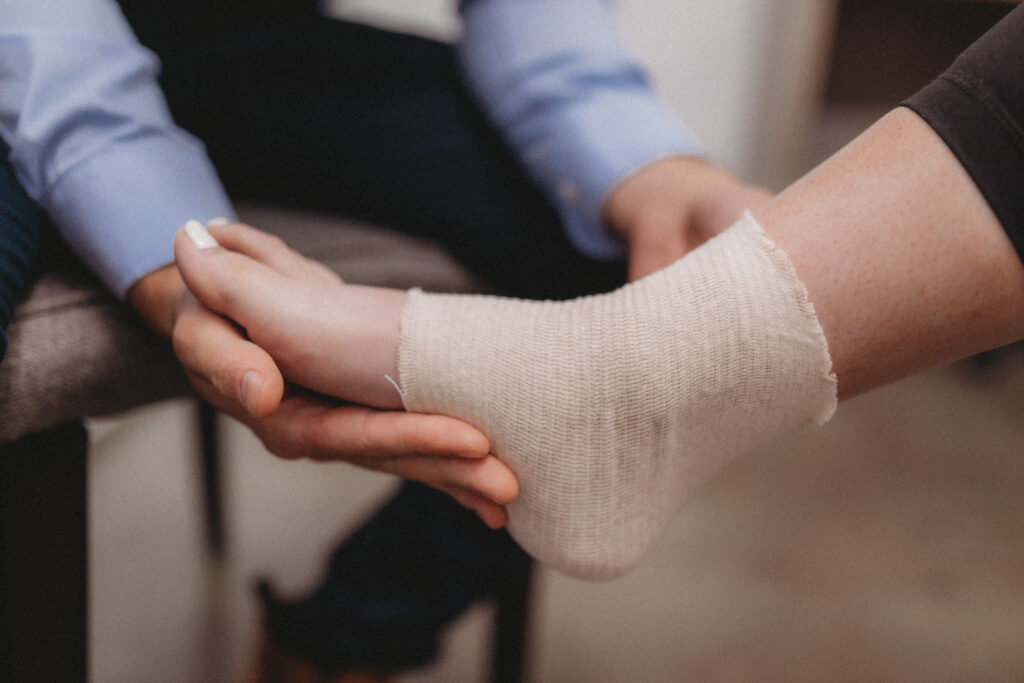
Understanding Foot pain
Foot pain is pain anywhere from your heel to your toes, including the arch, midfoot and ball of the foot. It is a symptom, not a diagnosis. Your foot has 26 bones, 33 joints and more than 100 tendons, ligaments and muscles, so the first job is identifying which structure is producing your pain.
Most foot pain improves with non-surgical care once the cause is clear. Your podiatrist looks at where it hurts, when it hurts, how you walk and what you wear, then treats the tissue that is under too much load.
Who does it affect?
anyone, and more often people who are on their feet all day, have recently increased activity, or have diabetes or inflammatory arthritis
How common is it?
foot pain is one of the most common reasons people see a podiatrist, at every age from children through to older adults
What is the recovery like?
varies widely by cause, from a single appointment for a painful corn to a staged program for a tendon or joint problem
Who should I see for treatment?
your podiatrist, with physiotherapy or dietetics involved when the cause sits beyond the foot
What funding options are available?
Medicare, NDIS, DVA and private health funds accepted
What causes foot pain?
Foot pain happens when a structure in your foot is asked to do more than it can currently tolerate. That structure might be a tendon, a ligament, a joint surface, a nerve, a bone or the skin itself. Each one produces a slightly different pattern of pain, which is why the location and timing matter so much.
Most foot pain builds gradually rather than starting with one dramatic injury. Something changes: new shoes, a new job, a return to running, extra kilometres, a growth spurt, or simply more standing than your feet are used to. The tissue takes on more load than it has adapted to, and pain follows.
Contributing factors include:
A change in load. More walking, running, standing or a sudden return to sport after time off.
Footwear. Flat, worn, narrow or unsupportive shoes change how force travels through your foot.
Foot structure and movement. Flat feet, high arches, stiff joints or a tight calf shift pressure to areas that are not built for it.
General health. Diabetes, gout, rheumatoid and osteoarthritis, and changes in body weight all affect foot tissue.
Age-related change. Tendons, joint cartilage and the fat pad under your heel all change over time.
Previous injury. An old sprain, fracture or surgery can alter how you load the foot years later.
Symptoms of Foot pain
Foot pain presents in a few recognisable ways:
Sharp, stabbing pain in one specific spot you can point to
A deep ache that builds through the day and eases when you sit
Burning, tingling or numbness spreading into the toes
Swelling, redness or heat over a joint
Stiffness that takes a few minutes of walking to loosen
Pain that changes depending on which shoes you have on
Your treatment comes from what the assessment finds, because the plan for a nerve problem looks nothing like the plan for a tendon or a skin lesion.
What to expect at your first appointment
Tell us what is going on
Where it hurts, when it started, what makes it worse, what you have already tried, and what you need your feet to do.
A full assessment
Your podiatrist examines the painful area, tests joint range and strength, checks your circulation and nerve function, watches you walk, and looks at your shoes.
A clear plan
You get a diagnosis in plain language, an explanation of why it happened, and the treatment options that suit your goals.
Review and adjust
We track how your pain and function respond, and change the plan when the response tells us to.

When to book an appointment
Your foot pain has lasted longer than two weeks
It is changing how you walk, work, train or sleep
Rest, new shoes or over-the-counter insoles have not helped
You do not know what is causing it, or you have been given conflicting advice
Book an assessment if:
Looking after yourself at home
These steps help most types of foot pain while you wait for your appointment.
A change in load. More walking, running, standing or a sudden return to sport after time off.
Footwear. Flat, worn, narrow or unsupportive shoes change how force travels through your foot.
Foot structure and movement. Flat feet, high arches, stiff joints or a tight calf shift pressure to areas that are not built for it.
General health. Diabetes, gout, rheumatoid and osteoarthritis, and changes in body weight all affect foot tissue.
Age-related change. Tendons, joint cartilage and the fat pad under your heel all change over time.
Previous injury. An old sprain, fracture or surgery can alter how you load the foot years later.

Meet the team who treat this
Behind every appointment is a team of practitioners who know each other, trust each other and work together for you. Across seven clinics and nine disciplines, our team shares expertise, coordinates treatment plans and celebrates your progress together.

Aimee Fuller
Healthcare Support Officer
Available at Blaxland

Alicia Whiticker
Healthcare Support Officer
Available at Blaxland

Amanda Banks
Healthcare Support Officer
Available at Blaxland

Amanda Duggan
Healthcare Support Officer
Available at Blaxland

Amy Meekings
Healthcare Support Officer
Available at Blaxland

Anita Beerapu
Healthcare Support Officer
Available at Blaxland

Benjamin Tucker
Healthcare Support Officer
Available at Blaxland

Blake Cossar
Healthcare Support Officer
Available at Blaxland

Bronte Tupper
Healthcare Support Officer
Available at Blaxland

Chris Farrugia
Healthcare Support Officer
Available at Blaxland

Corrina Aitken
Healthcare Support Officer
Available at Blaxland

David Logue
Healthcare Support Officer
Available at Blaxland

Dean Gresser
Healthcare Support Officer
Available at Blaxland

Emma Nassif
Healthcare Support Officer
Available at Blaxland

Esha Sharma
Healthcare Support Officer
Available at Blaxland

Fatima Hussaini
Healthcare Support Officer
Available at Blaxland

Felicity Spencer-Davey
Healthcare Support Officer
Available at Blaxland

Frankie Raikadroka
Healthcare Support Officer
Available at Blaxland

Hannah Norrie
Healthcare Support Officer
Available at Blaxland

Heather Edwards
Healthcare Support Officer
Available at Blaxland

Isaac Vella
Healthcare Support Officer
Available at Blaxland

Jarrah Nesbitt
Healthcare Support Officer
Available at Blaxland

Jonathan Lopez
Healthcare Support Officer
Available at Blaxland

Justin Hanna
Healthcare Support Officer
Available at Blaxland

Kasey Collins
Healthcare Support Officer
Available at Blaxland

Katrina Gauci
Healthcare Support Officer
Available at Blaxland

Kennedy Touet
Healthcare Support Officer
Available at Blaxland

Kristy Edwards
Healthcare Support Officer
Available at Blaxland

Kyle Perry
Healthcare Support Officer
Available at Blaxland

Lorna Nicastri
Healthcare Support Officer
Available at Blaxland

Maja Bosic
Healthcare Support Officer
Available at Blaxland

Marxy Koronel
Healthcare Support Officer
Available at Blaxland

Matt Barton
Healthcare Support Officer
Available at Blaxland

Michael Todd
Healthcare Support Officer
Available at Blaxland

Mr Jeffery Jenkins FACPS
Healthcare Support Officer
Available at Blaxland

Nathan Cavanagh
Healthcare Support Officer
Available at Blaxland

Patrick Celeban
Healthcare Support Officer
Available at Blaxland

Praise Khin
Healthcare Support Officer
Available at Blaxland

Sarah Bonnici
Healthcare Support Officer
Available at Blaxland

Shannon Smith
Healthcare Support Officer
Available at Blaxland

Siobhan Kelly
Healthcare Support Officer
Available at Blaxland

Taleisha Bozzi
Healthcare Support Officer
Available at Blaxland

Trystan Singh
Healthcare Support Officer
Available at Blaxland

Uty Kotwal
Healthcare Support Officer
Available at Blaxland

Yoni Hochberg
Healthcare Support Officer
Available at Blaxland

Zak Lloyd
Healthcare Support Officer
Available at Blaxland
EPC, DVA, NDIS and WorkCover welcome
Nearly half of our appointments are funded through Medicare, DVA, NDIS or WorkCover. We manage the paperwork so you can focus on your health.


NDIS
We support eligible NDIS participants across podiatry, physiotherapy, exercise physiology, dietetics and psychology, depending on your plan and goals. Eligibility and funding are set by your plan.

Medicare
Medicare may rebate podiatry, physiotherapy, exercise physiology and dietetics sessions when your GP refers you under an Enhanced Primary Care (EPC) or Chronic Disease Management (CDM) plan, and psychology sessions under a Mental Health Care Plan. The number of sessions is set by your plan.

DVA
Gold and White card holders can access DVA-funded care across our services with a valid referral.

WorkCover
If you have been injured at work, we accept WorkCover referrals for physiotherapy, exercise physiology and psychology, and manage the paperwork with your insurer, with a clear return-to-work plan.
Seven clinics across three regions
Find a clinic near you. Each location is staffed by local practitioners who know your community.
Penrith
Western SydneyOur largest centre, with our full range of services under one roof.
Ropes Crossing
Western SydneyPodiatry, at Ropes Crossing Village.
Blaxland
Blue MountainsPodiatry, physiotherapy, exercise physiology and group classes.
Springwood
Blue MountainsPodiatry, dietetics and a boutique footwear store.
Katoomba
Blue MountainsPodiatry, physiotherapy and dietetics, in a restored 1914 cottage.
Ryde
North ShorePodiatry, physiotherapy, dietetics and exercise physiology, with a footwear store and gait analysis.
Lindfield
North ShorePodiatry, with mobile podiatry across the North Shore and Northern Beaches.
Ready to find out what is causing your foot pain?
Book an assessment with a podiatrist and get a diagnosis, a plan and a clear next step.
















Frequently asked questions
Why does my foot hurt when I have not injured it?
Most foot pain has no single injury behind it. It builds up when a tissue is loaded slightly beyond what it has adapted to, over weeks or months. A new job, a house move, a holiday with extra walking, a shoe change or a return to running can all be enough. The pain arrives after the change, not during it, which is why the cause is easy to miss.
Should I see a podiatrist or a GP for foot pain?
A podiatrist is the direct option for pain coming from the foot itself, including tendons, joints, nerves, skin and nails. You do not need a referral to book. See your GP first if you have fever, an unexplained hot swollen joint, a spreading wound, or foot pain alongside new symptoms elsewhere in your body. Your podiatrist will refer you back to a GP or specialist if the assessment points that way.
Can foot pain come from my back or a nerve rather than my foot?
Yes. Nerve irritation in the lower back or compression around the ankle can produce pain, burning or numbness that you feel in the foot, even though the foot itself is healthy. The giveaway is pain that does not change much with foot loading, or symptoms that follow a strip or band pattern. Your podiatrist tests nerve function during the assessment and coordinates with physiotherapy where the source sits higher up.
Why is my foot pain worse at the end of the day rather than first thing?
End-of-day pain usually points to cumulative loading rather than tissue stiffness. Joints, the forefoot and the skin under pressure points all accumulate stress across hours of standing or walking, so the pain climbs as the day goes on. Morning pain that eases with movement points more towards the plantar fascia and tendons, which stiffen overnight. The pattern helps your podiatrist narrow the cause before the examination starts.
Does it mean something different if both feet hurt at once?
Often, yes. Pain in one foot usually points to a local cause such as a tendon, joint or nerve problem. Pain in both feet at the same time can suggest a body-wide contributor, such as inflammatory arthritis, nerve changes linked to diabetes, or footwear and load issues affecting both sides equally. Your podiatrist will ask about the pattern, because it changes what gets examined first.
Can standing all day at work cause foot pain even in good shoes?
Yes. Long periods of standing, especially on hard floors like concrete, load the feet continuously without the pumping action that walking provides. Supportive footwear helps but does not remove that load. Anti-fatigue matting, movement breaks, rotating tasks and targeted strengthening can all reduce symptoms, and your podiatrist can assess whether your work pattern, your footwear or your foot mechanics is the main driver.