

IBS diet
Find out which foods are triggering your IBS, and which ones are not
Bloating by mid-afternoon, pain that comes and goes, and a growing list of foods you are scared to eat. IBS symptoms can be managed, and diet is one of the most effective places to start.
Medicare, NDIS, DVA and private health funds accepted.
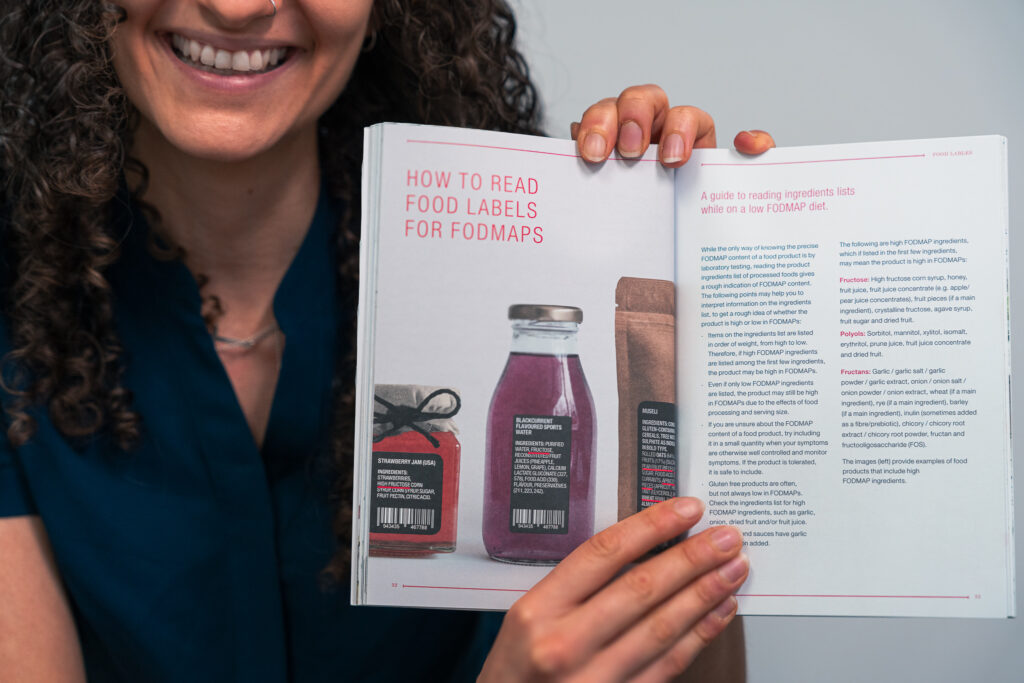
Understanding IBS dietitian
Irritable bowel syndrome (IBS) often responds well to dietary change, but there is no single IBS diet that suits everyone. Your dietitian works out which foods, portions and eating patterns are driving your symptoms, then builds a plan around them.
For many people, it starts with reducing or eliminating certain common triggers (fibre type, meal timing, caffeine, alcohol and stress) which can be enough to help ease symptoms. Some people need a structured low FODMAP program: a short elimination phase, then planned reintroduction to identify their personal triggers.
Who does it affect?
adults and teenagers of any age, more commonly women.
How common is it?
IBS affects around 4.4% and 13% of Australian adults (https://www.racgp.org.au/check/check-issues/2022/digestive-conditions).
What is the recovery like?
symptom control varies between people, and most plans are adjusted over several appointments.
Who should I see for treatment?
an Accredited Practising Dietitian.
What funding options are available?
Medicare, NDIS, DVA and private health funds accepted.
What is an IBS diet?
An IBS diet is a targeted eating plan used to reduce the pain, bloating and bowel changes that come with irritable bowel syndrome. It is not a permanent list of banned foods.
IBS occurs when you have a gut that is more sensitive than usual to stretching, gas and normal digestive signals. Certain carbohydrates, called FODMAPs, ferment in the bowel and draw in water, which produces gas and pressure. In a sensitive gut, that pressure often registers as pain.
Common contributing factors include:
FODMAPs in foods such as onion, garlic, wheat, legumes, apples, milk and some sweeteners
the amount and type of fibre you eat, particularly a sudden increase
large meals, skipped meals or long gaps between eating
caffeine, spice, alcohol and high-fat meals
stress, poor sleep and the gut-brain connection
a gut infection, course of antibiotics or period of illness
Symptoms of IBS dietitian
IBS usually shows up as a pattern rather than a one-off episode:
abdominal pain or cramping that eases after a bowel motion
bloating and visible abdominal distension, often worse as the day goes on
diarrhoea, constipation, or a swing between the two
wind, urgency, or the feeling that you have not finished
nausea, reflux or early fullness after small meals
fatigue and low mood alongside the gut symptoms
Your plan comes out of the assessment, not off a template
What to expect at your first appointment
Tell us what is going on
You describe your symptoms, your bowel pattern, what you have already cut out, and how it is affecting work, travel and eating out.
A full assessment
Your dietitian reviews your usual intake, fibre and fluid, medications, test results and any diagnoses your GP has made or excluded.
A clear plan
You leave with a written plan: what to change first, what to keep eating, how to record symptoms, and what to expect over the coming weeks.
Review and adjust
At follow-up you go through what changed, then move into reintroduction or adjust the plan so your diet stays as broad as possible.
When to book an appointment
your gut symptoms have persisted for more than three months
bloating, pain or urgency is affecting work, sport, travel or social plans
you have cut out foods on your own and symptoms have not improved
you are unsure whether your triggers are real or coincidental
Book an assessment if:
Looking after yourself at home
These general steps often help while you wait for your appointment:
FODMAPs in foods such as onion, garlic, wheat, legumes, apples, milk and some sweeteners
the amount and type of fibre you eat, particularly a sudden increase
large meals, skipped meals or long gaps between eating
caffeine, spice, alcohol and high-fat meals
stress, poor sleep and the gut-brain connection
a gut infection, course of antibiotics or period of illness

Meet the team who treat this
Behind every appointment is a team of practitioners who know each other, trust each other and work together for you. Across seven clinics and nine disciplines, our team shares expertise, coordinates treatment plans and celebrates your progress together.

Aimee Fuller
Healthcare Support Officer
Available at Blaxland

Alicia Whiticker
Healthcare Support Officer
Available at Blaxland

Amanda Banks
Healthcare Support Officer
Available at Blaxland

Amanda Duggan
Healthcare Support Officer
Available at Blaxland
Amy Meekings
Healthcare Support Officer
Available at Blaxland

Anita Beerapu
Healthcare Support Officer
Available at Blaxland
Benjamin Tucker
Healthcare Support Officer
Available at Blaxland

Blake Cossar
Healthcare Support Officer
Available at Blaxland

Bronte Tupper
Healthcare Support Officer
Available at Blaxland

Chris Farrugia
Healthcare Support Officer
Available at Blaxland

Corrina Aitken
Healthcare Support Officer
Available at Blaxland

David Logue
Healthcare Support Officer
Available at Blaxland

Dean Gresser
Healthcare Support Officer
Available at Blaxland
Emma Nassif
Healthcare Support Officer
Available at Blaxland

Esha Sharma
Healthcare Support Officer
Available at Blaxland

Fatima Hussaini
Healthcare Support Officer
Available at Blaxland

Felicity Spencer-Davey
Healthcare Support Officer
Available at Blaxland

Frankie Raikadroka
Healthcare Support Officer
Available at Blaxland
Hannah Norrie
Healthcare Support Officer
Available at Blaxland
Heather Edwards
Healthcare Support Officer
Available at Blaxland

Isaac Vella
Healthcare Support Officer
Available at Blaxland
Jarrah Nesbitt
Healthcare Support Officer
Available at Blaxland

Jonathan Lopez
Healthcare Support Officer
Available at Blaxland

Justin Hanna
Healthcare Support Officer
Available at Blaxland

Kasey Collins
Healthcare Support Officer
Available at Blaxland

Katrina Gauci
Healthcare Support Officer
Available at Blaxland
Kennedy Touet
Healthcare Support Officer
Available at Blaxland

Kristy Edwards
Healthcare Support Officer
Available at Blaxland

Kyle Perry
Healthcare Support Officer
Available at Blaxland
Lorna Nicastri
Healthcare Support Officer
Available at Blaxland

Maja Bosic
Healthcare Support Officer
Available at Blaxland

Marxy Koronel
Healthcare Support Officer
Available at Blaxland

Matt Barton
Healthcare Support Officer
Available at Blaxland

Michael Todd
Healthcare Support Officer
Available at Blaxland

Mr Jeffery Jenkins FACPS
Healthcare Support Officer
Available at Blaxland

Nathan Cavanagh
Healthcare Support Officer
Available at Blaxland

Patrick Celeban
Healthcare Support Officer
Available at Blaxland

Praise Khin
Healthcare Support Officer
Available at Blaxland

Sarah Bonnici
Healthcare Support Officer
Available at Blaxland

Shannon Smith
Healthcare Support Officer
Available at Blaxland
Siobhan Kelly
Healthcare Support Officer
Available at Blaxland
Taleisha Bozzi
Healthcare Support Officer
Available at Blaxland

Trystan Singh
Healthcare Support Officer
Available at Blaxland

Uty Kotwal
Healthcare Support Officer
Available at Blaxland

Yoni Hochberg
Healthcare Support Officer
Available at Blaxland

Zak Lloyd
Healthcare Support Officer
Available at Blaxland
EPC, DVA, NDIS and WorkCover welcome
Nearly half of our appointments are funded through Medicare, DVA, NDIS or WorkCover. We manage the paperwork so you can focus on your health.


NDIS
We support eligible NDIS participants across podiatry, physiotherapy, exercise physiology, dietetics and psychology, depending on your plan and goals. Eligibility and funding are set by your plan.

Medicare
Medicare may rebate podiatry, physiotherapy, exercise physiology and dietetics sessions when your GP refers you under an Enhanced Primary Care (EPC) or Chronic Disease Management (CDM) plan, and psychology sessions under a Mental Health Care Plan. The number of sessions is set by your plan.

DVA
Gold and White card holders can access DVA-funded care across our services with a valid referral.

WorkCover
If you have been injured at work, we accept WorkCover referrals for physiotherapy, exercise physiology and psychology, and manage the paperwork with your insurer, with a clear return-to-work plan.
Seven clinics across three regions
Find a clinic near you. Each location is staffed by local practitioners who know your community.
Penrith
Western SydneyOur largest centre, with our full range of services under one roof.
Ropes Crossing
Western SydneyPodiatry, at Ropes Crossing Village.
Blaxland
Blue MountainsPodiatry, physiotherapy, exercise physiology and group classes.
Springwood
Blue MountainsPodiatry, dietetics and a boutique footwear store.
Katoomba
Blue MountainsPodiatry, physiotherapy and dietetics, in a restored 1914 cottage.
Ryde
North ShorePodiatry, physiotherapy, dietetics and exercise physiology, with a footwear store and gait analysis.
Lindfield
North ShorePodiatry, with mobile podiatry across the North Shore and Northern Beaches.
Ready to stop guessing what to eat?
Book with a dietitian and get an IBS plan built around your symptoms, not a generic food list.















Frequently asked questions
Do I need a diagnosis before changing my diet for IBS?
Not necessary but it can help. See your GP first. Coeliac disease, inflammatory bowel disease and some infections cause similar symptoms and need different treatment. Coeliac testing in particular must be done while you are still eating gluten, so starting a restricted diet early can make the result unreliable. Once other causes are excluded, dietary treatment for IBS is safe and effective to begin.
Is the low FODMAP diet meant to be permanent?
No. The elimination phase typically runs for two to six weeks, long enough to see whether symptoms settle. After that you reintroduce foods one group at a time to find your personal thresholds. Staying in the elimination phase long term narrows your diet unnecessarily, can reduce nutrient intake, and may reduce the diversity of bacteria in your bowel.
Does fibre help IBS or make it worse?
It depends on the type. Soluble fibre, found in oats, psyllium, chia and citrus, holds water and often improves both constipation and diarrhoea. Insoluble fibre, such as wheat bran and raw vegetable skins, adds bulk and can increase bloating and pain in a sensitive gut. The amount matters too: gradual increases are tolerated far better than sudden ones.
Are probiotics useful for IBS?
Some are, but the effect is strain-specific rather than general. Certain strains have evidence for reducing bloating or overall symptom scores, while many supermarket products have not been tested in IBS at all. A four-week trial of one product at a time, with symptoms recorded, tells you more than switching between brands. Your dietitian can help you choose and evaluate one.
Do I need to avoid gluten if I do not have coeliac disease?
Usually not. Many people who feel better without wheat are reacting to fructans, a FODMAP found in wheat, rye, onion and garlic, rather than to gluten itself. That distinction matters because sourdough, spelt and small portions of wheat are often tolerated. Testing this properly during reintroduction can return bread and pasta to your diet.
Can I follow a low FODMAP diet as a vegetarian or vegan?
Yes, with planning. Legumes are a core protein source and also high in FODMAPs, but canned and rinsed chickpeas or lentils are tolerated in small portions, and firm tofu, tempeh, eggs, quinoa and nuts fill the gap. Protein, iron, calcium and B12 need checking during the elimination phase, which is why supervision matters more for plant-based eaters.