

Ingrown toenail surgery
Sort out the toe that hurts every time you put a shoe on
The side of your toenail digs into the skin, the toe throbs inside your shoe, and it comes back weeks after every trim. Ingrown toenails are treatable, and a short procedure in the clinic can deal with the nail edge causing the problem.
Medicare, NDIS, DVA and private health funds accepted.
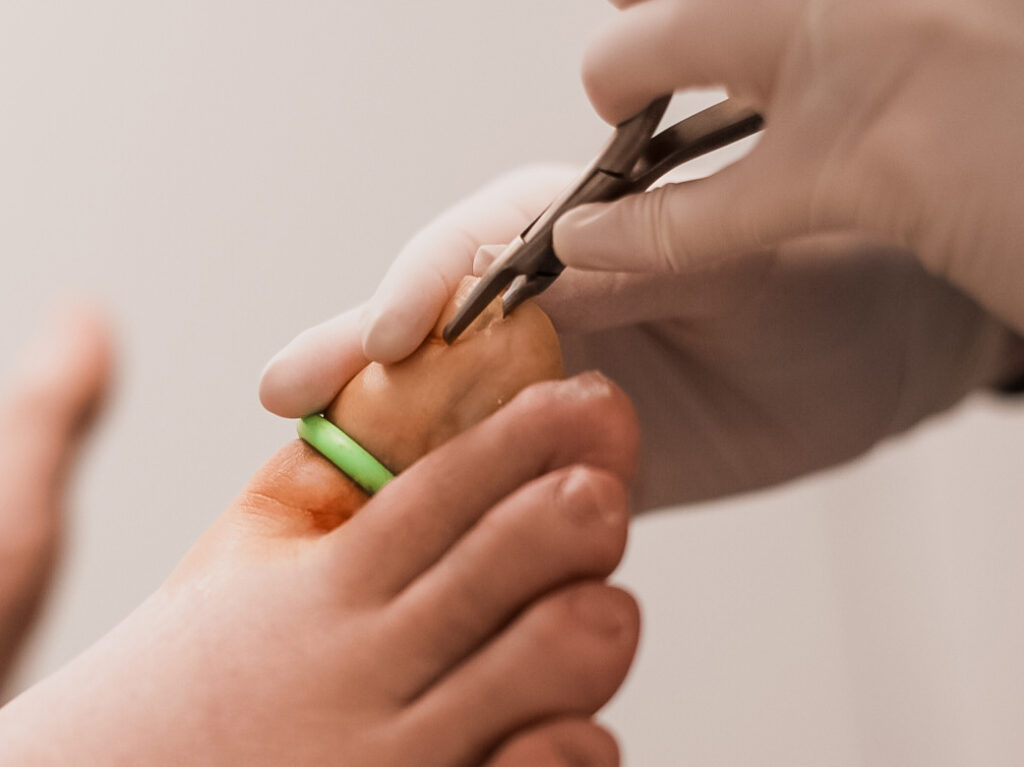
Understanding Ingrown toenail surgery
An ingrown toenail happens when the edge or corner of the nail grows into the skin beside it. Ingrown toenail surgery is a minor procedure your podiatrist performs in the clinic, under local anaesthetic, to remove the strip of nail that keeps pressing into the skin.
Not every ingrown toenail needs a procedure. A first episode often settles once the nail spike is removed and the nail fold is cleared. Surgery is for the toe that keeps returning, or the one that is too painful to treat any other way.
Who does it affect?
most common in teenagers and adults through to their thirties, and again in older adults with thicker nails.
How common is it?
one of the most frequent reasons people see a podiatrist for toe pain.
What is the recovery like?
you walk out the same day in an open or roomy shoe, and healing time varies from person to person.
Who should I see for treatment?
your podiatrist, with your GP involved if antibiotics are needed.
What funding options are available?
Medicare, NDIS, DVA and private health funds accepted.
What is ingrown toenail surgery?
Ingrown toenail surgery is a small in-clinic procedure that removes the section of nail growing into the skin. The medical name for the condition is onychocryptosis. The procedure is done with local anaesthetic, so the toe is numb and you stay awake the whole time.
Most ingrown toenails start with a tiny spike of nail left behind at the corner. As the nail grows forward, that spike pierces the skin fold beside it. The body treats the nail like a splinter, so you get pain, swelling and sometimes infection. Trimming the corner gives short-term relief, then the cycle repeats.
Things that make an ingrown toenail more likely include:
Nail shape: nails that curve sharply at the edges press into the skin as they grow.
Cutting technique: rounding the corners or picking at the side leaves a spike behind.
Footwear pressure: narrow shoes, football boots and tight socks push skin against the nail.
Moisture: sweaty feet soften the skin, so a sharp nail edge breaks through more easily.
Trauma: stubbing the toe or repeated impact in sport can change how the nail grows.
Nail thickening: a damaged or thickened nail sits differently in the nail fold.
Symptoms of Ingrown toenail surgery
Pain along one or both sides of the nail, worse with pressure from shoes.
Redness and swelling in the skin fold beside the nail.
A sharp edge or spike of nail you can feel under the skin.
Clear fluid, pus or bleeding from the side of the nail.
Lumpy overgrown tissue at the nail edge, known as hypergranulation.
Throbbing at night, or when your feet are warm.
Your plan comes out of the assessment, not off a list
What to expect at your first appointment
Tell us what's going on
How long the toe has been painful, what you have already tried, and whether it has been infected before.
A full assessment
Your podiatrist examines the nail and skin fold, checks circulation and sensation in the foot, and looks at your footwear.
A clear plan
You find out whether the nail can be cleared conservatively or whether a procedure is the better option, and what each involves.
Review and adjust
If you have the procedure, you come back for dressing changes and a healing check, and your plan changes if the toe needs it.
When to book an appointment
Pain beside the nail has lasted more than two weeks.
The toe hurts in closed shoes, or it is affecting work, walking or sport.
You have cut the corner out yourself and it keeps coming back.
You are not sure whether the toe is ingrown, infected or something else.
Book an assessment if:
Looking after yourself at home
These steps help while you wait for your appointment, and after a procedure.
Nail shape: nails that curve sharply at the edges press into the skin as they grow.
Cutting technique: rounding the corners or picking at the side leaves a spike behind.
Footwear pressure: narrow shoes, football boots and tight socks push skin against the nail.
Moisture: sweaty feet soften the skin, so a sharp nail edge breaks through more easily.
Trauma: stubbing the toe or repeated impact in sport can change how the nail grows.
Nail thickening: a damaged or thickened nail sits differently in the nail fold.

Meet the team who treat this
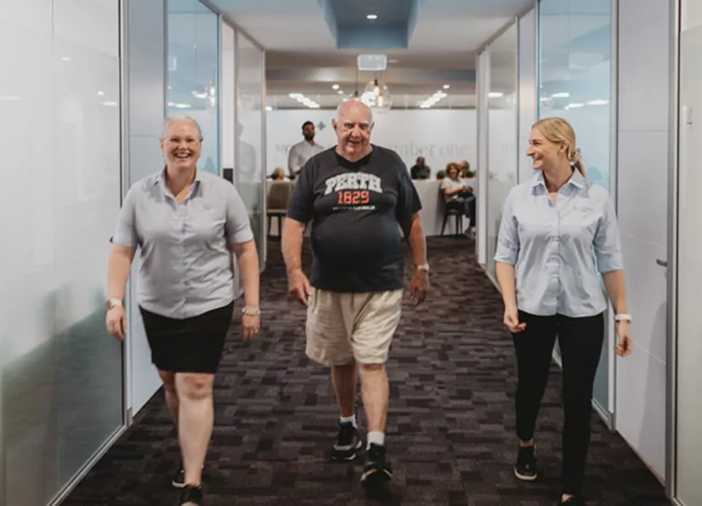
Behind every appointment is a team of practitioners who know each other, trust each other and work together for you. Across seven clinics and nine disciplines, our team shares expertise, coordinates treatment plans and celebrates your progress together.

Aimee Fuller
Healthcare Support Officer
Available at Blaxland

Alicia Whiticker
Healthcare Support Officer
Available at Blaxland

Amanda Banks
Healthcare Support Officer
Available at Blaxland

Amanda Duggan
Healthcare Support Officer
Available at Blaxland

Amy Meekings
Healthcare Support Officer
Available at Blaxland

Anita Beerapu
Healthcare Support Officer
Available at Blaxland

Benjamin Tucker
Healthcare Support Officer
Available at Blaxland

Blake Cossar
Healthcare Support Officer
Available at Blaxland

Bronte Tupper
Healthcare Support Officer
Available at Blaxland

Chris Farrugia
Healthcare Support Officer
Available at Blaxland

Corrina Aitken
Healthcare Support Officer
Available at Blaxland

David Logue
Healthcare Support Officer
Available at Blaxland

Dean Gresser
Healthcare Support Officer
Available at Blaxland

Emma Nassif
Healthcare Support Officer
Available at Blaxland

Esha Sharma
Healthcare Support Officer
Available at Blaxland

Fatima Hussaini
Healthcare Support Officer
Available at Blaxland

Felicity Spencer-Davey
Healthcare Support Officer
Available at Blaxland

Frankie Raikadroka
Healthcare Support Officer
Available at Blaxland

Hannah Norrie
Healthcare Support Officer
Available at Blaxland

Heather Edwards
Healthcare Support Officer
Available at Blaxland

Isaac Vella
Healthcare Support Officer
Available at Blaxland

Jarrah Nesbitt
Healthcare Support Officer
Available at Blaxland

Jonathan Lopez
Healthcare Support Officer
Available at Blaxland

Justin Hanna
Healthcare Support Officer
Available at Blaxland

Kasey Collins
Healthcare Support Officer
Available at Blaxland

Katrina Gauci
Healthcare Support Officer
Available at Blaxland

Kennedy Touet
Healthcare Support Officer
Available at Blaxland

Kristy Edwards
Healthcare Support Officer
Available at Blaxland

Kyle Perry
Healthcare Support Officer
Available at Blaxland

Lorna Nicastri
Healthcare Support Officer
Available at Blaxland

Maja Bosic
Healthcare Support Officer
Available at Blaxland

Marxy Koronel
Healthcare Support Officer
Available at Blaxland

Matt Barton
Healthcare Support Officer
Available at Blaxland

Michael Todd
Healthcare Support Officer
Available at Blaxland

Mr Jeffery Jenkins FACPS
Healthcare Support Officer
Available at Blaxland

Nathan Cavanagh
Healthcare Support Officer
Available at Blaxland

Patrick Celeban
Healthcare Support Officer
Available at Blaxland

Praise Khin
Healthcare Support Officer
Available at Blaxland

Sarah Bonnici
Healthcare Support Officer
Available at Blaxland

Shannon Smith
Healthcare Support Officer
Available at Blaxland

Siobhan Kelly
Healthcare Support Officer
Available at Blaxland

Taleisha Bozzi
Healthcare Support Officer
Available at Blaxland

Trystan Singh
Healthcare Support Officer
Available at Blaxland

Uty Kotwal
Healthcare Support Officer
Available at Blaxland

Yoni Hochberg
Healthcare Support Officer
Available at Blaxland

Zak Lloyd
Healthcare Support Officer
Available at Blaxland
EPC, DVA, NDIS and WorkCover welcome
Nearly half of our appointments are funded through Medicare, DVA, NDIS or WorkCover. We manage the paperwork so you can focus on your health.


NDIS
We support eligible NDIS participants across podiatry, physiotherapy, exercise physiology, dietetics and psychology, depending on your plan and goals. Eligibility and funding are set by your plan.

Medicare
Medicare may rebate podiatry, physiotherapy, exercise physiology and dietetics sessions when your GP refers you under an Enhanced Primary Care (EPC) or Chronic Disease Management (CDM) plan, and psychology sessions under a Mental Health Care Plan. The number of sessions is set by your plan.

DVA
Gold and White card holders can access DVA-funded care across our services with a valid referral.

WorkCover
If you have been injured at work, we accept WorkCover referrals for physiotherapy, exercise physiology and psychology, and manage the paperwork with your insurer, with a clear return-to-work plan.
Seven clinics across three regions
Find a clinic near you. Each location is staffed by local practitioners who know your community.
Penrith
Western SydneyOur largest centre, with our full range of services under one roof.
Ropes Crossing
Western SydneyPodiatry, at Ropes Crossing Village.
Blaxland
Blue MountainsPodiatry, physiotherapy, exercise physiology and group classes.
Springwood
Blue MountainsPodiatry, dietetics and a boutique footwear store.
Katoomba
Blue MountainsPodiatry, physiotherapy and dietetics, in a restored 1914 cottage.
Ryde
North ShorePodiatry, physiotherapy, dietetics and exercise physiology, with a footwear store and gait analysis.
Lindfield
North ShorePodiatry, with mobile podiatry across the North Shore and Northern Beaches.
Ready to deal with that ingrown toenail?
Book a podiatry assessment and find out whether your toe needs a procedure or simple nail care.
















Frequently asked questions
Will the nail grow back after ingrown toenail surgery?
The treated strip of nail is not designed to grow back, because phenol treats the growth cells that produce it. The rest of the nail keeps growing normally, so the toe looks slightly narrower rather than bare. A small amount of regrowth happens in a minority of cases, which is one reason your podiatrist reviews the toe as it heals. Regrowth can be retreated if it occurs.
How long will I need off work, school or sport?
Most people return to desk work or school within a day or two, wearing an open or roomy shoe. Jobs that involve steel-cap boots, long periods standing or wet environments usually need longer. Swimming, sand and contact sport wait until the wound has closed. Your podiatrist gives you a return date at your review rather than at the procedure itself.
Can I have both toes treated at the same appointment?
Yes, both big toes, or more than one nail edge, can often be treated in the same visit. Your podiatrist will talk through whether that is sensible for you, since doing both at once means both feet are dressed and you may find walking more awkward for the first day. Appointment length and cost differ when more than one toe is treated.
Do I need a referral from my GP?
No referral is needed to see a podiatrist. You can book directly and claim through private health extras if you have that cover. A referral matters only for specific funding pathways, such as a Chronic Disease Management plan through Medicare, DVA or an NDIS plan. Bring any relevant paperwork with you so the front desk can check what applies.
Is ingrown toenail surgery safe if I have diabetes or poor circulation?
It can be, but the assessment is more detailed. Your podiatrist checks blood flow and nerve sensation in the foot before deciding, because both affect wound healing. In some cases the safer path is conservative nail care with closer monitoring, or coordinating with your GP or a high-risk foot service before any procedure. If surgery goes ahead, dressing checks are scheduled more frequently until the toe has fully healed.
Can I drive and wear normal shoes after the procedure?
Plan not to drive yourself home. The anaesthetic leaves the toe numb for a few hours, which can affect pedal feel, and the toe is dressed with a bulky bandage on the day. Bring an open-toed shoe or sandal for the trip home. Most people are back in roomy enclosed shoes within days, guided by comfort and your podiatrist’s dressing advice.
And the ACF block: