

Injury prevention & sports performance
Stay in your sport instead of rehabbing it
You keep getting the same niggle every season, and you are tired of stopping and starting. Injury risk can be measured, trained and lowered.
Medicare, NDIS, DVA and private health funds accepted.
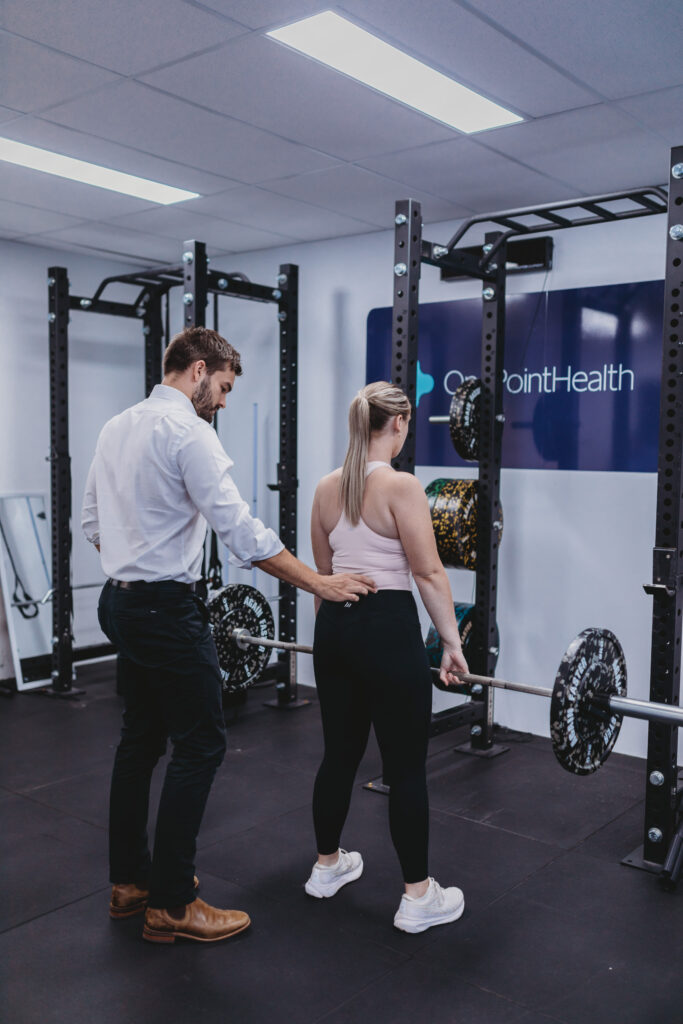
Understanding Injury prevention
Injury prevention means finding the weak links in your body and your training before they turn into an injury. It covers strength, movement quality, training load and recovery, not just a quick stretch before sport.
Most injuries in sport, the gym and physical work build up over weeks. When the load you put through a tissue outgrows what that tissue can handle, it starts to complain. A structured plan can lower your risk and usually lets you keep training while you work on it.
Who does it affect?
runners, team sport players, gym-goers, tradespeople and anyone returning to exercise after time off.
How common is it?
sport and active recreation injuries account for a large share of Australian injury presentations each year [CONFIRM: current AIHW sports injury figure].
What is the recovery like?
prevention programs often run in blocks of 6 to 12 weeks, then continue as maintenance work.
Who should I see for treatment?
physiotherapists and exercise physiologists.
What funding options are available?
Medicare, NDIS, DVA and private health funds accepted.
What causes most training injuries?
An injury happens when the force going through a muscle, tendon, bone or joint is more than that structure can currently tolerate. Some injuries are sudden, like a rolled ankle or a hamstring tear at full sprint. Many others build quietly over weeks of training.
The usual pattern looks like this. Your training jumps in volume, intensity or surface, your body does not get enough recovery time between sessions, and a small niggle appears. You train through it, the tissue keeps loading up, and eventually it limits you.
Common contributing factors include:
Rapid jumps in training load, such as adding distance, speed or heavy sessions too quickly
Low strength or capacity in a key muscle group, often calves, hips, glutes, hamstrings or shoulders
A previous injury that was never fully rehabilitated, which leaves lasting strength and control gaps
Poor sleep, high life stress and under-fuelling, all of which slow tissue recovery
Sudden changes in equipment, footwear, playing surface or technique
Long periods of sitting or heavy manual work stacked on top of training
Symptoms of Injury prevention
Injuries rarely arrive without notice. These are the signals that your body is close to its limit:
A niggle that turns up at the same point in every run, game or session
Pain or stiffness that is worse the morning after training than during it
One side feeling noticeably weaker, less stable or less coordinated than the other
Swelling in a joint after training, even if it settles overnight
Needing a longer warm-up each week before the area feels normal
Technique changing under fatigue, such as a limp late in a session
Your program is built from what your assessment shows, not from a generic checklist.
What to expect at your first appointment
Tell us what is going on
Your training week, your sport or job, past injuries, current niggles and what you are aiming for.
A full assessment
Your physiotherapist or exercise physiologist tests strength, range of motion, mobility, balance and how you move under load, then compares left to right.
A clear plan
You leave with a short list of exercises, target numbers to aim for and specific guidance on how to adjust your training in the next few weeks.
Review and adjust
We retest the same measures so you can see what has changed, and progress the program as your capacity improves.
When to book an appointment
A niggle has hung around for more than two weeks without improving
Pain is changing how you train, play or work, even slightly
Rest, stretching and foam rolling have not fixed a recurring problem
You are unsure whether to push through, modify or stop
Book an assessment if:
Looking after yourself at home
These habits support your program between appointments.
Rapid jumps in training load, such as adding distance, speed or heavy sessions too quickly
Low strength or capacity in a key muscle group, often calves, hips, glutes, hamstrings or shoulders
A previous injury that was never fully rehabilitated, which leaves lasting strength and control gaps
Poor sleep, high life stress and under-fuelling, all of which slow tissue recovery
Sudden changes in equipment, footwear, playing surface or technique
Long periods of sitting or heavy manual work stacked on top of training

Meet the team who treat this
Behind every appointment is a team of practitioners who know each other, trust each other and work together for you. Across seven clinics and nine disciplines, our team shares expertise, coordinates treatment plans and celebrates your progress together.

Aimee Fuller
Healthcare Support Officer
Available at Blaxland

Alicia Whiticker
Healthcare Support Officer
Available at Blaxland

Amanda Banks
Healthcare Support Officer
Available at Blaxland

Amanda Duggan
Healthcare Support Officer
Available at Blaxland

Amy Meekings
Healthcare Support Officer
Available at Blaxland

Anita Beerapu
Healthcare Support Officer
Available at Blaxland

Benjamin Tucker
Healthcare Support Officer
Available at Blaxland

Blake Cossar
Healthcare Support Officer
Available at Blaxland

Bronte Tupper
Healthcare Support Officer
Available at Blaxland

Chris Farrugia
Healthcare Support Officer
Available at Blaxland

Corrina Aitken
Healthcare Support Officer
Available at Blaxland

David Logue
Healthcare Support Officer
Available at Blaxland

Dean Gresser
Healthcare Support Officer
Available at Blaxland

Emma Nassif
Healthcare Support Officer
Available at Blaxland

Esha Sharma
Healthcare Support Officer
Available at Blaxland

Fatima Hussaini
Healthcare Support Officer
Available at Blaxland

Felicity Spencer-Davey
Healthcare Support Officer
Available at Blaxland

Frankie Raikadroka
Healthcare Support Officer
Available at Blaxland

Hannah Norrie
Healthcare Support Officer
Available at Blaxland

Heather Edwards
Healthcare Support Officer
Available at Blaxland

Isaac Vella
Healthcare Support Officer
Available at Blaxland

Jarrah Nesbitt
Healthcare Support Officer
Available at Blaxland

Jonathan Lopez
Healthcare Support Officer
Available at Blaxland

Justin Hanna
Healthcare Support Officer
Available at Blaxland

Kasey Collins
Healthcare Support Officer
Available at Blaxland

Katrina Gauci
Healthcare Support Officer
Available at Blaxland

Kennedy Touet
Healthcare Support Officer
Available at Blaxland

Kristy Edwards
Healthcare Support Officer
Available at Blaxland

Kyle Perry
Healthcare Support Officer
Available at Blaxland

Lorna Nicastri
Healthcare Support Officer
Available at Blaxland

Maja Bosic
Healthcare Support Officer
Available at Blaxland

Marxy Koronel
Healthcare Support Officer
Available at Blaxland

Matt Barton
Healthcare Support Officer
Available at Blaxland

Michael Todd
Healthcare Support Officer
Available at Blaxland

Mr Jeffery Jenkins FACPS
Healthcare Support Officer
Available at Blaxland

Nathan Cavanagh
Healthcare Support Officer
Available at Blaxland

Patrick Celeban
Healthcare Support Officer
Available at Blaxland

Praise Khin
Healthcare Support Officer
Available at Blaxland

Sarah Bonnici
Healthcare Support Officer
Available at Blaxland

Shannon Smith
Healthcare Support Officer
Available at Blaxland

Siobhan Kelly
Healthcare Support Officer
Available at Blaxland

Taleisha Bozzi
Healthcare Support Officer
Available at Blaxland

Trystan Singh
Healthcare Support Officer
Available at Blaxland

Uty Kotwal
Healthcare Support Officer
Available at Blaxland

Yoni Hochberg
Healthcare Support Officer
Available at Blaxland

Zak Lloyd
Healthcare Support Officer
Available at Blaxland
EPC, DVA, NDIS and WorkCover welcome
Nearly half of our appointments are funded through Medicare, DVA, NDIS or WorkCover. We manage the paperwork so you can focus on your health.


NDIS
We support eligible NDIS participants across podiatry, physiotherapy, exercise physiology, dietetics and psychology, depending on your plan and goals. Eligibility and funding are set by your plan.

Medicare
Medicare may rebate podiatry, physiotherapy, exercise physiology and dietetics sessions when your GP refers you under an Enhanced Primary Care (EPC) or Chronic Disease Management (CDM) plan, and psychology sessions under a Mental Health Care Plan. The number of sessions is set by your plan.

DVA
Gold and White card holders can access DVA-funded care across our services with a valid referral.

WorkCover
If you have been injured at work, we accept WorkCover referrals for physiotherapy, exercise physiology and psychology, and manage the paperwork with your insurer, with a clear return-to-work plan.
Seven clinics across three regions
Find a clinic near you. Each location is staffed by local practitioners who know your community.
Penrith
Western SydneyOur largest centre, with our full range of services under one roof.
Ropes Crossing
Western SydneyPodiatry, at Ropes Crossing Village.
Blaxland
Blue MountainsPodiatry, physiotherapy, exercise physiology and group classes.
Springwood
Blue MountainsPodiatry, dietetics and a boutique footwear store.
Katoomba
Blue MountainsPodiatry, physiotherapy and dietetics, in a restored 1914 cottage.
Ryde
North ShorePodiatry, physiotherapy, dietetics and exercise physiology, with a footwear store and gait analysis.
Lindfield
North ShorePodiatry, with mobile podiatry across the North Shore and Northern Beaches.
Ready to stop the same injury coming back?
Book an assessment and get a plan built around your sport, your training week and your history.
















Frequently asked questions
Can injuries actually be prevented, or only made less likely?
Injury prevention lowers your risk; it does not remove it. Contact, collisions and bad luck cannot be trained away. What can change is your capacity, so research on structured strength and neuromuscular programs shows meaningful reductions in injury rates across several sports. A good program also means that when something does happen, you tend to be better prepared for rehabilitation.
How much should I increase my training each week?
Small, single changes are safer than big, combined ones. Many practitioners work from roughly a 10 per cent weekly increase in volume as a starting reference point, then adjust it based on how you respond. What matters more is consistency: two or three steady weeks followed by an easier week usually beats a sharp spike, then a forced break.
What is the difference between physiotherapy and exercise physiology here?
Your physiotherapist focuses on diagnosis, hands-on treatment and rehabilitating specific injuries or joints. Your exercise physiologist focuses on building capacity through longer-term, structured exercise programs, often alongside health conditions such as diabetes or heart disease. Many prevention plans use both: physiotherapy to sort out the problem area, exercise physiology to build and maintain the strength that keeps it settled.
Does sleep or nutrition really change my injury risk?
Yes. Tissue repair and adaptation happen mostly during rest, so short sleep and under-fuelling leave you starting each session less recovered than you should be. Studies in athletes link low sleep and low energy availability with higher injury rates. If your training load is climbing, your food and sleep need to climb with it rather than stay flat.
When should teenagers start injury prevention work?
Around the time training becomes regular and structured, often in the early high school years. Growing athletes carry particular risks: growth plates are still developing, limb length changes quickly, and training loads can jump when they join representative teams. Programs at this age focus on movement quality, landing and running mechanics and light, well-supervised strength work rather than heavy lifting.
How much time does a prevention program take each week?
Usually less than people expect. Most programs run 20 to 30 minutes, two to three times a week, and much of it can be folded into the warm-up you already do before training or games. Once the initial build phase is done, a smaller maintenance dose holds the benefit. Your practitioner designs it around the time you will actually give it, because the program you do beats the perfect one you skip.