

Lower back pain
Find out what is driving your lower back pain, and what to do about it
Your back has locked up, sitting has become a chore, and you are bracing every time you bend. Lower back pain is common, it usually has a clear driver, and it responds well to treatment.
Medicare, NDIS, DVA and private health funds accepted.
Understanding Lower back pain
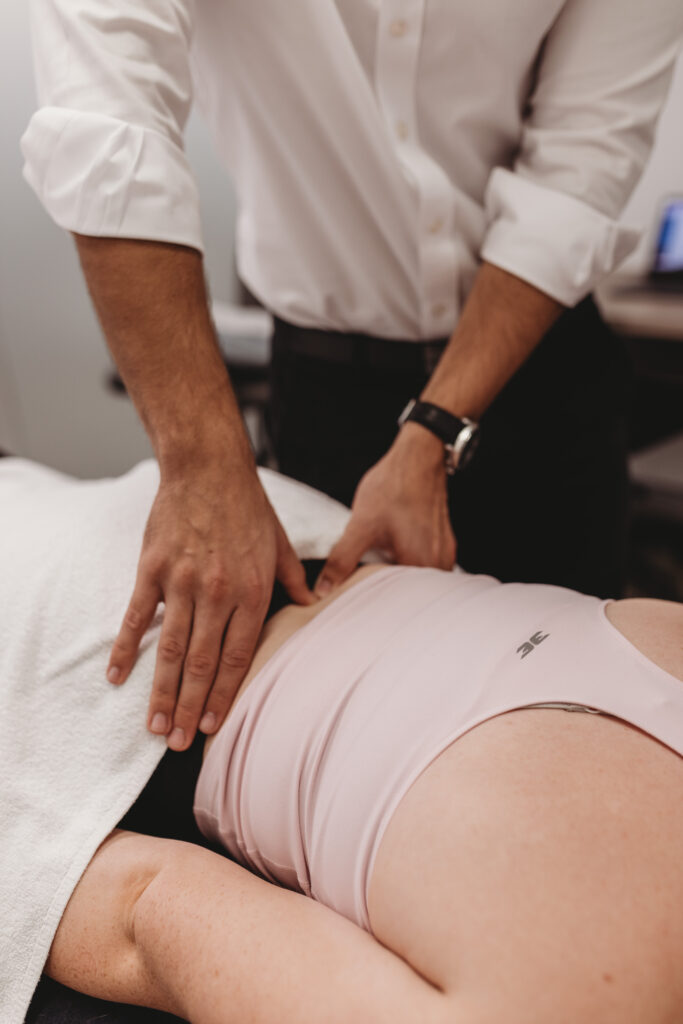
Lower back pain is pain felt anywhere between the bottom of your ribs and the top of your buttocks. It can come on suddenly after lifting or twisting, or build slowly over weeks with no obvious trigger. Most of the time it comes from the joints, discs, muscles and nerves of the lower back, which are all sensitive to load, posture and sudden change.
Because several structures can produce a similar pain, the useful question is not what the pain is called but what is provoking it. That is what an assessment answers, and it is what your treatment plan is built on.
Who does it affect?
adults of every age, including people with desk jobs, physical jobs, new parents and athletes
How common is it?
back problems affect around one in six Australians [CONFIRM: ABS National Health Survey figure]
What is the recovery like?
varies; many acute episodes settle within weeks, while long-standing pain takes a staged approach
Who should I see for treatment?
physiotherapists and chiropractors, with referral to other services where needed
What funding options are available?
Medicare, NDIS, DVA and private health funds accepted
What causes lower back pain?
Your lower back is a stack of five vertebrae, separated by discs, joined at the back by small facet joints, and supported by muscles and ligaments. Nerves exit between each level and travel into your hips and legs. Pain starts when one of those structures is loaded more than it can currently tolerate, or when it has been held in one position for too long.
Sometimes there is an obvious moment: a heavy lift, an awkward twist, a fall. More often the pain builds. Long hours seated, a sudden jump in training, poor sleep and periods of high stress all reduce how much load your back handles comfortably. The pain then arrives during an ordinary movement, which is why so many people say it happened when they bent to pick up a sock.
Common contributing factors include:
Sustained postures, especially prolonged sitting, driving or bending at work
A rapid increase in lifting, training volume or physical work
Reduced strength and endurance in the hip, trunk and back muscles
Previous episodes of back pain, which raise the chance of another one
Age-related disc and joint changes, which are normal and often painless
Stress, low mood and disrupted sleep, which change how sensitive your nervous system is
Symptoms of Lower back pain
Lower back pain presents in different patterns, and the pattern matters more than the intensity.
Aching, stiffness or a band of tightness across the lower back
Sharp, catching pain with bending, twisting or standing up from a chair
Pain and stiffness that is worst in the first 20 to 30 minutes of the morning
Pain that builds through the day with sitting or standing, and eases when you change position
Muscle spasm that makes you hold yourself to one side
Difficulty getting comfortable in bed or rolling over
Your plan comes out of the assessment, not out of a template
What to expect at your first appointment
Tell us what is going on
When the pain started, what you were doing, what makes it worse and better, and what it is stopping you doing at work, at home or in sport.
A full assessment
We check how your spine and hips move, test strength and nerve function where relevant, and screen for anything that needs medical review or imaging.
A clear plan
You leave knowing what is driving your pain, what treatment involves, what you can do between visits, and roughly how often you need to come in.
Review and adjust
At each visit we retest the movements that hurt, track your progress against what matters to you, and change the plan as your back improves.
When to book an appointment
Your lower back pain has lasted more than a week, or keeps returning
Pain is interfering with work, sleep, driving or training
Rest, heat and over-the-counter medication have not shifted it
You are not sure what caused it, or you are worried about doing damage
Book an assessment if:
Looking after yourself at home
These strategies suit most people with recent, uncomplicated back pain, and work alongside treatment rather than replacing it.
Sustained postures, especially prolonged sitting, driving or bending at work
A rapid increase in lifting, training volume or physical work
Reduced strength and endurance in the hip, trunk and back muscles
Previous episodes of back pain, which raise the chance of another one
Age-related disc and joint changes, which are normal and often painless
Stress, low mood and disrupted sleep, which change how sensitive your nervous system is

Meet the team who treat this
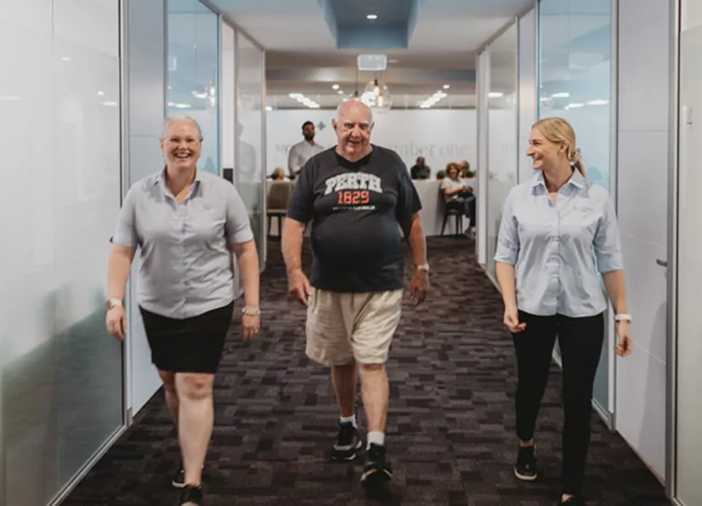
Behind every appointment is a team of practitioners who know each other, trust each other and work together for you. Across seven clinics and nine disciplines, our team shares expertise, coordinates treatment plans and celebrates your progress together.

Aimee Fuller
Healthcare Support Officer
Available at Blaxland

Alicia Whiticker
Healthcare Support Officer
Available at Blaxland

Amanda Banks
Healthcare Support Officer
Available at Blaxland

Amanda Duggan
Healthcare Support Officer
Available at Blaxland

Amy Meekings
Healthcare Support Officer
Available at Blaxland

Anita Beerapu
Healthcare Support Officer
Available at Blaxland

Benjamin Tucker
Healthcare Support Officer
Available at Blaxland

Blake Cossar
Healthcare Support Officer
Available at Blaxland

Bronte Tupper
Healthcare Support Officer
Available at Blaxland

Chris Farrugia
Healthcare Support Officer
Available at Blaxland

Corrina Aitken
Healthcare Support Officer
Available at Blaxland

David Logue
Healthcare Support Officer
Available at Blaxland

Dean Gresser
Healthcare Support Officer
Available at Blaxland

Emma Nassif
Healthcare Support Officer
Available at Blaxland

Esha Sharma
Healthcare Support Officer
Available at Blaxland

Fatima Hussaini
Healthcare Support Officer
Available at Blaxland

Felicity Spencer-Davey
Healthcare Support Officer
Available at Blaxland

Frankie Raikadroka
Healthcare Support Officer
Available at Blaxland

Hannah Norrie
Healthcare Support Officer
Available at Blaxland

Heather Edwards
Healthcare Support Officer
Available at Blaxland

Isaac Vella
Healthcare Support Officer
Available at Blaxland

Jarrah Nesbitt
Healthcare Support Officer
Available at Blaxland

Jonathan Lopez
Healthcare Support Officer
Available at Blaxland

Justin Hanna
Healthcare Support Officer
Available at Blaxland

Kasey Collins
Healthcare Support Officer
Available at Blaxland

Katrina Gauci
Healthcare Support Officer
Available at Blaxland

Kennedy Touet
Healthcare Support Officer
Available at Blaxland

Kristy Edwards
Healthcare Support Officer
Available at Blaxland

Kyle Perry
Healthcare Support Officer
Available at Blaxland

Lorna Nicastri
Healthcare Support Officer
Available at Blaxland

Maja Bosic
Healthcare Support Officer
Available at Blaxland

Marxy Koronel
Healthcare Support Officer
Available at Blaxland

Matt Barton
Healthcare Support Officer
Available at Blaxland

Michael Todd
Healthcare Support Officer
Available at Blaxland

Mr Jeffery Jenkins FACPS
Healthcare Support Officer
Available at Blaxland

Nathan Cavanagh
Healthcare Support Officer
Available at Blaxland

Patrick Celeban
Healthcare Support Officer
Available at Blaxland

Praise Khin
Healthcare Support Officer
Available at Blaxland

Sarah Bonnici
Healthcare Support Officer
Available at Blaxland

Shannon Smith
Healthcare Support Officer
Available at Blaxland

Siobhan Kelly
Healthcare Support Officer
Available at Blaxland

Taleisha Bozzi
Healthcare Support Officer
Available at Blaxland

Trystan Singh
Healthcare Support Officer
Available at Blaxland

Uty Kotwal
Healthcare Support Officer
Available at Blaxland

Yoni Hochberg
Healthcare Support Officer
Available at Blaxland

Zak Lloyd
Healthcare Support Officer
Available at Blaxland
EPC, DVA, NDIS and WorkCover welcome
Nearly half of our appointments are funded through Medicare, DVA, NDIS or WorkCover. We manage the paperwork so you can focus on your health.


NDIS
We support eligible NDIS participants across podiatry, physiotherapy, exercise physiology, dietetics and psychology, depending on your plan and goals. Eligibility and funding are set by your plan.

Medicare
Medicare may rebate podiatry, physiotherapy, exercise physiology and dietetics sessions when your GP refers you under an Enhanced Primary Care (EPC) or Chronic Disease Management (CDM) plan, and psychology sessions under a Mental Health Care Plan. The number of sessions is set by your plan.

DVA
Gold and White card holders can access DVA-funded care across our services with a valid referral.

WorkCover
If you have been injured at work, we accept WorkCover referrals for physiotherapy, exercise physiology and psychology, and manage the paperwork with your insurer, with a clear return-to-work plan.
Seven clinics across three regions
Find a clinic near you. Each location is staffed by local practitioners who know your community.
Penrith
Western SydneyOur largest centre, with our full range of services under one roof.
Ropes Crossing
Western SydneyPodiatry, at Ropes Crossing Village.
Blaxland
Blue MountainsPodiatry, physiotherapy, exercise physiology and group classes.
Springwood
Blue MountainsPodiatry, dietetics and a boutique footwear store.
Katoomba
Blue MountainsPodiatry, physiotherapy and dietetics, in a restored 1914 cottage.
Ryde
North ShorePodiatry, physiotherapy, dietetics and exercise physiology, with a footwear store and gait analysis.
Lindfield
North ShorePodiatry, with mobile podiatry across the North Shore and Northern Beaches.
Ready to sort out that lower back pain?
Book an assessment and find out what is driving it, then get a plan that fits your life.
















Frequently asked questions
Should I rest or keep moving with lower back pain?
Keep moving, within limits. Current guidelines favour staying active over bed rest, because gentle movement maintains circulation, mobility and confidence. That does not mean pushing through sharp pain. Aim for short, frequent bouts of walking and light activity, and reduce the specific tasks that spike your pain for a few days. If you cannot stay upright long enough to walk to the letterbox, book in sooner.
Should I see a physiotherapist or a chiropractor for lower back pain?
Either can help, and both assess the same structures. Physiotherapists typically lean more on graded exercise and rehabilitation; chiropractors typically lean more on spinal manipulation and hands-on care. In practice the approaches overlap heavily, and many people do well with either. If you have a preference, book it. If you do not, our team can point you to the better starting fit after the initial assessment.
Can stress or poor sleep make lower back pain worse?
Yes. Stress, anxiety and broken sleep increase how sensitive your nervous system is, so the same load produces more pain. Stress also raises resting muscle tension and reduces activity, both of which feed the cycle. This does not mean the pain is imaginary; the pain is real, and the driver is partly outside the back itself. Addressing sleep and stress often improves how quickly the pain settles.
Does a disc actually slip out of place?
No. Discs are firmly attached to the vertebrae above and below and cannot slide out of position. What can happen is a bulge or tear, where the softer inner material pushes against the outer wall and sometimes contacts a nerve. That is a genuine injury, but it is not a bone or disc moving out of alignment, and it does not need to be put back in.
Is my mattress or my desk chair causing my lower back pain?
Rarely on its own. Beds and chairs influence comfort more than they cause injury, and there is no single correct mattress firmness or chair design. What matters more is how long you stay in one position. Before spending money, trial changes such as a lumbar cushion, a different sleeping position, or a timer to prompt movement every half hour, and see what actually shifts your symptoms.
Can I still lift weights or go to the gym with lower back pain?
Usually yes, with adjustments. Loading your back is part of the solution, not something to avoid indefinitely. You may need to temporarily reduce weight, change range of motion, or swap deadlifts and heavy squats for variations that feel comfortable, then build back up. Your physiotherapist can map out which lifts to keep, which to modify, and how quickly to progress the load.