

Lymphatic drainage massage
Move the fluid that is making your arms and legs feel heavy
Your limb feels heavy, tight and puffy, your shoes or rings do not fit the way they used to, and elevating it only helps for a while. Swelling responds well to hands-on treatment when the fluid is given somewhere to go.
Medicare, NDIS, DVA and private health funds accepted.
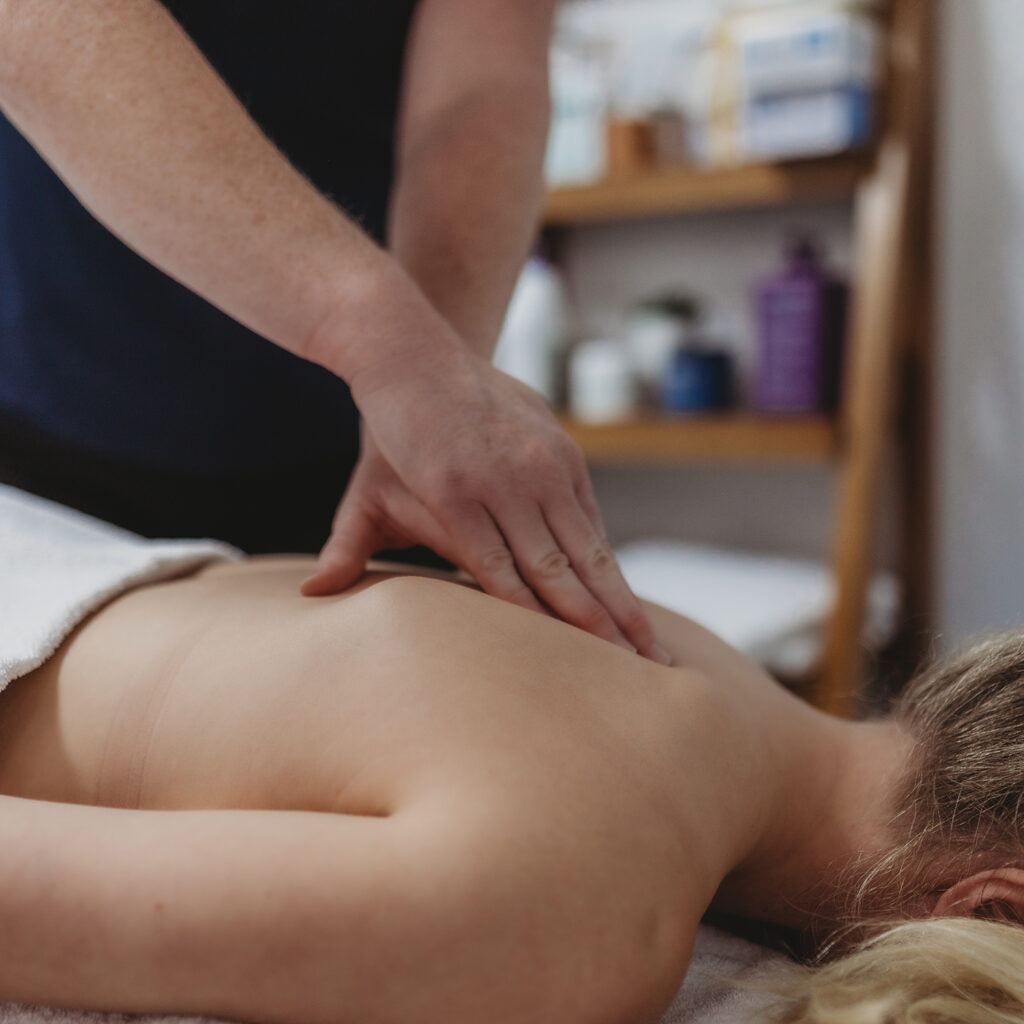
Understanding Lymphatic drainage massage
Lymphatic drainage massage is a light, rhythmic hands-on technique that helps move excess fluid out of swollen tissue and back into your circulation. It is used for swelling after surgery, fluid retention, heaviness in an arm or leg, and long-term conditions such as lymphoedema.
It feels very different to a standard massage. The pressure stays light and the strokes stay slow, because the vessels being treated sit just under your skin. Your massage therapist finds where fluid is pooling, then works in a sequence that clears the pathway ahead of it.
Who does it affect?
people recovering from surgery or injury, people with lymphoedema, and people who swell with heat, hormones or long periods of sitting and standing
How common is it?
some swelling after surgery or injury is normal, and most people notice it while they heal
What is the recovery like?
varies, and depends on the cause of the swelling and whether it is short term or ongoing
Who should I see for treatment?
a remedial massage therapist trained in manual lymphatic drainage [CONFIRM: which OnePointHealth therapists hold MLD qualifications]
What funding options are available?
Medicare, NDIS, DVA and private health funds accepted
What is lymphatic drainage massage?
Lymphatic drainage massage, also called manual lymphatic drainage, is a gentle technique that encourages lymph fluid to move through your body.
Your lymphatic system is a network of thin vessels and nodes that drains excess fluid, protein and waste out of your tissue. It has no pump of its own. It relies on muscle movement, breathing and the squeeze of the vessel walls. When that flow slows down, or a section of the network is damaged, fluid collects in the tissue and the area feels heavy, tight and full.
Things that commonly slow lymphatic flow include:
Surgery that removes, moves or disturbs lymph nodes, including breast, abdominal, orthopaedic and cosmetic surgery
Radiotherapy or scar tissue that blocks a drainage pathway
Long periods of sitting, standing or immobility after an injury or illness
Heat, hormonal changes and pregnancy, which increase the fluid load in your tissue
Vein problems such as chronic venous insufficiency
Infection or inflammation, which sends extra fluid into the area
Symptoms of Lymphatic drainage massage
Swelling and lymphatic congestion usually show up as:
Puffiness in your hand, foot, arm, leg, abdomen or face
A heavy, tight or full feeling in the limb
Skin that holds an indent for a moment after you press it
Rings, watches, socks or shoes that leave marks or feel tighter than usual
Less movement at the wrist, elbow, ankle or knee because of the volume of fluid
Aching that eases when you elevate the limb
Your treatment plan comes out of your first assessment
What to expect at your first appointment
Tell us what is going on
You explain where the swelling is, when it started, what makes it worse, and any surgery, cancer treatment or medical conditions in your history.
A full assessment
Your therapist looks at the swollen area and your skin, checks how the tissue responds to pressure, and may measure the limb so you have a baseline to compare against.
A clear plan
You get treatment on the day where it is appropriate, plus an explanation of what is happening and how many sessions your therapist expects to be useful.
Review and adjust
At follow-ups your therapist rechecks the area, compares it to your baseline, and changes the plan based on how you have responded.
When to book an appointment
Swelling has lasted more than two weeks and is not settling on its own
Your shoes, rings or clothing no longer fit, or the heaviness is limiting how you move
Elevation, walking and compression have not made enough difference
You have had surgery or cancer treatment and want to know whether lymphatic drainage suits your situation
Book an assessment if:
Looking after yourself at home
These habits support your treatment between appointments.
Surgery that removes, moves or disturbs lymph nodes, including breast, abdominal, orthopaedic and cosmetic surgery
Radiotherapy or scar tissue that blocks a drainage pathway
Long periods of sitting, standing or immobility after an injury or illness
Heat, hormonal changes and pregnancy, which increase the fluid load in your tissue
Vein problems such as chronic venous insufficiency
Infection or inflammation, which sends extra fluid into the area
Meet the team who treat this
Behind every appointment is a team of practitioners who know each other, trust each other and work together for you. Across seven clinics and nine disciplines, our team shares expertise, coordinates treatment plans and celebrates your progress together.

Aimee Fuller
Healthcare Support Officer
Available at Blaxland

Alicia Whiticker
Healthcare Support Officer
Available at Blaxland

Amanda Banks
Healthcare Support Officer
Available at Blaxland
Amanda Duggan
Healthcare Support Officer
Available at Blaxland
Amy Meekings
Healthcare Support Officer
Available at Blaxland

Anita Beerapu
Healthcare Support Officer
Available at Blaxland
Benjamin Tucker
Healthcare Support Officer
Available at Blaxland

Blake Cossar
Healthcare Support Officer
Available at Blaxland

Bronte Tupper
Healthcare Support Officer
Available at Blaxland

Chris Farrugia
Healthcare Support Officer
Available at Blaxland

Corrina Aitken
Healthcare Support Officer
Available at Blaxland

David Logue
Healthcare Support Officer
Available at Blaxland

Dean Gresser
Healthcare Support Officer
Available at Blaxland

Emma Nassif
Healthcare Support Officer
Available at Blaxland

Esha Sharma
Healthcare Support Officer
Available at Blaxland

Fatima Hussaini
Healthcare Support Officer
Available at Blaxland
Felicity Spencer-Davey
Healthcare Support Officer
Available at Blaxland

Frankie Raikadroka
Healthcare Support Officer
Available at Blaxland
Hannah Norrie
Healthcare Support Officer
Available at Blaxland
Heather Edwards
Healthcare Support Officer
Available at Blaxland

Isaac Vella
Healthcare Support Officer
Available at Blaxland
Jarrah Nesbitt
Healthcare Support Officer
Available at Blaxland
Jonathan Lopez
Healthcare Support Officer
Available at Blaxland

Justin Hanna
Healthcare Support Officer
Available at Blaxland

Kasey Collins
Healthcare Support Officer
Available at Blaxland

Katrina Gauci
Healthcare Support Officer
Available at Blaxland
Kennedy Touet
Healthcare Support Officer
Available at Blaxland

Kristy Edwards
Healthcare Support Officer
Available at Blaxland

Kyle Perry
Healthcare Support Officer
Available at Blaxland
Lorna Nicastri
Healthcare Support Officer
Available at Blaxland
Maja Bosic
Healthcare Support Officer
Available at Blaxland

Marxy Koronel
Healthcare Support Officer
Available at Blaxland

Matt Barton
Healthcare Support Officer
Available at Blaxland

Michael Todd
Healthcare Support Officer
Available at Blaxland
Mr Jeffery Jenkins FACPS
Healthcare Support Officer
Available at Blaxland

Nathan Cavanagh
Healthcare Support Officer
Available at Blaxland

Patrick Celeban
Healthcare Support Officer
Available at Blaxland

Praise Khin
Healthcare Support Officer
Available at Blaxland

Sarah Bonnici
Healthcare Support Officer
Available at Blaxland
Shannon Smith
Healthcare Support Officer
Available at Blaxland

Siobhan Kelly
Healthcare Support Officer
Available at Blaxland
Taleisha Bozzi
Healthcare Support Officer
Available at Blaxland

Trystan Singh
Healthcare Support Officer
Available at Blaxland

Uty Kotwal
Healthcare Support Officer
Available at Blaxland

Yoni Hochberg
Healthcare Support Officer
Available at Blaxland

Zak Lloyd
Healthcare Support Officer
Available at Blaxland
EPC, DVA, NDIS and WorkCover welcome
Nearly half of our appointments are funded through Medicare, DVA, NDIS or WorkCover. We manage the paperwork so you can focus on your health.

NDIS
We support eligible NDIS participants across podiatry, physiotherapy, exercise physiology, dietetics and psychology, depending on your plan and goals. Eligibility and funding are set by your plan.

Medicare
Medicare may rebate podiatry, physiotherapy, exercise physiology and dietetics sessions when your GP refers you under an Enhanced Primary Care (EPC) or Chronic Disease Management (CDM) plan, and psychology sessions under a Mental Health Care Plan. The number of sessions is set by your plan.

DVA
Gold and White card holders can access DVA-funded care across our services with a valid referral.

WorkCover
If you have been injured at work, we accept WorkCover referrals for physiotherapy, exercise physiology and psychology, and manage the paperwork with your insurer, with a clear return-to-work plan.
Seven clinics across three regions
Find a clinic near you. Each location is staffed by local practitioners who know your community.
Penrith
Western SydneyOur largest centre, with our full range of services under one roof.
Ropes Crossing
Western SydneyPodiatry, at Ropes Crossing Village.
Blaxland
Blue MountainsPodiatry, physiotherapy, exercise physiology and group classes.
Springwood
Blue MountainsPodiatry, dietetics and a boutique footwear store.
Katoomba
Blue MountainsPodiatry, physiotherapy and dietetics, in a restored 1914 cottage.
Ryde
North ShorePodiatry, physiotherapy, dietetics and exercise physiology, with a footwear store and gait analysis.
Lindfield
North ShorePodiatry, with mobile podiatry across the North Shore and Northern Beaches.
Ready to get that swelling moving?
Book a lymphatic drainage massage and start with a proper assessment of where the fluid is sitting.














Frequently asked questions
What does lymphatic drainage massage feel like?
Very light. Your therapist stretches and releases the skin with flat hands rather than pressing into muscle, so there is no deep pressure and it should not hurt. Oil is often left off, because the technique needs grip on the skin. Most people find the slow rhythm relaxing and some fall asleep. Session length varies with how much of the body is treated. [CONFIRM: standard appointment lengths offered]
How soon after surgery can I have lymphatic drainage massage?
You need clearance from your surgeon or treating doctor first, and the right timing depends on the procedure you had. Once cleared, your therapist works away from the incision until it has fully closed, and treats the regions that drain the area instead. Bring details of your operation and any post-operative instructions to your first appointment.
How many sessions will I need?
It varies with the cause. Short-term swelling after surgery or injury often responds within a small block of sessions, with self-drainage carrying the rest. Ongoing conditions such as lymphoedema are usually managed long term, with a more frequent early phase followed by maintenance appointments. Your therapist gives you an expected pattern at your first visit and reviews it as your swelling responds.
How is lymphatic drainage different from a regular massage?
The pressure and the target are different. A standard massage works muscle tissue with moderate to firm pressure. Lymphatic drainage uses very light, rhythmic, directional strokes over the skin, because the lymphatic vessels it works on sit just beneath the surface. It should not feel forceful, and it is not designed to release muscle tension; it is designed to encourage fluid movement.
Is there anyone who should not have lymphatic drainage massage?
Yes. It is not suitable during an active infection or fever, with an untreated deep vein thrombosis, or with unmanaged heart or kidney failure, because moving extra fluid into circulation can make these conditions worse. If you have a current cancer diagnosis, a heart condition or kidney disease, check with your doctor first, and tell your massage therapist before the session begins.
Do I need a doctor's referral for lymphatic drainage massage?
No referral is needed; you can book directly. If you are having lymphatic drainage as part of managing a medical condition such as lymphoedema, it works best coordinated with your treating doctor or lymphoedema therapist, and your massage therapist will ask about that care so the session fits what your medical team is doing.