

Custom orthotics
Orthotics made for your feet, not for an average foot
Your feet ache by the end of the day, and the insoles you bought off the shelf have not changed much. Custom orthotics are prescribed to shift load away from the tissue that is being overworked.
Medicare, NDIS, DVA, Workers Compensation and Private Health Funds accepted.
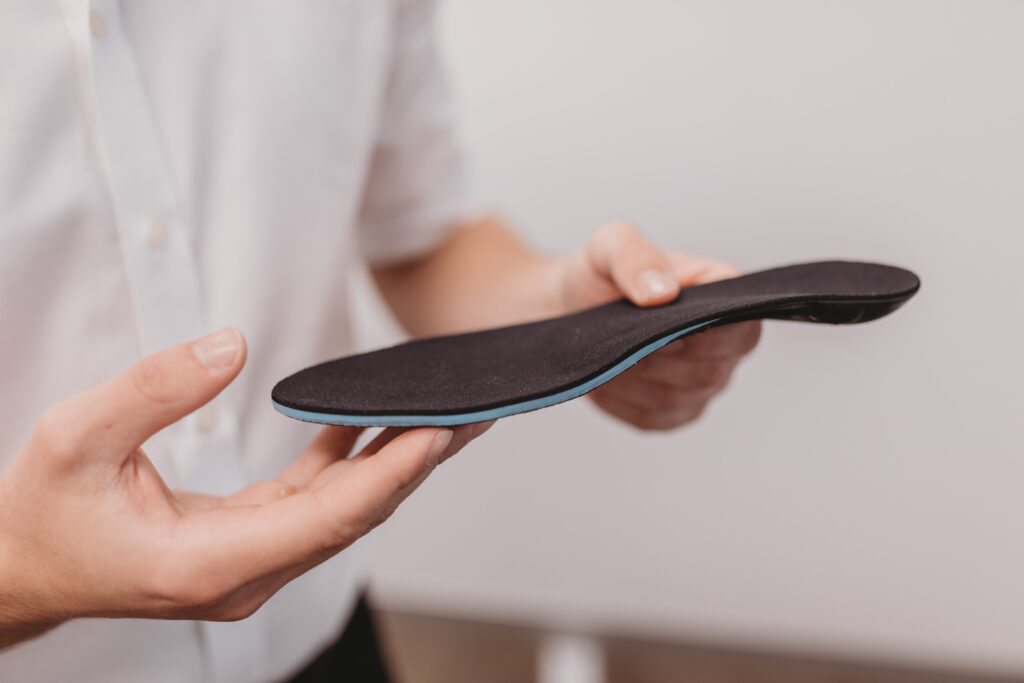
Understanding Orthotics
Orthotics are devices worn inside your shoes that change how force travels through your feet and legs. Custom orthotics are made to your podiatrist’s prescription, from a 3D scan of your own foot, so the support sits exactly where your foot needs it.
They are used for shin pain, ankle pain, heel pain, arch pain, forefoot pain, and for foot structures that load unevenly. Orthotics work alongside footwear changes and exercise, and your podiatrist reviews them to check they are doing the job.
Who does it affect?
adults and children with foot, ankle, knee or lower back pain linked to how their feet load
How common is it?
prescribed every day in podiatry, for everyone from office workers to runners
What is the recovery like?
most people build up over one to two weeks, and comfort improves as your feet adjust
Who should I see for treatment?
your podiatrist, after a biomechanical assessment
What funding options are available?
Medicare, NDIS, DVA, Workers Compensation and Private Health Funds accepted
What are orthotics?
Orthotics are prescription devices that sit inside your shoes and control how your foot moves and loads through each step. Custom orthotics are built from a 3D scan or plaster cast of your foot, then made to a written prescription that sets the shape, thickness, flexibility and any padding or wedging.
Most people are prescribed orthotics after a specific problem appears. Pain builds in one spot, often the heel, arch or ball of the foot, because that tissue is taking more load than it can handle. Orthotics redistribute that load so the painful tissue gets a break while it settles.
Common reasons your podiatrist may prescribe them include:
Foot structure, including a very flat or very high arch
The way you walk or run, and how your foot rolls through each step
A sudden increase in standing, walking or training load
Shoes that are worn out, too flexible or the wrong shape for your foot
Past injury or surgery that changed how you walk
Health conditions such as diabetes or arthritis that need pressure taken off certain areas
Symptoms of Orthotics
Signs that orthotics may be part of your plan include:
Heel or arch pain that bites in your first few steps in the morning
Burning, aching or numbness under the ball of your foot
Pain that returns each time you increase your walking or running
Aching feet or legs after a long day standing at work
Callus or hard skin building in one spot on your foot
Knee, hip or lower back pain that started with a change in your feet or shoes
Your prescription comes from your assessment, which includes your foot structure, your gait, your footwear and your personal goals.
What to expect at your first appointment
Tell us what is going on
You describe the pain, when it started, what makes it worse, and which shoes and activities matter to you.
A full assessment
Your podiatrist examines your foot and ankle, watches you walk, tests joint movement and muscle strength, and checks your current shoes.
A clear plan
You find out whether orthotics suit your problem, what type is being recommended, what it will cost and how long the fitting takes.
Review and adjust
You come back so your podiatrist can check comfort and function, and fine-tune the device.

When to book an appointment
Foot pain has lasted more than two weeks and is not settling
You are cutting back on work, walking or training because of your feet
New shoes or chemist insoles have not made a real difference
You are not sure what is causing your pain, or whether orthotics would help
Book an assessment if:
Looking after yourself at home
Simple habits keep your orthotics comfortable and working the way they were prescribed.
Foot structure, including a very flat or very high arch
The way you walk or run, and how your foot rolls through each step
A sudden increase in standing, walking or training load
Shoes that are worn out, too flexible or the wrong shape for your foot
Past injury or surgery that changed how you walk
Health conditions such as diabetes or arthritis that need pressure taken off certain areas

Meet the team who treat this
Behind every appointment is a team of practitioners who know each other, trust each other and work together for you. Across seven clinics and nine disciplines, our team shares expertise, coordinates treatment plans and celebrates your progress together.

Aimee Fuller
Healthcare Support Officer
Available at Blaxland

Alicia Whiticker
Healthcare Support Officer
Available at Blaxland

Amanda Banks
Healthcare Support Officer
Available at Blaxland

Amanda Duggan
Healthcare Support Officer
Available at Blaxland

Amy Meekings
Healthcare Support Officer
Available at Blaxland

Anita Beerapu
Healthcare Support Officer
Available at Blaxland

Benjamin Tucker
Healthcare Support Officer
Available at Blaxland

Blake Cossar
Healthcare Support Officer
Available at Blaxland

Bronte Tupper
Healthcare Support Officer
Available at Blaxland

Chris Farrugia
Healthcare Support Officer
Available at Blaxland

Corrina Aitken
Healthcare Support Officer
Available at Blaxland

David Logue
Healthcare Support Officer
Available at Blaxland

Dean Gresser
Healthcare Support Officer
Available at Blaxland

Emma Nassif
Healthcare Support Officer
Available at Blaxland

Esha Sharma
Healthcare Support Officer
Available at Blaxland

Fatima Hussaini
Healthcare Support Officer
Available at Blaxland

Felicity Spencer-Davey
Healthcare Support Officer
Available at Blaxland

Frankie Raikadroka
Healthcare Support Officer
Available at Blaxland

Hannah Norrie
Healthcare Support Officer
Available at Blaxland

Heather Edwards
Healthcare Support Officer
Available at Blaxland

Isaac Vella
Healthcare Support Officer
Available at Blaxland

Jarrah Nesbitt
Healthcare Support Officer
Available at Blaxland

Jonathan Lopez
Healthcare Support Officer
Available at Blaxland

Justin Hanna
Healthcare Support Officer
Available at Blaxland

Kasey Collins
Healthcare Support Officer
Available at Blaxland

Katrina Gauci
Healthcare Support Officer
Available at Blaxland

Kennedy Touet
Healthcare Support Officer
Available at Blaxland

Kristy Edwards
Healthcare Support Officer
Available at Blaxland

Kyle Perry
Healthcare Support Officer
Available at Blaxland

Lorna Nicastri
Healthcare Support Officer
Available at Blaxland

Maja Bosic
Healthcare Support Officer
Available at Blaxland

Marxy Koronel
Healthcare Support Officer
Available at Blaxland

Matt Barton
Healthcare Support Officer
Available at Blaxland

Michael Todd
Healthcare Support Officer
Available at Blaxland

Mr Jeffery Jenkins FACPS
Healthcare Support Officer
Available at Blaxland

Nathan Cavanagh
Healthcare Support Officer
Available at Blaxland

Patrick Celeban
Healthcare Support Officer
Available at Blaxland

Praise Khin
Healthcare Support Officer
Available at Blaxland

Sarah Bonnici
Healthcare Support Officer
Available at Blaxland

Shannon Smith
Healthcare Support Officer
Available at Blaxland

Siobhan Kelly
Healthcare Support Officer
Available at Blaxland

Taleisha Bozzi
Healthcare Support Officer
Available at Blaxland

Trystan Singh
Healthcare Support Officer
Available at Blaxland

Uty Kotwal
Healthcare Support Officer
Available at Blaxland

Yoni Hochberg
Healthcare Support Officer
Available at Blaxland

Zak Lloyd
Healthcare Support Officer
Available at Blaxland
EPC, DVA, NDIS and WorkCover welcome
Nearly half of our appointments are funded through Medicare, DVA, NDIS or WorkCover. We manage the paperwork so you can focus on your health.


NDIS
We support eligible NDIS participants across podiatry, physiotherapy, exercise physiology, dietetics and psychology, depending on your plan and goals. Eligibility and funding are set by your plan.

Medicare
Medicare may rebate podiatry, physiotherapy, exercise physiology and dietetics sessions when your GP refers you under an Enhanced Primary Care (EPC) or Chronic Disease Management (CDM) plan, and psychology sessions under a Mental Health Care Plan. The number of sessions is set by your plan.

DVA
Gold and White card holders can access DVA-funded care across our services with a valid referral.

WorkCover
If you have been injured at work, we accept WorkCover referrals for physiotherapy, exercise physiology and psychology, and manage the paperwork with your insurer, with a clear return-to-work plan.
Seven clinics across three regions
Find a clinic near you. Each location is staffed by local practitioners who know your community.
Penrith
Western SydneyOur largest centre, with our full range of services under one roof.
Ropes Crossing
Western SydneyPodiatry, at Ropes Crossing Village.
Blaxland
Blue MountainsPodiatry, physiotherapy, exercise physiology and group classes.
Springwood
Blue MountainsPodiatry, dietetics and a boutique footwear store.
Katoomba
Blue MountainsPodiatry, physiotherapy and dietetics, in a restored 1914 cottage.
Ryde
North ShorePodiatry, physiotherapy, dietetics and exercise physiology, with a footwear store and gait analysis.
Lindfield
North ShorePodiatry, with mobile podiatry across the North Shore and Northern Beaches.
Ready for orthotics that actually fit your feet?
Book a podiatry assessment and find out whether custom orthotics suit your feet and your shoes.















Frequently asked questions
How long do custom orthotics last?
Most custom orthotics last around two to four years for an adult, though heavier use, heavier body weight and high-mileage running shorten that. The shell usually outlasts the top cover, so your podiatrist can often refurbish a device rather than remake it. Children grow out of theirs faster, sometimes within a year, because the shell has to match a growing foot.
Do custom orthotics take time to get used to?
Yes. Most people notice a firm, unfamiliar feeling under the arch for the first week or two while your foot adapts to a new load pattern. A gradual build-up helps. Mild aching in a new area can settle, but sharp pain, rubbing or pinching is not part of wearing in, so contact the clinic for an adjustment rather than pushing through.
Can I use one pair of orthotics in different shoes?
Sometimes, but not always. An orthotic sits at a set height and width, so it needs a shoe with a removable insole and enough depth. Work boots, runners and dress shoes often need different devices. Tell your podiatrist which shoes you actually wear at the assessment, because the prescription is designed around the shoe as much as the foot.
Are over-the-counter insoles as good as custom orthotics?
For mild, short-term pain, a good prefabricated insole can be enough, and your podiatrist may modify one for you. Custom devices are prescribed when your foot shape is unusual, when pressure needs to be taken off one precise area, when past insoles have failed, or when a health condition such as diabetes or arthritis raises the stakes.
Will wearing orthotics weaken my foot muscles?
There is no good evidence that orthotics weaken your feet. They change where load lands rather than doing the work your muscles do. Your podiatrist normally pairs a device with strengthening exercises so your feet get stronger while the painful tissue settles. Many people use orthotics for a period, then reduce their use as strength and tolerance improve.
Can children wear orthotics?
Yes, and children are assessed differently to adults because their feet are still developing. Flat-looking feet in a young child are often normal and need no device at all. Orthotics are considered when a child has pain, tires or trips more than expected, or avoids activity. Ask about our children’s podiatry service, Children’s podiatry [CONFIRM: link when live].