

Osteoarthritis
Keep moving with less joint pain
Your knees ache on the stairs, your hips stiffen up after sitting, and mornings take longer than they used to. Osteoarthritis is common, and the right exercise and treatment plan can reduce your pain and keep you doing what you enjoy.
Medicare, NDIS, DVA and private health funds accepted.
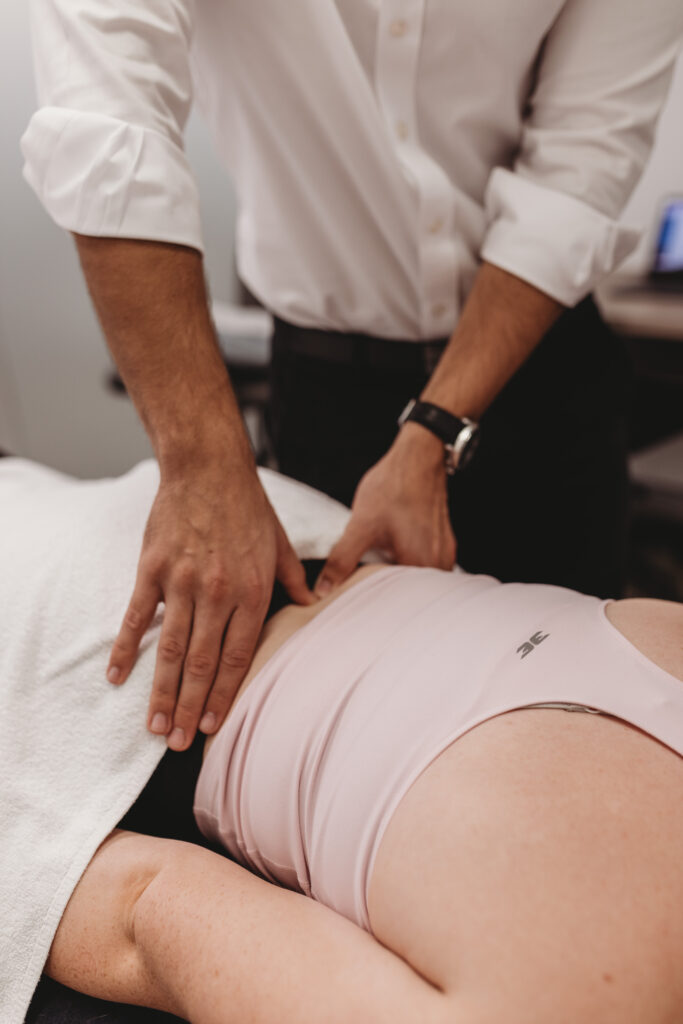
Understanding Osteoarthritis
Osteoarthritis is a condition of the whole joint, where cartilage thins and the bone, muscle and joint lining change with it. It causes pain, stiffness and a joint that feels harder to trust than it used to.
Osteoarthritis cannot be reversed, but the pain and stiffness respond well to treatment. Exercise, strength work and load management are the first-line care for hip and knee osteoarthritis, and your physiotherapist or exercise physiologist can build that plan around your joints and your goals.
Who does it affect?
adults over 45 most often, though younger people with past joint injuries also develop it.
How common is it?
one of the most common joint conditions in Australia. [CONFIRM: around 2.1 million Australians live with osteoarthritis, AIHW]
What is the recovery like?
symptoms vary, and many people notice change over a program of weeks rather than days.
Who should I see for treatment?
physiotherapists and exercise physiologists, often alongside your GP.
What funding options are available?
Medicare, NDIS, DVA and private health funds accepted.
What is osteoarthritis?
Osteoarthritis is the gradual breakdown and remodelling of a joint. The cartilage that cushions the bone ends thins, the joint lining can become inflamed, and the surrounding muscles often weaken. The result is pain with load, stiffness after rest, and less confidence in the joint.
It usually develops slowly over years. Many people first notice it after a change in activity, a period of rest, or a busy weekend of gardening or walking.
Things that contribute to osteoarthritis include:
Age, family history and joint shape
Previous joint injury or surgery, such as an ACL tear or a meniscus tear
Carrying extra body weight, which increases load through the hips and knees
Long periods of low activity, which reduce the muscle strength a joint relies on
Heavy or repetitive loading at work or in sport
Symptoms of Osteoarthritis
Osteoarthritis usually presents as:
Joint pain that increases with activity and settles with rest
Stiffness first thing in the morning that eases within about 30 minutes
Stiffness after sitting still, sometimes called gelling
Grinding, clicking or a catching feeling in the joint
Swelling or warmth around the joint after a big day
A joint that feels weak, unsteady or harder to trust
Your plan comes from your assessment, your goals and the joints involved.
What to expect at your first appointment
Tell us what is going on
You describe your pain, which joints are involved, what you have stopped doing, and what you want to get back to.
A full assessment
Your physiotherapist checks your joint range, strength, balance and how you walk, squat and climb stairs.
A clear plan
You leave with an explanation of your joint, a starting exercise program and clear advice on activity.
Review and adjust
At follow-up visits your program is progressed as your strength and tolerance improve.

When to book an appointment
Your joint pain has lasted more than six weeks
You are avoiding stairs, walking, work or sport because of the joint
Rest, heat packs and over-the-counter pain relief are not holding it
You are unsure whether your pain is osteoarthritis or another joint problem
Book an assessment if:
Looking after yourself at home
Alongside your program, these habits help most people with osteoarthritis.
Age, family history and joint shape
Previous joint injury or surgery, such as an ACL tear or a meniscus tear
Carrying extra body weight, which increases load through the hips and knees
Long periods of low activity, which reduce the muscle strength a joint relies on
Heavy or repetitive loading at work or in sport

Meet the team who treat this
Behind every appointment is a team of practitioners who know each other, trust each other and work together for you. Across seven clinics and nine disciplines, our team shares expertise, coordinates treatment plans and celebrates your progress together.

Aimee Fuller
Healthcare Support Officer
Available at Blaxland

Alicia Whiticker
Healthcare Support Officer
Available at Blaxland

Amanda Banks
Healthcare Support Officer
Available at Blaxland

Amanda Duggan
Healthcare Support Officer
Available at Blaxland

Amy Meekings
Healthcare Support Officer
Available at Blaxland

Anita Beerapu
Healthcare Support Officer
Available at Blaxland

Benjamin Tucker
Healthcare Support Officer
Available at Blaxland

Blake Cossar
Healthcare Support Officer
Available at Blaxland

Bronte Tupper
Healthcare Support Officer
Available at Blaxland

Chris Farrugia
Healthcare Support Officer
Available at Blaxland

Corrina Aitken
Healthcare Support Officer
Available at Blaxland

David Logue
Healthcare Support Officer
Available at Blaxland

Dean Gresser
Healthcare Support Officer
Available at Blaxland

Emma Nassif
Healthcare Support Officer
Available at Blaxland

Esha Sharma
Healthcare Support Officer
Available at Blaxland

Fatima Hussaini
Healthcare Support Officer
Available at Blaxland

Felicity Spencer-Davey
Healthcare Support Officer
Available at Blaxland

Frankie Raikadroka
Healthcare Support Officer
Available at Blaxland

Hannah Norrie
Healthcare Support Officer
Available at Blaxland

Heather Edwards
Healthcare Support Officer
Available at Blaxland

Isaac Vella
Healthcare Support Officer
Available at Blaxland

Jarrah Nesbitt
Healthcare Support Officer
Available at Blaxland

Jonathan Lopez
Healthcare Support Officer
Available at Blaxland

Justin Hanna
Healthcare Support Officer
Available at Blaxland

Kasey Collins
Healthcare Support Officer
Available at Blaxland

Katrina Gauci
Healthcare Support Officer
Available at Blaxland

Kennedy Touet
Healthcare Support Officer
Available at Blaxland

Kristy Edwards
Healthcare Support Officer
Available at Blaxland

Kyle Perry
Healthcare Support Officer
Available at Blaxland

Lorna Nicastri
Healthcare Support Officer
Available at Blaxland

Maja Bosic
Healthcare Support Officer
Available at Blaxland

Marxy Koronel
Healthcare Support Officer
Available at Blaxland

Matt Barton
Healthcare Support Officer
Available at Blaxland

Michael Todd
Healthcare Support Officer
Available at Blaxland

Mr Jeffery Jenkins FACPS
Healthcare Support Officer
Available at Blaxland

Nathan Cavanagh
Healthcare Support Officer
Available at Blaxland

Patrick Celeban
Healthcare Support Officer
Available at Blaxland

Praise Khin
Healthcare Support Officer
Available at Blaxland

Sarah Bonnici
Healthcare Support Officer
Available at Blaxland

Shannon Smith
Healthcare Support Officer
Available at Blaxland

Siobhan Kelly
Healthcare Support Officer
Available at Blaxland

Taleisha Bozzi
Healthcare Support Officer
Available at Blaxland

Trystan Singh
Healthcare Support Officer
Available at Blaxland

Uty Kotwal
Healthcare Support Officer
Available at Blaxland

Yoni Hochberg
Healthcare Support Officer
Available at Blaxland

Zak Lloyd
Healthcare Support Officer
Available at Blaxland
EPC, DVA, NDIS and WorkCover welcome
Nearly half of our appointments are funded through Medicare, DVA, NDIS or WorkCover. We manage the paperwork so you can focus on your health.


NDIS
We support eligible NDIS participants across podiatry, physiotherapy, exercise physiology, dietetics and psychology, depending on your plan and goals. Eligibility and funding are set by your plan.

Medicare
Medicare may rebate podiatry, physiotherapy, exercise physiology and dietetics sessions when your GP refers you under an Enhanced Primary Care (EPC) or Chronic Disease Management (CDM) plan, and psychology sessions under a Mental Health Care Plan. The number of sessions is set by your plan.

DVA
Gold and White card holders can access DVA-funded care across our services with a valid referral.

WorkCover
If you have been injured at work, we accept WorkCover referrals for physiotherapy, exercise physiology and psychology, and manage the paperwork with your insurer, with a clear return-to-work plan.
Seven clinics across three regions
Find a clinic near you. Each location is staffed by local practitioners who know your community.
Penrith
Western SydneyOur largest centre, with our full range of services under one roof.
Ropes Crossing
Western SydneyPodiatry, at Ropes Crossing Village.
Blaxland
Blue MountainsPodiatry, physiotherapy, exercise physiology and group classes.
Springwood
Blue MountainsPodiatry, dietetics and a boutique footwear store.
Katoomba
Blue MountainsPodiatry, physiotherapy and dietetics, in a restored 1914 cottage.
Ryde
North ShorePodiatry, physiotherapy, dietetics and exercise physiology, with a footwear store and gait analysis.
Lindfield
North ShorePodiatry, with mobile podiatry across the North Shore and Northern Beaches.
Ready to move with less joint pain?
Book an assessment and start a plan built around your joints, your goals and your day.
















Frequently asked questions
Does exercise wear out an arthritic joint faster?
No. Suitable exercise does not wear out a joint with osteoarthritis. Joint cartilage has no blood supply, so it relies on movement to pump fluid in and out and stay healthy. Loading the joint in a graded way also builds the muscle that protects it. Some discomfort during and after exercise is normal, as long as it settles within about 24 hours.
Do I need an X-ray or MRI to diagnose osteoarthritis?
Usually not. Osteoarthritis is diagnosed from your age, symptoms and physical examination, and Australian guidelines do not recommend routine imaging. Scan findings often match poorly with pain: many people with significant changes on X-ray have few symptoms, and others with painful joints show mild changes. Your GP may order imaging if your presentation is unusual or surgery is being considered.
Will I end up needing a joint replacement?
Not necessarily. Many people manage hip and knee osteoarthritis for years without surgery, and joint replacement is generally considered when pain is severe and other options have been tried. If surgery is planned, building strength beforehand, sometimes called prehabilitation, can support your recovery afterwards. Your surgeon makes that decision with you and your GP.
Is osteoarthritis the same as rheumatoid arthritis?
No. Osteoarthritis is a mechanical and structural condition affecting one or a few joints, with stiffness that eases within about 30 minutes of waking. Rheumatoid arthritis is an autoimmune disease that typically affects joints on both sides of the body, causes morning stiffness lasting more than an hour, and needs medical management with a rheumatologist.
Does losing weight help knee and hip osteoarthritis?
It can. Each kilogram lost reduces the force travelling through your knees with every step, and body fat also produces chemicals that promote inflammation. Research shows combining weight management with exercise gives better pain relief than either alone. Our dietitians can work with your physiotherapist or exercise physiologist if this is part of your plan.
Are supplements like glucosamine or fish oil worth trying?
Evidence for supplements in osteoarthritis is mixed. Glucosamine and chondroitin have not consistently outperformed placebo in high-quality trials, while fish oil may offer modest benefit for some people. Supplements can interact with medications, including blood thinners, so check with your GP or pharmacist first. They are best considered an addition to exercise and load management, not a replacement.