

Posture correction
Stop paying for the way you sit all day
By mid-afternoon your neck and shoulders ache, your mid-back feels locked up, and sitting up straight lasts about ten minutes. Postural pain responds well to treatment when you know which parts are stiff and which are weak.
Medicare, NDIS, DVA and private health funds accepted.
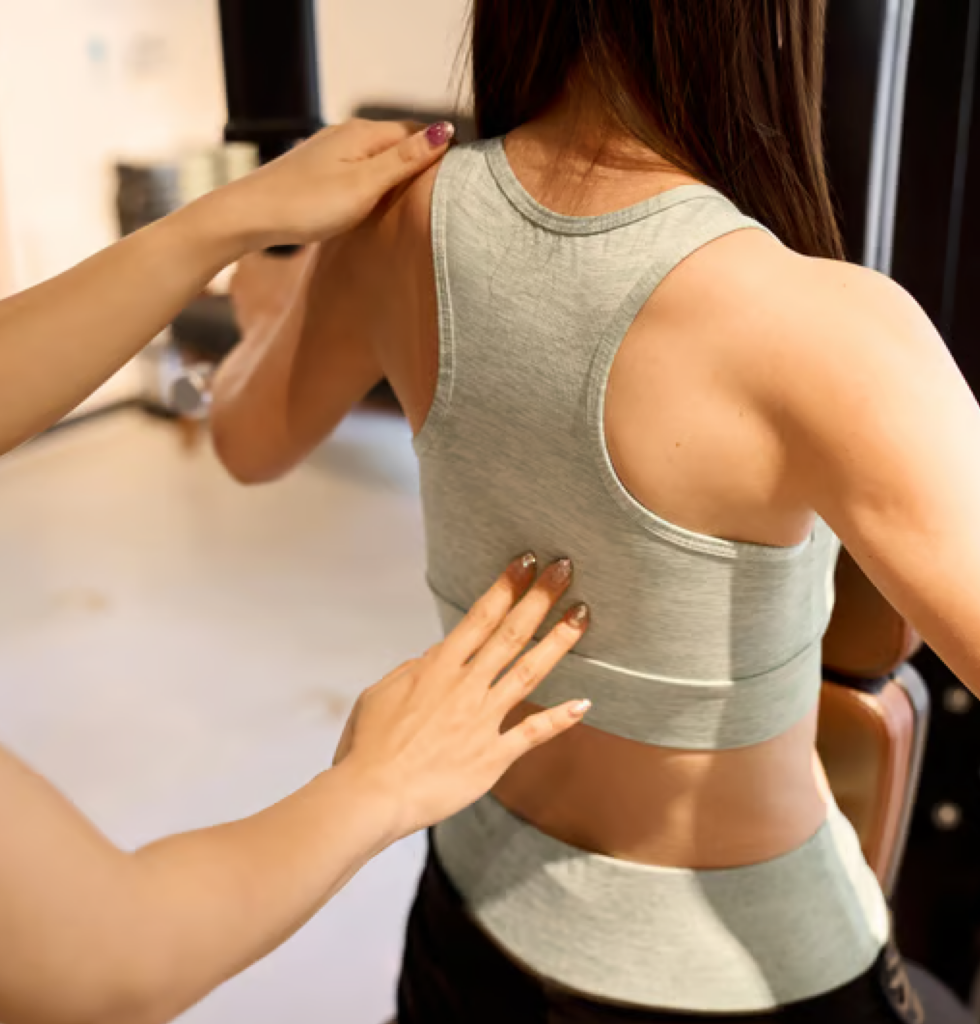
Understanding Posture correction
Posture correction is treatment and training that changes how you hold and move your body, so that everyday positions stop causing pain. It combines hands-on care for stiff joints and tight muscles with strength work and practical changes to your desk, your phone and your training.
Most posture problems are not about achieving a perfectly straight line. They come from holding one position for hours without the strength or variety to tolerate it. Your chiropractor or physiotherapist works out what is stiff, what is weak, and what to change first.
Who does it affect?
desk workers, students, drivers, tradespeople and new parents.
How common is it?
very common in people who sit for most of the working day. [CONFIRM: prevalence figure for postural neck and back pain in Australian adults]
What is the recovery like?
varies. Symptoms often ease early, while strength and habit changes take longer.
Who should I see for treatment?
chiropractors and physiotherapists.
What funding options are available?
Medicare, NDIS, DVA and private health funds accepted.
What is posture correction?
Posture is simply the position your joints sit in when you are still and how you organise your body when you move. Posture correction addresses the positions that have become painful, rather than chasing an ideal shape.
It usually develops slowly. You take a job or a habit that keeps your head forward and your shoulders rounded, the mid-back stiffens, the muscles that hold you upright lose endurance, and the same position that felt fine last year now aches by lunchtime.
Common contributing factors include:
Long hours seated with the head forward and shoulders rounded
Reduced endurance in the deep neck, mid-back and hip muscles
Stiffness through the thoracic spine, the mid-back section of your spine
One-sided loading: tools, a toddler, a bag on the same shoulder
Screens, chairs and car seats set at the wrong height
Periods of rapid change: growth spurts, a new job, a new training load
Symptoms of Posture correction
Aching across the neck, shoulders and mid-back that builds through the day
Tightness or burning between the shoulder blades
Stiffness for the first minute after you stand up from your chair
Upper back fatigue when standing or walking for long periods
Headaches that start at the base of the skull
A rounded upper back, forward head or uneven shoulders you have noticed in photos
Your plan comes out of the assessment, so it targets your stiff and weak areas rather than a generic exercise sheet.
What to expect at your first appointment
Tell us what is going on
When it aches, what makes it worse, your job, your training and what you have already tried.
A full assessment
Your practitioner checks your posture in standing and sitting, tests movement through your neck, mid-back and hips, and screens strength and endurance.
A clear plan
You leave knowing what is driving your symptoms, what treatment is recommended, and the two or three things to change first.
Review and adjust
At follow-up you retest, progress the strength work, and change anything that is not helping.

When to book an appointment
Neck, shoulder or mid-back pain has been building for more than three weeks
Sitting, driving or screen work is limited by pain
Stretching, a new chair or a posture app has not changed anything
You are unsure whether your posture is the cause or a coincidence
Book an assessment if:
Looking after yourself at home
These habits support your treatment between appointments.
Long hours seated with the head forward and shoulders rounded
Reduced endurance in the deep neck, mid-back and hip muscles
Stiffness through the thoracic spine, the mid-back section of your spine
One-sided loading: tools, a toddler, a bag on the same shoulder
Screens, chairs and car seats set at the wrong height
Periods of rapid change: growth spurts, a new job, a new training load

Meet the team who treat this
Behind every appointment is a team of practitioners who know each other, trust each other and work together for you. Across seven clinics and nine disciplines, our team shares expertise, coordinates treatment plans and celebrates your progress together.

Aimee Fuller
Healthcare Support Officer
Available at Blaxland

Alicia Whiticker
Healthcare Support Officer
Available at Blaxland

Amanda Banks
Healthcare Support Officer
Available at Blaxland

Amanda Duggan
Healthcare Support Officer
Available at Blaxland

Amy Meekings
Healthcare Support Officer
Available at Blaxland

Anita Beerapu
Healthcare Support Officer
Available at Blaxland

Benjamin Tucker
Healthcare Support Officer
Available at Blaxland

Blake Cossar
Healthcare Support Officer
Available at Blaxland

Bronte Tupper
Healthcare Support Officer
Available at Blaxland

Chris Farrugia
Healthcare Support Officer
Available at Blaxland

Corrina Aitken
Healthcare Support Officer
Available at Blaxland

David Logue
Healthcare Support Officer
Available at Blaxland

Dean Gresser
Healthcare Support Officer
Available at Blaxland

Emma Nassif
Healthcare Support Officer
Available at Blaxland

Esha Sharma
Healthcare Support Officer
Available at Blaxland

Fatima Hussaini
Healthcare Support Officer
Available at Blaxland

Felicity Spencer-Davey
Healthcare Support Officer
Available at Blaxland

Frankie Raikadroka
Healthcare Support Officer
Available at Blaxland

Hannah Norrie
Healthcare Support Officer
Available at Blaxland

Heather Edwards
Healthcare Support Officer
Available at Blaxland

Isaac Vella
Healthcare Support Officer
Available at Blaxland

Jarrah Nesbitt
Healthcare Support Officer
Available at Blaxland

Jonathan Lopez
Healthcare Support Officer
Available at Blaxland

Justin Hanna
Healthcare Support Officer
Available at Blaxland

Kasey Collins
Healthcare Support Officer
Available at Blaxland

Katrina Gauci
Healthcare Support Officer
Available at Blaxland

Kennedy Touet
Healthcare Support Officer
Available at Blaxland

Kristy Edwards
Healthcare Support Officer
Available at Blaxland

Kyle Perry
Healthcare Support Officer
Available at Blaxland

Lorna Nicastri
Healthcare Support Officer
Available at Blaxland

Maja Bosic
Healthcare Support Officer
Available at Blaxland

Marxy Koronel
Healthcare Support Officer
Available at Blaxland

Matt Barton
Healthcare Support Officer
Available at Blaxland

Michael Todd
Healthcare Support Officer
Available at Blaxland

Mr Jeffery Jenkins FACPS
Healthcare Support Officer
Available at Blaxland

Nathan Cavanagh
Healthcare Support Officer
Available at Blaxland

Patrick Celeban
Healthcare Support Officer
Available at Blaxland

Praise Khin
Healthcare Support Officer
Available at Blaxland

Sarah Bonnici
Healthcare Support Officer
Available at Blaxland

Shannon Smith
Healthcare Support Officer
Available at Blaxland

Siobhan Kelly
Healthcare Support Officer
Available at Blaxland

Taleisha Bozzi
Healthcare Support Officer
Available at Blaxland

Trystan Singh
Healthcare Support Officer
Available at Blaxland

Uty Kotwal
Healthcare Support Officer
Available at Blaxland

Yoni Hochberg
Healthcare Support Officer
Available at Blaxland

Zak Lloyd
Healthcare Support Officer
Available at Blaxland
EPC, DVA, NDIS and WorkCover welcome
Nearly half of our appointments are funded through Medicare, DVA, NDIS or WorkCover. We manage the paperwork so you can focus on your health.


NDIS
We support eligible NDIS participants across podiatry, physiotherapy, exercise physiology, dietetics and psychology, depending on your plan and goals. Eligibility and funding are set by your plan.

Medicare
Medicare may rebate podiatry, physiotherapy, exercise physiology and dietetics sessions when your GP refers you under an Enhanced Primary Care (EPC) or Chronic Disease Management (CDM) plan, and psychology sessions under a Mental Health Care Plan. The number of sessions is set by your plan.

DVA
Gold and White card holders can access DVA-funded care across our services with a valid referral.

WorkCover
If you have been injured at work, we accept WorkCover referrals for physiotherapy, exercise physiology and psychology, and manage the paperwork with your insurer, with a clear return-to-work plan.
Seven clinics across three regions
Find a clinic near you. Each location is staffed by local practitioners who know your community.
Penrith
Western SydneyOur largest centre, with our full range of services under one roof.
Ropes Crossing
Western SydneyPodiatry, at Ropes Crossing Village.
Blaxland
Blue MountainsPodiatry, physiotherapy, exercise physiology and group classes.
Springwood
Blue MountainsPodiatry, dietetics and a boutique footwear store.
Katoomba
Blue MountainsPodiatry, physiotherapy and dietetics, in a restored 1914 cottage.
Ryde
North ShorePodiatry, physiotherapy, dietetics and exercise physiology, with a footwear store and gait analysis.
Lindfield
North ShorePodiatry, with mobile podiatry across the North Shore and Northern Beaches.
Ready to sit and stand without the afternoon ache?
Book an assessment and get a posture plan built around your body, your job and your training.















Frequently asked questions
Does poor posture actually cause pain?
Posture is one factor, not the whole story. Research shows people with similar postures can have very different symptoms, so a rounded upper back is not automatically painful. What tends to cause trouble is sustained loading without enough strength, movement variety or recovery. That is why treatment targets endurance, joint movement and daily habits rather than trying to force one ideal shape.
Do posture correctors, braces or taping work?
Braces and taping can give short-term feedback that reminds you to change position, and some people find that useful early on. They do not build strength, so the effect usually fades once you stop wearing them. Your practitioner may use taping alongside treatment for a few weeks, then transition you to strength work that holds without external support.
Is a standing desk better than a sitting desk?
Neither is better on its own. Standing all day can cause its own low back, hip and foot symptoms. The benefit of a sit-stand desk is the change of position, not the standing itself. Aim to alternate through the day, keep your screen at eye level in both settings, and use a footrest or anti-fatigue mat when standing.
Can posture be changed if you are older?
Yes, movement and strength can improve at any age. Some changes to the spine become structural over time and will not fully reverse, particularly through the mid-back. Even then, improving thoracic movement, hip mobility and postural endurance often reduces pain, improves balance and makes standing and walking easier. Your practitioner will be clear about what is likely to change.
Can posture affect my breathing or energy levels?
It can. A collapsed upper back and forward head position reduce how far your ribs expand, which encourages shallow upper chest breathing. Some people notice this most when talking for long periods or exercising. Improving mid-back movement and rib mechanics often makes deeper breathing feel easier, and some people report less end-of-day fatigue as postural muscles cope better.
Should I be worried about my child's posture or school bag?
Slouching alone is rarely a concern in a growing child. Worth checking are bags heavier than about 10 per cent of body weight, carrying on one shoulder, pain that wakes them, or a change in the shape of the back or shoulder height. Bring them in if you notice any of those, as growth periods deserve a proper look.