

Scoliosis
Understand your spine and get on top of the pain
You have been told your spine curves to one side, or you have noticed one shoulder or hip sitting higher than the other. Scoliosis can be assessed, monitored and managed, and the pain and stiffness that come with it often respond well to treatment.
Medicare, NDIS, DVA and private health funds accepted.
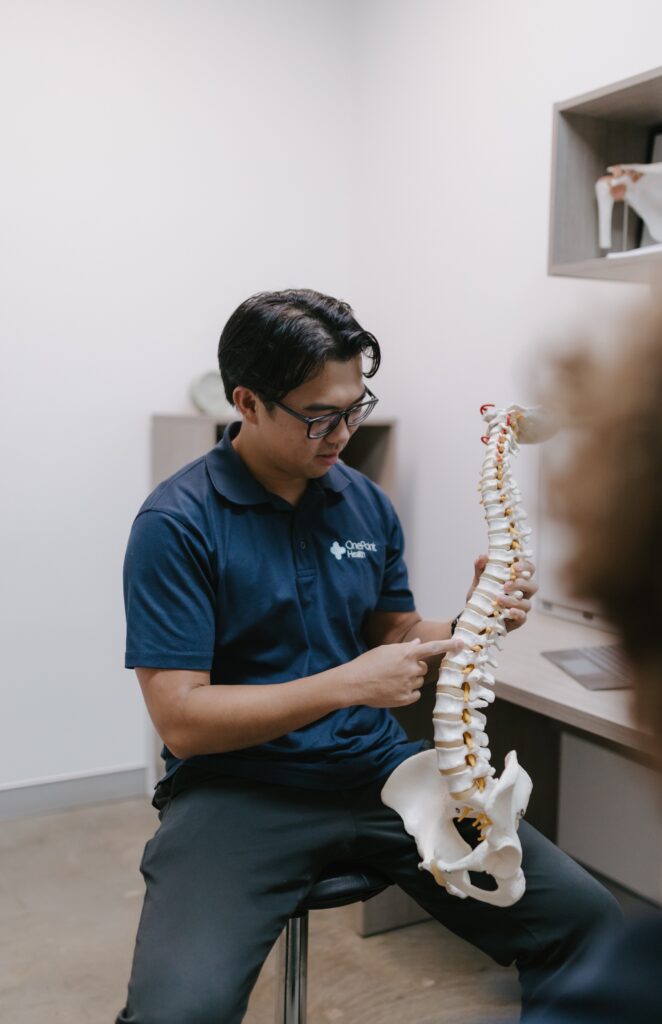
Understanding Scoliosis
Scoliosis is a sideways curve of the spine, usually with some rotation through the vertebrae. Most curves are mild and stay mild, but some progress during growth, and some become painful later in adult life.
Your chiropractor assesses the curve, checks how it affects your movement and refers for imaging or specialist review when the findings call for it. Care focuses on pain, stiffness and function.
Who does it affect?
children between 10 and 15 during growth spurts, and adults as the spine changes with age.
How common is it?
around 2 to 3 in every 100 people have some degree of scoliosis. [CONFIRM: prevalence figure for Australia]
What is the recovery like?
varies. Mild curves are often monitored over time, and symptoms are managed rather than cured.
Who should I see for treatment?
chiropractors, working alongside your GP, physiotherapists and spinal specialists where needed.
What funding options are available?
Medicare, NDIS, DVA and private health funds accepted.
What is scoliosis?
Scoliosis is a curve of the spine to the left or right, measured in degrees. A curve of more than 10 degrees on an X-ray is what makes it scoliosis rather than normal variation. The spine also twists slightly, which is why one side of the back can look fuller when you bend forward.
Most cases have no single identifiable cause and appear during the adolescent growth spurt. Curves can also develop later in life as discs and joints change with age. Whether a curve progresses depends largely on how much growing is left, which is why children are monitored more closely than adults.
Factors linked to scoliosis include:
Growth spurts through adolescence, when curves are most likely to change
Family history, which raises the chance of a curve developing
Differences in the shape of one or more vertebrae present from birth
Neuromuscular conditions such as cerebral palsy or muscular dystrophy
Degenerative change in the discs and facet joints in adults
A leg length difference or long-standing asymmetry, which can create a functional curve
Symptoms of Scoliosis
Scoliosis often causes no pain at all, particularly in children. When you do notice it, it usually shows up as:
One shoulder, shoulder blade or hip sitting higher or further forward than the other
A visible curve, or clothing that hangs unevenly
Aching or fatigue in the back after standing or sitting for long periods
Stiffness and reduced movement when you bend or twist to one side
Muscle tightness on one side of the back
In larger curves, breathlessness on exertion
Your treatment plan comes out of the assessment, not out of a template. What suits a 13-year-old with a growing curve is different to what suits a 60-year-old with degenerative change.
What to expect at your first appointment
Tell us what is going on
You describe when the curve was noticed, what hurts, what makes it worse and what you want to keep doing.
A full assessment
Your chiropractor checks your posture, spinal movement, muscle balance, leg length and nerve function, including a forward bend test.
A clear plan
You get an explanation of what the assessment found, whether imaging or a specialist opinion is needed, and what treatment involves.
Review and adjust
You are reassessed at set points so the plan changes as your symptoms and, in growing children, the curve change.
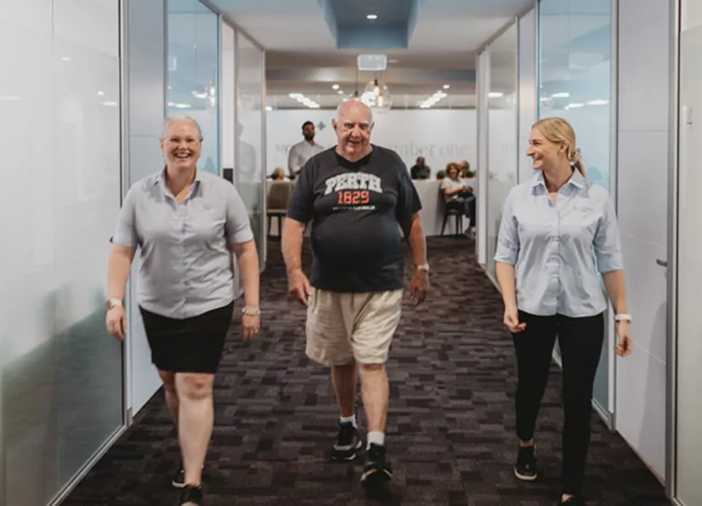
When to book an appointment
Back pain has lasted more than two weeks and is not settling
The curve limits your work, sport, sleep or how long you can stand
Stretching, rest and pain relief have stopped making a difference
You are unsure whether what you are seeing in the mirror is scoliosis
Book an assessment if:
Looking after yourself at home
Alongside treatment, a few habits make a real difference to how scoliosis feels day to day.
Growth spurts through adolescence, when curves are most likely to change
Family history, which raises the chance of a curve developing
Differences in the shape of one or more vertebrae present from birth
Neuromuscular conditions such as cerebral palsy or muscular dystrophy
Degenerative change in the discs and facet joints in adults
A leg length difference or long-standing asymmetry, which can create a functional curve

Meet the team who treat this
Behind every appointment is a team of practitioners who know each other, trust each other and work together for you. Across seven clinics and nine disciplines, our team shares expertise, coordinates treatment plans and celebrates your progress together.
Aimee Fuller
Healthcare Support Officer
Available at Blaxland

Alicia Whiticker
Healthcare Support Officer
Available at Blaxland

Amanda Banks
Healthcare Support Officer
Available at Blaxland
Amanda Duggan
Healthcare Support Officer
Available at Blaxland
Amy Meekings
Healthcare Support Officer
Available at Blaxland

Anita Beerapu
Healthcare Support Officer
Available at Blaxland
Benjamin Tucker
Healthcare Support Officer
Available at Blaxland
Blake Cossar
Healthcare Support Officer
Available at Blaxland

Bronte Tupper
Healthcare Support Officer
Available at Blaxland
Chris Farrugia
Healthcare Support Officer
Available at Blaxland
Corrina Aitken
Healthcare Support Officer
Available at Blaxland

David Logue
Healthcare Support Officer
Available at Blaxland
Dean Gresser
Healthcare Support Officer
Available at Blaxland
Emma Nassif
Healthcare Support Officer
Available at Blaxland
Esha Sharma
Healthcare Support Officer
Available at Blaxland
Fatima Hussaini
Healthcare Support Officer
Available at Blaxland
Felicity Spencer-Davey
Healthcare Support Officer
Available at Blaxland

Frankie Raikadroka
Healthcare Support Officer
Available at Blaxland
Hannah Norrie
Healthcare Support Officer
Available at Blaxland
Heather Edwards
Healthcare Support Officer
Available at Blaxland
Isaac Vella
Healthcare Support Officer
Available at Blaxland
Jarrah Nesbitt
Healthcare Support Officer
Available at Blaxland
Jonathan Lopez
Healthcare Support Officer
Available at Blaxland

Justin Hanna
Healthcare Support Officer
Available at Blaxland
Kasey Collins
Healthcare Support Officer
Available at Blaxland

Katrina Gauci
Healthcare Support Officer
Available at Blaxland
Kennedy Touet
Healthcare Support Officer
Available at Blaxland
Kristy Edwards
Healthcare Support Officer
Available at Blaxland
Kyle Perry
Healthcare Support Officer
Available at Blaxland
Lorna Nicastri
Healthcare Support Officer
Available at Blaxland
Maja Bosic
Healthcare Support Officer
Available at Blaxland

Marxy Koronel
Healthcare Support Officer
Available at Blaxland

Matt Barton
Healthcare Support Officer
Available at Blaxland

Michael Todd
Healthcare Support Officer
Available at Blaxland
Mr Jeffery Jenkins FACPS
Healthcare Support Officer
Available at Blaxland
Nathan Cavanagh
Healthcare Support Officer
Available at Blaxland
Patrick Celeban
Healthcare Support Officer
Available at Blaxland

Praise Khin
Healthcare Support Officer
Available at Blaxland
Sarah Bonnici
Healthcare Support Officer
Available at Blaxland
Shannon Smith
Healthcare Support Officer
Available at Blaxland

Siobhan Kelly
Healthcare Support Officer
Available at Blaxland
Taleisha Bozzi
Healthcare Support Officer
Available at Blaxland
Trystan Singh
Healthcare Support Officer
Available at Blaxland

Uty Kotwal
Healthcare Support Officer
Available at Blaxland
Yoni Hochberg
Healthcare Support Officer
Available at Blaxland

Zak Lloyd
Healthcare Support Officer
Available at Blaxland
EPC, DVA, NDIS and WorkCover welcome
Nearly half of our appointments are funded through Medicare, DVA, NDIS or WorkCover. We manage the paperwork so you can focus on your health.

NDIS
We support eligible NDIS participants across podiatry, physiotherapy, exercise physiology, dietetics and psychology, depending on your plan and goals. Eligibility and funding are set by your plan.

Medicare
Medicare may rebate podiatry, physiotherapy, exercise physiology and dietetics sessions when your GP refers you under an Enhanced Primary Care (EPC) or Chronic Disease Management (CDM) plan, and psychology sessions under a Mental Health Care Plan. The number of sessions is set by your plan.

DVA
Gold and White card holders can access DVA-funded care across our services with a valid referral.

WorkCover
If you have been injured at work, we accept WorkCover referrals for physiotherapy, exercise physiology and psychology, and manage the paperwork with your insurer, with a clear return-to-work plan.
Seven clinics across three regions
Find a clinic near you. Each location is staffed by local practitioners who know your community.
Penrith
Western SydneyOur largest centre, with our full range of services under one roof.
Ropes Crossing
Western SydneyPodiatry, at Ropes Crossing Village.
Blaxland
Blue MountainsPodiatry, physiotherapy, exercise physiology and group classes.
Springwood
Blue MountainsPodiatry, dietetics and a boutique footwear store.
Katoomba
Blue MountainsPodiatry, physiotherapy and dietetics, in a restored 1914 cottage.
Ryde
North ShorePodiatry, physiotherapy, dietetics and exercise physiology, with a footwear store and gait analysis.
Lindfield
North ShorePodiatry, with mobile podiatry across the North Shore and Northern Beaches.
Ready to find out what your curve actually means?
Get your spine assessed, your questions answered and a plan you can act on.
















Frequently asked questions
Can chiropractic straighten a scoliosis curve?
No. There is no evidence that chiropractic care corrects or reverses a scoliosis curve. What treatment can do is reduce pain, improve how freely you move and help you stay active. Structural change to a curve is managed with bracing during growth or, in a small number of cases, surgery. Your chiropractor will tell you honestly which category you fall into.
What is a Cobb angle?
A Cobb angle is the standard measurement of a scoliosis curve, taken from an X-ray by drawing lines along the most tilted vertebrae at each end of the curve. Under 10 degrees is not classed as scoliosis. Curves between 10 and 25 degrees are usually monitored, 25 to 45 degrees may be braced during growth, and larger curves are referred for a surgical opinion.
Is scoliosis hereditary?
Scoliosis runs in families in about a third of cases, so having a parent or sibling with a curve raises your child’s chance of developing one. No single gene explains it. If scoliosis is in your family, it is worth having children checked through the growth years, roughly ages 10 to 15, when curves are most likely to appear and progress.
Can I lift weights or play sport with scoliosis?
Yes, in almost all cases. Strength training and sport are encouraged, because stronger trunk and hip muscles support the spine and improve endurance. Technique and load progression matter more than the exercise itself. Very heavy overhead or spinal loading may need modifying if you have a large curve or ongoing pain, and your chiropractor can adjust your program.
Does scoliosis get worse as you get older?
Curves that are stable at the end of growth usually stay stable, though larger curves over 50 degrees can slowly progress in adulthood. Separately, adults can develop degenerative scoliosis in their 50s and beyond as discs and facet joints wear. This is a different condition to the adolescent form and tends to cause more pain and stiffness.
Will I need an X-ray before treatment?
Not always. If a curve is small, painless and unchanged, your chiropractor may monitor it clinically instead. Imaging is recommended when a curve appears to be progressing, when a child is still growing, when pain is significant, or when neurological symptoms are present. Any referral is explained first, including what the images will and will not tell you.