

Sever's disease
Get your child back to sport without heel pain
Your child limps off the field, grabs the back of their heel, and it happens again every game day. Sever’s disease is common in growing children and it responds well to the right plan.
Medicare, NDIS, DVA and private health funds accepted.
Understanding Sever’s disease
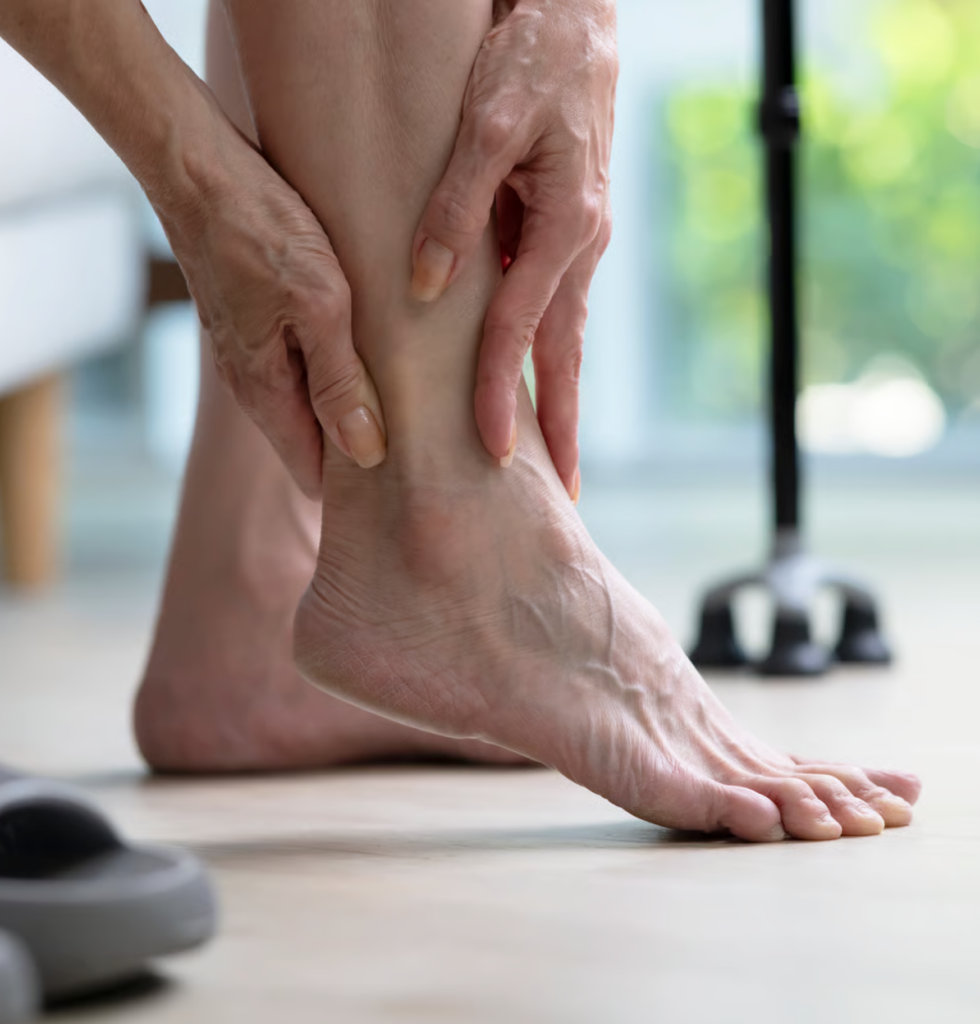
Sever’s disease is heel pain in growing children, usually aged 8 to 14. The Achilles tendon pulls on the growth plate at the back of the heel bone, and running, jumping and hard surfaces irritate it.
It is painful, but it is temporary and it does not damage the bone. With load management, footwear changes and targeted exercise, most children stay involved in sport while the heel settles.
Who does it affect?
active children and teenagers, most often during a growth spurt.
How common is it?
one of the most common causes of heel pain in children.
What is the recovery like?
varies from child to child, and symptoms usually resolve once the growth plate matures.
Who should I see for treatment?
your podiatrist.
What funding options are available?
Medicare, NDIS, and private health funds accepted.
What is Sever's disease?
Sever’s disease, also called calcaneal apophysitis, is inflammation of the growth plate at the back of the heel bone. It is not a disease and it is not an injury to the bone itself.
In growing children, the heel bone lengthens before the calf muscle and Achilles tendon catch up. That tension pulls on the growth plate, and repeated impact from sport makes the area painful.
Things that make it more likely:
A recent growth spurt, or a sudden jump in shoe size
High sport load, such as several teams, carnivals or back-to-back seasons
Hard surfaces like asphalt, concrete and synthetic courts
Flat, worn or unsupportive shoes, including football boots with little heel
Tight calf muscles and reduced ankle flexibility
Foot posture that increases load through the heel
Symptoms of Sever’s disease
Pain at the back or sides of the heel, often on both feet
Tenderness when you squeeze the heel from side to side
Limping, or walking on tiptoes, after running or jumping
Pain that starts during sport and lingers into the evening
Stiffness and soreness the morning after a game
Reluctance to join in at training, PE or lunchtime sport
Your child's plan comes from the assessment, including their growth stage, sport load and how the foot loads the ground.
What to expect at your first appointment
Tell us what is going on
When the pain started, which sports your child plays, how often, and what has already been tried.
A full assessment
Your podiatrist examines the heel, tests ankle flexibility and calf strength, and watches your child walk and hop.
A clear plan
You leave knowing what to change this week, what your child can keep playing, and what the next steps are.
Review and adjust
Progress is checked, load is increased in stages, and the plan changes as your child grows.
When to book an appointment
Heel pain has lasted more than two weeks
Your child is limping, missing training or sitting out PE
Rest, stretching and chemist heel cups have not changed anything
You are not sure whether it is Sever's disease or something else
Book an assessment if:
Looking after yourself at home
These steps support the plan your podiatrist puts together.
A recent growth spurt, or a sudden jump in shoe size
High sport load, such as several teams, carnivals or back-to-back seasons
Hard surfaces like asphalt, concrete and synthetic courts
Flat, worn or unsupportive shoes, including football boots with little heel
Tight calf muscles and reduced ankle flexibility
Foot posture that increases load through the heel

Meet the team who treat this
Behind every appointment is a team of practitioners who know each other, trust each other and work together for you. Across seven clinics and nine disciplines, our team shares expertise, coordinates treatment plans and celebrates your progress together.

Aimee Fuller
Healthcare Support Officer
Available at Blaxland

Alicia Whiticker
Healthcare Support Officer
Available at Blaxland

Amanda Banks
Healthcare Support Officer
Available at Blaxland
Amanda Duggan
Healthcare Support Officer
Available at Blaxland
Amy Meekings
Healthcare Support Officer
Available at Blaxland

Anita Beerapu
Healthcare Support Officer
Available at Blaxland
Benjamin Tucker
Healthcare Support Officer
Available at Blaxland

Blake Cossar
Healthcare Support Officer
Available at Blaxland

Bronte Tupper
Healthcare Support Officer
Available at Blaxland
Chris Farrugia
Healthcare Support Officer
Available at Blaxland

Corrina Aitken
Healthcare Support Officer
Available at Blaxland

David Logue
Healthcare Support Officer
Available at Blaxland
Dean Gresser
Healthcare Support Officer
Available at Blaxland
Emma Nassif
Healthcare Support Officer
Available at Blaxland
Esha Sharma
Healthcare Support Officer
Available at Blaxland
Fatima Hussaini
Healthcare Support Officer
Available at Blaxland
Felicity Spencer-Davey
Healthcare Support Officer
Available at Blaxland
Frankie Raikadroka
Healthcare Support Officer
Available at Blaxland
Hannah Norrie
Healthcare Support Officer
Available at Blaxland
Heather Edwards
Healthcare Support Officer
Available at Blaxland
Isaac Vella
Healthcare Support Officer
Available at Blaxland
Jarrah Nesbitt
Healthcare Support Officer
Available at Blaxland
Jonathan Lopez
Healthcare Support Officer
Available at Blaxland

Justin Hanna
Healthcare Support Officer
Available at Blaxland
Kasey Collins
Healthcare Support Officer
Available at Blaxland
Katrina Gauci
Healthcare Support Officer
Available at Blaxland
Kennedy Touet
Healthcare Support Officer
Available at Blaxland

Kristy Edwards
Healthcare Support Officer
Available at Blaxland

Kyle Perry
Healthcare Support Officer
Available at Blaxland
Lorna Nicastri
Healthcare Support Officer
Available at Blaxland
Maja Bosic
Healthcare Support Officer
Available at Blaxland

Marxy Koronel
Healthcare Support Officer
Available at Blaxland

Matt Barton
Healthcare Support Officer
Available at Blaxland

Michael Todd
Healthcare Support Officer
Available at Blaxland

Mr Jeffery Jenkins FACPS
Healthcare Support Officer
Available at Blaxland
Nathan Cavanagh
Healthcare Support Officer
Available at Blaxland
Patrick Celeban
Healthcare Support Officer
Available at Blaxland

Praise Khin
Healthcare Support Officer
Available at Blaxland

Sarah Bonnici
Healthcare Support Officer
Available at Blaxland
Shannon Smith
Healthcare Support Officer
Available at Blaxland
Siobhan Kelly
Healthcare Support Officer
Available at Blaxland
Taleisha Bozzi
Healthcare Support Officer
Available at Blaxland
Trystan Singh
Healthcare Support Officer
Available at Blaxland

Uty Kotwal
Healthcare Support Officer
Available at Blaxland

Yoni Hochberg
Healthcare Support Officer
Available at Blaxland

Zak Lloyd
Healthcare Support Officer
Available at Blaxland
EPC, DVA, NDIS and WorkCover welcome
Nearly half of our appointments are funded through Medicare, DVA, NDIS or WorkCover. We manage the paperwork so you can focus on your health.

NDIS
We support eligible NDIS participants across podiatry, physiotherapy, exercise physiology, dietetics and psychology, depending on your plan and goals. Eligibility and funding are set by your plan.

Medicare
Medicare may rebate podiatry, physiotherapy, exercise physiology and dietetics sessions when your GP refers you under an Enhanced Primary Care (EPC) or Chronic Disease Management (CDM) plan, and psychology sessions under a Mental Health Care Plan. The number of sessions is set by your plan.

DVA
Gold and White card holders can access DVA-funded care across our services with a valid referral.

WorkCover
If you have been injured at work, we accept WorkCover referrals for physiotherapy, exercise physiology and psychology, and manage the paperwork with your insurer, with a clear return-to-work plan.
Seven clinics across three regions
Find a clinic near you. Each location is staffed by local practitioners who know your community.
Penrith
Western SydneyOur largest centre, with our full range of services under one roof.
Ropes Crossing
Western SydneyPodiatry, at Ropes Crossing Village.
Blaxland
Blue MountainsPodiatry, physiotherapy, exercise physiology and group classes.
Springwood
Blue MountainsPodiatry, dietetics and a boutique footwear store.
Katoomba
Blue MountainsPodiatry, physiotherapy and dietetics, in a restored 1914 cottage.
Ryde
North ShorePodiatry, physiotherapy, dietetics and exercise physiology, with a footwear store and gait analysis.
Lindfield
North ShorePodiatry, with mobile podiatry across the North Shore and Northern Beaches.
Ready to get your child back on the field?
Book a podiatry assessment and get a clear plan for their heel pain.












Frequently asked questions
Why is Sever's disease called a disease?
The name is misleading. Sever’s disease is not an illness or infection, and nothing is diseased. It is a growth plate irritation, named after the American doctor who described it in 1912. The clinical name, calcaneal apophysitis, describes it more accurately: inflammation of the apophysis, the growth area at the back of the heel bone.
Does Sever's disease affect both heels?
Often, yes. Many children get pain in both heels, either at the same time or one after the other, because both growth plates are under the same tension during a growth spurt. One side is usually worse. Pain in a single heel is still common, and your podiatrist will check the other foot regardless to compare flexibility and strength.
Does my child need an X-ray?
Usually not. Sever’s disease is diagnosed from the history and a hands-on examination, including squeezing the heel from side to side. Imaging is considered when the story does not fit: pain after a specific injury, pain at rest, or symptoms that are not improving as expected. If imaging is needed, your podiatrist will explain why and arrange a referral.
Why does the pain settle with rest and come straight back at the next game?
Because rest lowers the load, but it does not change what caused the overload. Tight calves, footwear, surfaces and training volume are all still there when your child returns. This is why a plan that gradually rebuilds tolerance works better than repeated stop-start rest. Returning at full intensity after a week off is the most common reason pain repeats.
Will Sever's disease affect my child's growth?
No. Sever’s disease does not damage the growth plate, alter leg length or affect how tall your child becomes. The growth plate closes normally as your child matures, and the symptoms go with it. The main risk of ignoring it is months of avoidable pain, missed sport and changes in walking that can load other joints.
Can adults get Sever's disease?
No. Once the growth plate at the back of the heel fuses, usually in the mid-teens, Sever’s disease is no longer possible. Heel pain in adults comes from other structures, such as the plantar fascia, the Achilles tendon or the fat pad. If a teenager’s heel pain continues past growth, book a reassessment so the actual source is identified.