

Shin splints (MTSS)
Get back to running without that ache down the inside of your shin
Your shins ache from the first kilometre, and the pain that used to fade after a warm-up now hangs around all session. Shin splints respond well to load management and targeted strengthening.
Medicare, NDIS, DVA and private health funds accepted.
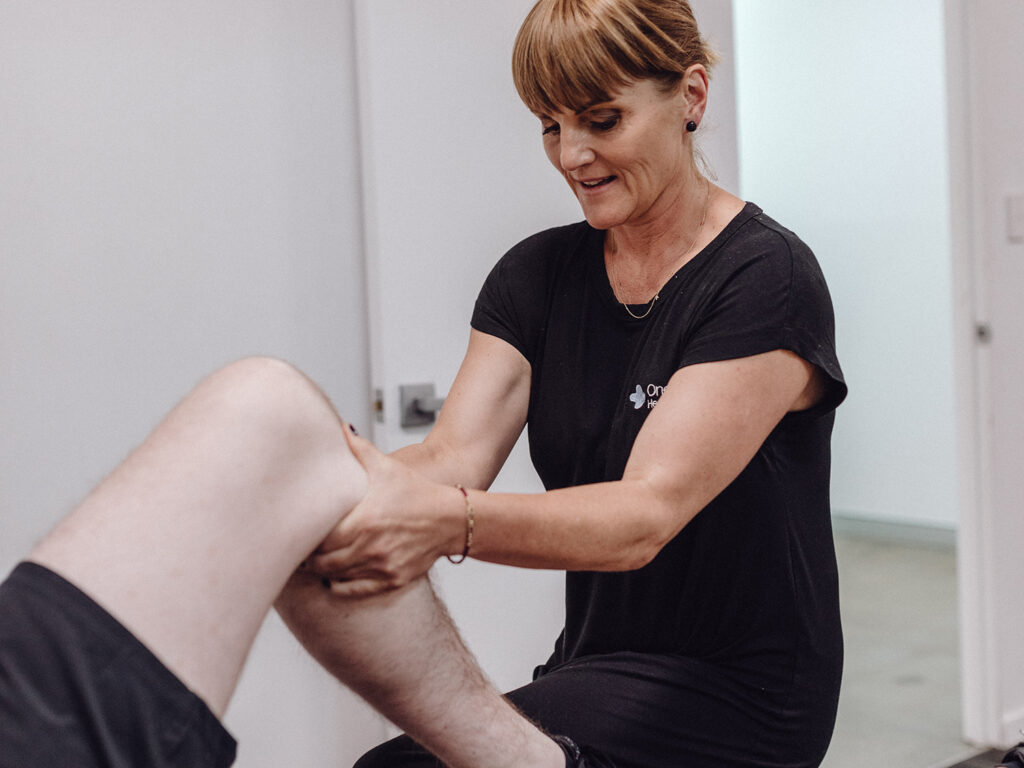
Understanding Shin splints
Shin splints is pain along the inner edge of your shinbone, brought on by running, jumping or a sudden jump in training. The medical name is medial tibial stress syndrome (MTSS)
It is a load problem rather than a permanent injury. Physiotherapy targets the training error behind it, builds the calf, foot and hip strength your shinbone relies on, and returns you to running in stages.
Who does it affect?
runners, dancers, court sport players, and anyone who ramps up training quickly after a break.
How common is it?
one of the most frequent causes of exercise-related leg pain in active people.
What is the recovery like?
varies with how long you have had symptoms and how much you can adjust your training.
Who should I see for treatment?
your physiotherapist, with podiatry input where footwear or foot mechanics are involved.
What funding options are available?
Medicare, NDIS, DVA and private health funds accepted.
What are shin splints?
Shin splints is pain and tenderness along the inner border of the tibia, the large bone at the front of your lower leg. The pain comes from bone and the tissues attaching to it reacting to repeated impact.
It usually develops when the load going through your shin rises faster than your body can adapt to it. Bone remodels constantly, and it copes well with running when the increase is gradual. Add distance, speed or hills too quickly and the tissue stays in an irritated state.
Common contributing factors include:
A sudden rise in running distance, pace or hill work
Starting a new sport, boot camp or pre-season after time off
Worn out running shoes, or a change from soft to hard surfaces
A change in shoes
Limited calf, foot and hip strength
Reduced ankle flexibility, or a foot posture that shifts load to the inner shin
Low energy availability or reduced bone health, which lowers how much impact bone tolerates
Symptoms of Shin splints
A dull, aching pain along the inner edge of your shinbone, usually in the lower two thirds
Pain that starts early in a run, settles as you warm up, then returns afterwards. As the injury progresses the pain may not settle during the run.
Tenderness when you press along a stretch of bone several centimetres long
Aching in the shin the morning after training
Mild swelling or a slightly lumpy feel along the bone edge
Pain that arrives earlier in each session as the weeks go on
Your treatment plan comes from what your assessment shows, not from the label
What to expect at your first appointment
Tell us what is going on
You explain where the pain sits, when it started, what your training looks like and what you are aiming to get back to.
A full assessment
Your physiotherapist checks the tender area, tests your calf, foot and hip strength, looks at ankle movement, and watches you walk, hop or run.
A clear plan
You leave knowing what is driving the pain, what to change in your training this week, and which exercises to start.
Review and adjust
You come back so your progress can be measured and your running load stepped up at the right rate.
When to book an appointment
Shin pain has lasted more than two weeks despite easing off training
The pain now starts in the first few minutes of a run, or bothers you while walking
Rest, ice and new shoes have not changed anything
You are not sure whether it is shin splints or something else
Book an assessment if:
Looking after yourself at home
These steps help most people while symptoms settle, and sit alongside the plan you are given.
A sudden rise in running distance, pace or hill work
Starting a new sport, boot camp or pre-season after time off
Worn out running shoes, or a change from soft to hard surfaces
A change in shoes
Limited calf, foot and hip strength
Reduced ankle flexibility, or a foot posture that shifts load to the inner shin
Low energy availability or reduced bone health, which lowers how much impact bone tolerates

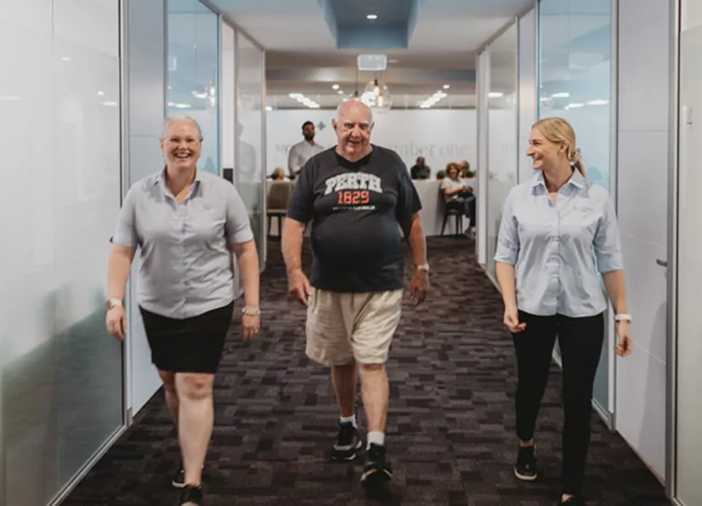
Meet the team who treat this
Behind every appointment is a team of practitioners who know each other, trust each other and work together for you. Across seven clinics and nine disciplines, our team shares expertise, coordinates treatment plans and celebrates your progress together.

Aimee Fuller
Healthcare Support Officer
Available at Blaxland

Alicia Whiticker
Healthcare Support Officer
Available at Blaxland

Amanda Banks
Healthcare Support Officer
Available at Blaxland

Amanda Duggan
Healthcare Support Officer
Available at Blaxland

Amy Meekings
Healthcare Support Officer
Available at Blaxland

Anita Beerapu
Healthcare Support Officer
Available at Blaxland

Benjamin Tucker
Healthcare Support Officer
Available at Blaxland

Blake Cossar
Healthcare Support Officer
Available at Blaxland

Bronte Tupper
Healthcare Support Officer
Available at Blaxland

Chris Farrugia
Healthcare Support Officer
Available at Blaxland

Corrina Aitken
Healthcare Support Officer
Available at Blaxland

David Logue
Healthcare Support Officer
Available at Blaxland

Dean Gresser
Healthcare Support Officer
Available at Blaxland

Emma Nassif
Healthcare Support Officer
Available at Blaxland

Esha Sharma
Healthcare Support Officer
Available at Blaxland

Fatima Hussaini
Healthcare Support Officer
Available at Blaxland

Felicity Spencer-Davey
Healthcare Support Officer
Available at Blaxland

Frankie Raikadroka
Healthcare Support Officer
Available at Blaxland

Hannah Norrie
Healthcare Support Officer
Available at Blaxland

Heather Edwards
Healthcare Support Officer
Available at Blaxland

Isaac Vella
Healthcare Support Officer
Available at Blaxland

Jarrah Nesbitt
Healthcare Support Officer
Available at Blaxland

Jonathan Lopez
Healthcare Support Officer
Available at Blaxland

Justin Hanna
Healthcare Support Officer
Available at Blaxland

Kasey Collins
Healthcare Support Officer
Available at Blaxland

Katrina Gauci
Healthcare Support Officer
Available at Blaxland

Kennedy Touet
Healthcare Support Officer
Available at Blaxland

Kristy Edwards
Healthcare Support Officer
Available at Blaxland

Kyle Perry
Healthcare Support Officer
Available at Blaxland

Lorna Nicastri
Healthcare Support Officer
Available at Blaxland

Maja Bosic
Healthcare Support Officer
Available at Blaxland

Marxy Koronel
Healthcare Support Officer
Available at Blaxland

Matt Barton
Healthcare Support Officer
Available at Blaxland

Michael Todd
Healthcare Support Officer
Available at Blaxland

Mr Jeffery Jenkins FACPS
Healthcare Support Officer
Available at Blaxland

Nathan Cavanagh
Healthcare Support Officer
Available at Blaxland

Patrick Celeban
Healthcare Support Officer
Available at Blaxland

Praise Khin
Healthcare Support Officer
Available at Blaxland

Sarah Bonnici
Healthcare Support Officer
Available at Blaxland

Shannon Smith
Healthcare Support Officer
Available at Blaxland

Siobhan Kelly
Healthcare Support Officer
Available at Blaxland

Taleisha Bozzi
Healthcare Support Officer
Available at Blaxland

Trystan Singh
Healthcare Support Officer
Available at Blaxland

Uty Kotwal
Healthcare Support Officer
Available at Blaxland

Yoni Hochberg
Healthcare Support Officer
Available at Blaxland

Zak Lloyd
Healthcare Support Officer
Available at Blaxland
EPC, DVA, NDIS and WorkCover welcome
Nearly half of our appointments are funded through Medicare, DVA, NDIS or WorkCover. We manage the paperwork so you can focus on your health.


NDIS
We support eligible NDIS participants across podiatry, physiotherapy, exercise physiology, dietetics and psychology, depending on your plan and goals. Eligibility and funding are set by your plan.

Medicare
Medicare may rebate podiatry, physiotherapy, exercise physiology and dietetics sessions when your GP refers you under an Enhanced Primary Care (EPC) or Chronic Disease Management (CDM) plan, and psychology sessions under a Mental Health Care Plan. The number of sessions is set by your plan.

DVA
Gold and White card holders can access DVA-funded care across our services with a valid referral.

WorkCover
If you have been injured at work, we accept WorkCover referrals for physiotherapy, exercise physiology and psychology, and manage the paperwork with your insurer, with a clear return-to-work plan.
Seven clinics across three regions
Find a clinic near you. Each location is staffed by local practitioners who know your community.
Penrith
Western SydneyOur largest centre, with our full range of services under one roof.
Ropes Crossing
Western SydneyPodiatry, at Ropes Crossing Village.
Blaxland
Blue MountainsPodiatry, physiotherapy, exercise physiology and group classes.
Springwood
Blue MountainsPodiatry, dietetics and a boutique footwear store.
Katoomba
Blue MountainsPodiatry, physiotherapy and dietetics, in a restored 1914 cottage.
Ryde
North ShorePodiatry, physiotherapy, dietetics and exercise physiology, with a footwear store and gait analysis.
Lindfield
North ShorePodiatry, with mobile podiatry across the North Shore and Northern Beaches.
Ready to run without shin pain?
Book a physiotherapy assessment and get a plan that returns you to full training safely.















Frequently asked questions
How do I know if it is a stress fracture rather than shin splints?
A stress fracture usually gives pain over one small, very tender point, while shin splints is tender across a longer stretch of bone. Stress fracture pain tends to build during exercise instead of easing, often hurts when you hop on one leg, and can ache at rest or overnight. Your physiotherapist assesses these signs and arranges imaging or a medical referral when the picture suggests bone stress.
Can you get shin splints from walking or gym work?
Yes. Any sharp rise in impact or standing load can trigger it, including long walking shifts on hard floors, hiking with a pack, skipping, plyometrics or a new group fitness class. Occupations that involve marching, ladders or concrete surfaces produce the same pattern. The common thread is a change in how much load your shin absorbs, not running specifically.
Do compression sleeves help shin splints?
Calf sleeves can make your shin feel more comfortable during and after exercise, and some people find they reduce muscle vibration and post-run soreness. They do not change the loading that caused the problem, so treat them as a comfort aid rather than a fix. Keep the strengthening and training adjustments going while you wear them.
Does the surface I run on make a difference?
It can. Concrete and other hard surfaces return more force to your leg than grass, synthetic track or a treadmill, and a sudden switch matters more than the surface itself. Cambered footpaths tilt your foot and load one shin more than the other. Varying your routes and changing direction on cambers helps spread the load across a training week.
How long do shin splints take to settle?
Recovery varies. People who catch it early and adjust training often improve within a few weeks, while symptoms present for months usually take longer because bone needs time to remodel. Factors that stretch out recovery include continuing to run through pain, low calf strength, poor sleep and inadequate nutrition. Your physiotherapist tracks progress with load milestones rather than the calendar.
Will shin splints come back when I build my training up again?
They can return if the same spike in load happens again. Reducing that risk usually means increasing weekly running volume in modest steps, keeping calf and foot strength work in your routine year round, and treating any early shin ache as a signal to hold your current load rather than push. Booking a review before a race block or pre-season also helps.