

Soft tissue injury
Get your soft tissue injury assessed, graded and back on track
You felt something pull, roll or tear, and now it is swollen, stiff and painful to load. Most soft tissue injuries respond well to early assessment and a staged rehabilitation plan.
Medicare, NDIS, DVA and private health funds accepted.
Understanding Soft tissue injury
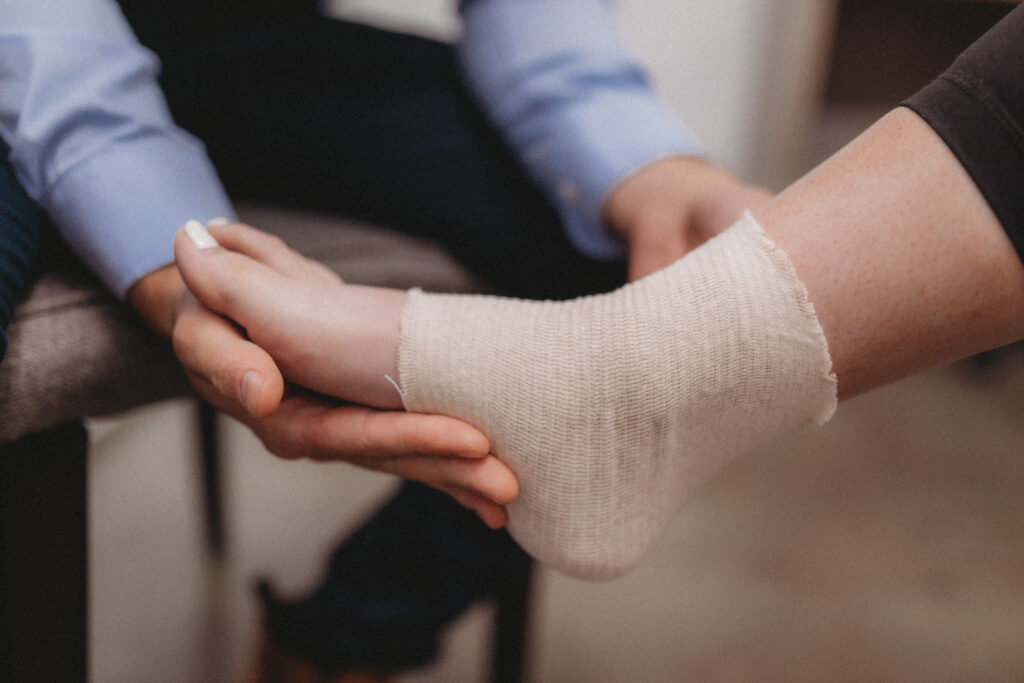
A soft tissue injury is damage to a muscle, tendon, ligament or the tissue around them. Anything that is bone. It usually happens in a single moment: a rolled ankle, a sprinting stride, a heavy landing or a direct knock. Pain, swelling, bruising and loss of movement follow within hours.
Your physiotherapist works out which tissue is injured, how badly, and what you can safely do now. From there you get a loading plan that protects the healing tissue while keeping the rest of you strong.
Who does it affect?
anyone who plays sport, works physically or has an accident, at any age
How common is it?
soft tissue injuries are among the most common presentations seen in physiotherapy [CONFIRM: source for prevalence claim]
What is the recovery like?
varies with the tissue involved and the grade of injury, from days to several months
Who should I see for treatment?
physiotherapists, working with your GP or a specialist if imaging or review is needed
What funding options are available?
Medicare, NDIS, DVA and private health funds accepted
What causes soft tissue injuries?
Soft tissue is everything that connects, moves and cushions your joints: muscles, tendons, ligaments, joint capsules and the fascia between them. An injury happens when the force through that tissue is greater than the tissue can handle at that moment. Fibres tear, small blood vessels break, and the area swells.
Most soft tissue injuries fall into one of three patterns. A sprain damages a ligament, usually when a joint is forced past its normal range. A strain damages a muscle or tendon, usually during a fast or heavy contraction. A contusion is a crush injury from a direct blow, which bleeds into the muscle.
What raises your risk:
Sudden increases in training load, speed or playing time
Fatigue late in a game, a shift or a session
Previous injury to the same area that was never fully rehabilitated
Strength or flexibility deficits that leave one tissue doing too much work
Playing on uneven ground, in poor footwear or in cold conditions without warming up
Age of the person
Symptoms of Soft tissue injury
How a soft tissue injury usually presents:
Pain at the moment of injury, sometimes with a snap, pop or tearing sensation
Swelling within minutes to hours, and bruising that can appear a day or two later
Difficulty putting weight through the limb, gripping, pushing or lifting
Stiffness and loss of range, particularly first thing in the morning
Tenderness over one specific point rather than a general ache
Muscle weakness or a feeling that the joint is unstable or giving way
Your treatment plan comes out of the assessment: which tissue, what grade, and what you need to get back to.
What to expect at your first appointment
Tell us what happened
How you were injured, what you felt at the time, what you have and have not been able to do since, and what you need to get back to.
A full assessment
Your physiotherapist looks at swelling and bruising, tests movement and strength, and uses specific tests to identify the injured tissue and grade it. If a fracture or complete rupture is suspected, you are referred for imaging.
A clear plan
You leave knowing what is injured, what to do in the next few days, what to avoid, and what a realistic recovery pathway looks like.
Review and adjust
Your loading is progressed as the tissue tolerates it. Exercises change as you improve, rather than staying the same for weeks.
When to book an appointment
Pain and swelling have not clearly improved after three to five days
You cannot walk, grip, lift or train normally
You have tried rest, ice and compression and it is still limiting you
You are not sure how bad it is, or how soon you can safely return to sport
Book an assessment if:
Looking after yourself at home
These steps help in the first few days, alongside the plan your physiotherapist gives you.
Sudden increases in training load, speed or playing time
Fatigue late in a game, a shift or a session
Previous injury to the same area that was never fully rehabilitated
Strength or flexibility deficits that leave one tissue doing too much work
Playing on uneven ground, in poor footwear or in cold conditions without warming up
Age of the person

Meet the team who treat this
Behind every appointment is a team of practitioners who know each other, trust each other and work together for you. Across seven clinics and nine disciplines, our team shares expertise, coordinates treatment plans and celebrates your progress together.

Aimee Fuller
Healthcare Support Officer
Available at Blaxland

Alicia Whiticker
Healthcare Support Officer
Available at Blaxland

Amanda Banks
Healthcare Support Officer
Available at Blaxland

Amanda Duggan
Healthcare Support Officer
Available at Blaxland

Amy Meekings
Healthcare Support Officer
Available at Blaxland

Anita Beerapu
Healthcare Support Officer
Available at Blaxland

Benjamin Tucker
Healthcare Support Officer
Available at Blaxland

Blake Cossar
Healthcare Support Officer
Available at Blaxland

Bronte Tupper
Healthcare Support Officer
Available at Blaxland

Chris Farrugia
Healthcare Support Officer
Available at Blaxland

Corrina Aitken
Healthcare Support Officer
Available at Blaxland

David Logue
Healthcare Support Officer
Available at Blaxland

Dean Gresser
Healthcare Support Officer
Available at Blaxland

Emma Nassif
Healthcare Support Officer
Available at Blaxland

Esha Sharma
Healthcare Support Officer
Available at Blaxland

Fatima Hussaini
Healthcare Support Officer
Available at Blaxland

Felicity Spencer-Davey
Healthcare Support Officer
Available at Blaxland

Frankie Raikadroka
Healthcare Support Officer
Available at Blaxland

Hannah Norrie
Healthcare Support Officer
Available at Blaxland

Heather Edwards
Healthcare Support Officer
Available at Blaxland

Isaac Vella
Healthcare Support Officer
Available at Blaxland

Jarrah Nesbitt
Healthcare Support Officer
Available at Blaxland

Jonathan Lopez
Healthcare Support Officer
Available at Blaxland

Justin Hanna
Healthcare Support Officer
Available at Blaxland

Kasey Collins
Healthcare Support Officer
Available at Blaxland

Katrina Gauci
Healthcare Support Officer
Available at Blaxland

Kennedy Touet
Healthcare Support Officer
Available at Blaxland

Kristy Edwards
Healthcare Support Officer
Available at Blaxland

Kyle Perry
Healthcare Support Officer
Available at Blaxland

Lorna Nicastri
Healthcare Support Officer
Available at Blaxland

Maja Bosic
Healthcare Support Officer
Available at Blaxland

Marxy Koronel
Healthcare Support Officer
Available at Blaxland

Matt Barton
Healthcare Support Officer
Available at Blaxland

Michael Todd
Healthcare Support Officer
Available at Blaxland

Mr Jeffery Jenkins FACPS
Healthcare Support Officer
Available at Blaxland

Nathan Cavanagh
Healthcare Support Officer
Available at Blaxland

Patrick Celeban
Healthcare Support Officer
Available at Blaxland

Praise Khin
Healthcare Support Officer
Available at Blaxland

Sarah Bonnici
Healthcare Support Officer
Available at Blaxland

Shannon Smith
Healthcare Support Officer
Available at Blaxland

Siobhan Kelly
Healthcare Support Officer
Available at Blaxland

Taleisha Bozzi
Healthcare Support Officer
Available at Blaxland

Trystan Singh
Healthcare Support Officer
Available at Blaxland

Uty Kotwal
Healthcare Support Officer
Available at Blaxland

Yoni Hochberg
Healthcare Support Officer
Available at Blaxland

Zak Lloyd
Healthcare Support Officer
Available at Blaxland
EPC, DVA, NDIS and WorkCover welcome
Nearly half of our appointments are funded through Medicare, DVA, NDIS or WorkCover. We manage the paperwork so you can focus on your health.


NDIS
We support eligible NDIS participants across podiatry, physiotherapy, exercise physiology, dietetics and psychology, depending on your plan and goals. Eligibility and funding are set by your plan.

Medicare
Medicare may rebate podiatry, physiotherapy, exercise physiology and dietetics sessions when your GP refers you under an Enhanced Primary Care (EPC) or Chronic Disease Management (CDM) plan, and psychology sessions under a Mental Health Care Plan. The number of sessions is set by your plan.

DVA
Gold and White card holders can access DVA-funded care across our services with a valid referral.

WorkCover
If you have been injured at work, we accept WorkCover referrals for physiotherapy, exercise physiology and psychology, and manage the paperwork with your insurer, with a clear return-to-work plan.
Seven clinics across three regions
Find a clinic near you. Each location is staffed by local practitioners who know your community.
Penrith
Western SydneyOur largest centre, with our full range of services under one roof.
Ropes Crossing
Western SydneyPodiatry, at Ropes Crossing Village.
Blaxland
Blue MountainsPodiatry, physiotherapy, exercise physiology and group classes.
Springwood
Blue MountainsPodiatry, dietetics and a boutique footwear store.
Katoomba
Blue MountainsPodiatry, physiotherapy and dietetics, in a restored 1914 cottage.
Ryde
North ShorePodiatry, physiotherapy, dietetics and exercise physiology, with a footwear store and gait analysis.
Lindfield
North ShorePodiatry, with mobile podiatry across the North Shore and Northern Beaches.
Ready to get that injury properly assessed?
Find out what you have injured, how bad it is, and what to do next.
















Frequently asked questions
Is a strain the same as a sprain?
No. A strain is damage to a muscle or tendon, usually from a forceful contraction, such as a pulled hamstring. A sprain is damage to a ligament, the tissue holding two bones together, usually from a joint being forced past its normal range. The words are often used interchangeably, but the two tissues heal at different rates and need different rehabilitation, which is why the distinction matters.
What are the stages of soft tissue healing?
There are four overlapping stages. Bleeding lasts a few hours. Inflammation runs for roughly the first two to three days and brings the swelling, heat and pain. Proliferation follows, where new tissue is laid down over several weeks. Remodelling then strengthens and reorganises that tissue, and can continue for months. Loading matters most in the last two stages, because tissue adapts to the demands placed on it.
Why should I avoid heat, alcohol and massage in the first 48 hours?
All three increase blood flow to the area, which can increase bleeding and swelling while damaged blood vessels are still sealing. More swelling usually means more pain and slower early progress. Heat packs, hot baths, alcohol and deep massage over the injury are best left until the acute stage settles. Gentle movement away from the injured tissue is safe and encouraged.
Is muscle soreness after exercise the same as a soft tissue injury?
No. Delayed onset muscle soreness peaks 24 to 48 hours after unfamiliar exercise, affects a whole muscle group on both sides, and eases with light movement. A soft tissue injury usually starts in a single moment, sits over one specific spot, and often comes with swelling, bruising or weakness. Soreness that is sharp, one-sided or stops you loading the limb deserves an assessment.
Can scar tissue cause ongoing problems?
It can. Repaired tissue is not identical to the original: it is often less elastic and less well organised. If an injury heals without the joint regaining full range, strength and control, that area tends to be re-injured or to overload nearby structures. Progressive loading during the remodelling stage helps the new tissue align and tolerate force, which is why rehabilitation continues past the point where pain stops.
Why does my injury feel stiffer and more painful the next morning?
Fluid pools in the injured area while you are lying still overnight, and the tissue cools and tightens. That combination makes the first movements of the day feel worse. Morning stiffness that eases within 15 to 30 minutes of gentle movement is normal early on. Stiffness that is getting worse day on day, or lasting most of the morning, is worth reviewing.