

TMJ
Get your jaw moving without pain again
Your jaw clicks when you chew, aches by the end of the day, and sometimes catches when you open wide. TMJ disorder responds well to hands-on treatment and a targeted exercise plan.
Medicare, NDIS, DVA and private health funds accepted.
Understanding TMJ
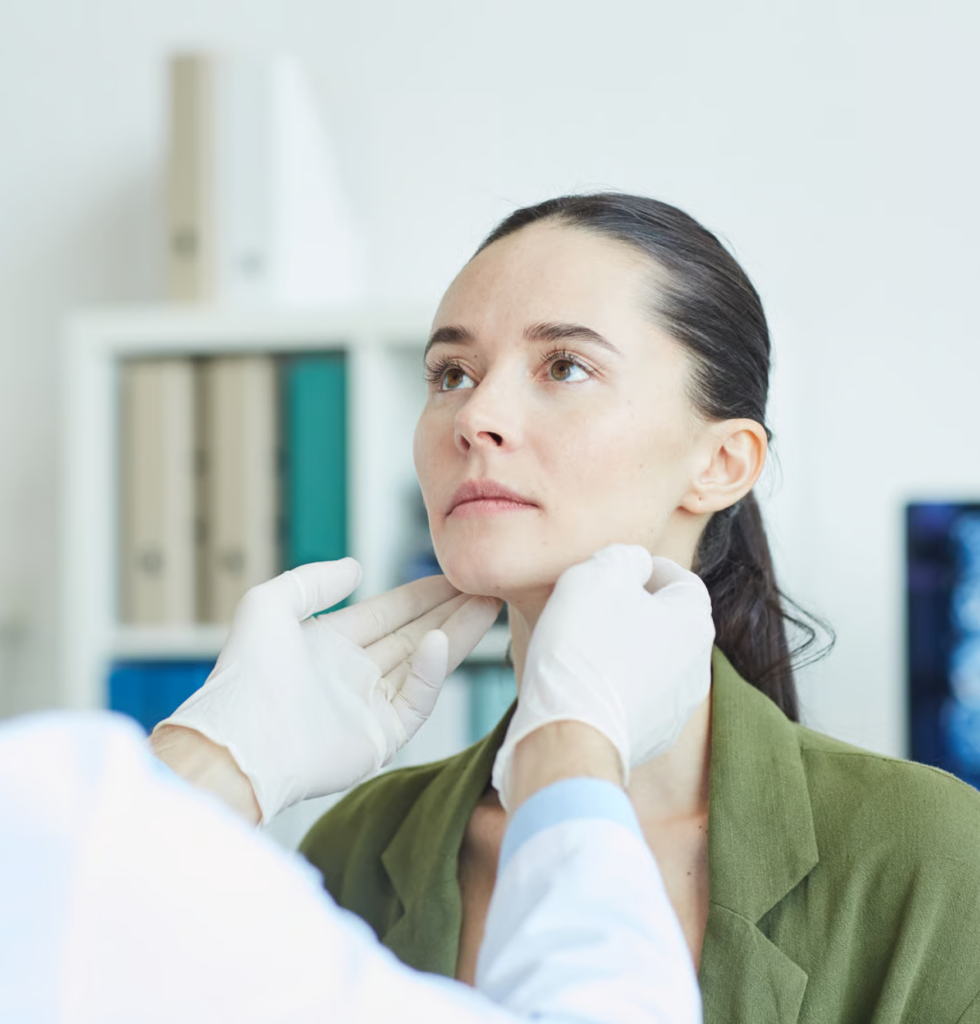
TMJ stands for the temporomandibular joint, the hinge that connects your jaw to your skull just in front of your ear. When that joint or the muscles that move it become painful, you may notice clicking, stiffness, headaches around the temples, and pain when you chew or yawn.
Physiotherapists treat TMJ disorder with hands-on techniques for the jaw and neck, exercises that retrain how your jaw opens, and changes to the habits loading it. You do not need a referral to book.
Who does it affect?
adults of any age, most often between 20 and 50, and more often women than men.
How common is it?
jaw pain affects a large share of adults at some point, though many never seek treatment.
What is the recovery like?
varies. Muscle-driven jaw pain often settles faster than joint or disc problems.
Who should I see for treatment?
your physiotherapist or chiropractor, often alongside your dentist.
What funding options are available?
Medicare, NDIS, DVA and private health funds accepted.
What is TMJ disorder?
TMJ disorder is pain or dysfunction in the jaw joint, the muscles that close your jaw, or both. Inside the joint sits a small cartilage disc. If that disc moves out of position as you open, you get the click. If the chewing muscles are overloaded, you can get a deep ache through the cheek and temple.
It usually builds gradually. Clenching, grinding, chewing on one side and long periods with your jaw held tense all add load, which the joint was not designed to carry day after day. Sometimes it starts suddenly, after a knock to the jaw or a long dental procedure.
Things that contribute to TMJ pain:
Clenching or grinding your teeth, often during sleep or while concentrating
Stress and poor sleep, which raise resting muscle tension in the jaw and neck
Neck stiffness and forward head posture, which change how the jaw sits and tracks
Direct trauma to the jaw, or an injury that jarred your head and neck
Habits such as nail biting, chewing gum, or resting your chin on your hand
Arthritis affecting the jaw joint itself
Symptoms of TMJ
TMJ disorder can present as:
Pain in front of the ear, through the cheek or along the jawline, worse when you chew
Clicking, popping or a grating sound when you open or close
Your jaw catching, or locking so you cannot open or close fully
Trouble biting into hard or chewy food, or opening wide enough to yawn comfortably
Headache around the temples, or aching that spreads into the neck
Ear symptoms such as fullness, earache or ringing with no ear infection
Your plan comes out of the assessment, because muscle-driven jaw pain and disc-related jaw pain are treated differently.
What to expect at your first appointment
Tell us what is going on
When the pain started, where you feel it, what makes it worse, whether it clicks or locks, and how it affects eating, talking and sleep.
A full assessment
Your practitioner measures how far you can open, watches the path your jaw takes, palpates the joint and chewing muscles, and checks your neck and bite habits.
A clear plan
You leave knowing what is driving your jaw pain, what treatment involves, and which exercises to start.
Review and adjust
We track your opening range, pain and function at each visit, and change the plan as things improve.
When to book an appointment
Your jaw pain has lasted more than two weeks or keeps returning
Chewing, yawning or talking for long periods is now painful or limited
A soft diet, heat packs or a dental splint have not changed things
You are not sure whether the problem is your jaw, your ear or your teeth
Book an assessment if:
Looking after yourself at home
These steps help most people while treatment is underway.
Clenching or grinding your teeth, often during sleep or while concentrating
Stress and poor sleep, which raise resting muscle tension in the jaw and neck
Neck stiffness and forward head posture, which change how the jaw sits and tracks
Direct trauma to the jaw, or an injury that jarred your head and neck
Habits such as nail biting, chewing gum, or resting your chin on your hand
Arthritis affecting the jaw joint itself

Meet the team who treat this
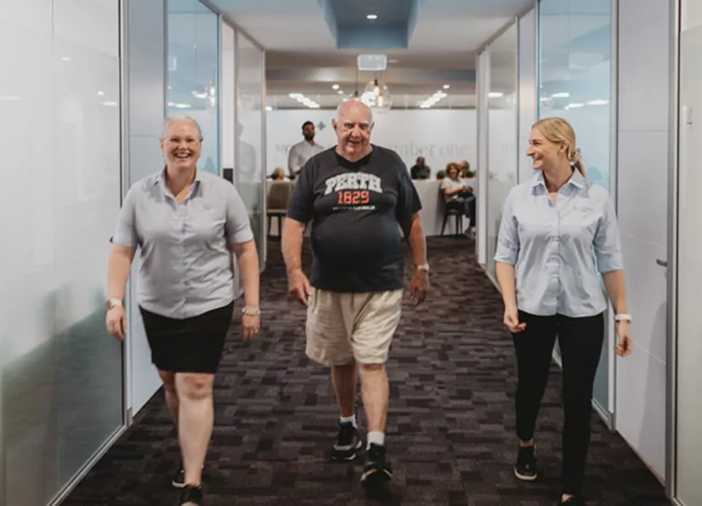
Behind every appointment is a team of practitioners who know each other, trust each other and work together for you. Across seven clinics and nine disciplines, our team shares expertise, coordinates treatment plans and celebrates your progress together.

Aimee Fuller
Healthcare Support Officer
Available at Blaxland

Alicia Whiticker
Healthcare Support Officer
Available at Blaxland

Amanda Banks
Healthcare Support Officer
Available at Blaxland

Amanda Duggan
Healthcare Support Officer
Available at Blaxland

Amy Meekings
Healthcare Support Officer
Available at Blaxland

Anita Beerapu
Healthcare Support Officer
Available at Blaxland

Benjamin Tucker
Healthcare Support Officer
Available at Blaxland

Blake Cossar
Healthcare Support Officer
Available at Blaxland

Bronte Tupper
Healthcare Support Officer
Available at Blaxland

Chris Farrugia
Healthcare Support Officer
Available at Blaxland

Corrina Aitken
Healthcare Support Officer
Available at Blaxland

David Logue
Healthcare Support Officer
Available at Blaxland

Dean Gresser
Healthcare Support Officer
Available at Blaxland

Emma Nassif
Healthcare Support Officer
Available at Blaxland

Esha Sharma
Healthcare Support Officer
Available at Blaxland

Fatima Hussaini
Healthcare Support Officer
Available at Blaxland

Felicity Spencer-Davey
Healthcare Support Officer
Available at Blaxland

Frankie Raikadroka
Healthcare Support Officer
Available at Blaxland

Hannah Norrie
Healthcare Support Officer
Available at Blaxland

Heather Edwards
Healthcare Support Officer
Available at Blaxland

Isaac Vella
Healthcare Support Officer
Available at Blaxland

Jarrah Nesbitt
Healthcare Support Officer
Available at Blaxland

Jonathan Lopez
Healthcare Support Officer
Available at Blaxland

Justin Hanna
Healthcare Support Officer
Available at Blaxland

Kasey Collins
Healthcare Support Officer
Available at Blaxland

Katrina Gauci
Healthcare Support Officer
Available at Blaxland

Kennedy Touet
Healthcare Support Officer
Available at Blaxland

Kristy Edwards
Healthcare Support Officer
Available at Blaxland

Kyle Perry
Healthcare Support Officer
Available at Blaxland

Lorna Nicastri
Healthcare Support Officer
Available at Blaxland

Maja Bosic
Healthcare Support Officer
Available at Blaxland

Marxy Koronel
Healthcare Support Officer
Available at Blaxland

Matt Barton
Healthcare Support Officer
Available at Blaxland

Michael Todd
Healthcare Support Officer
Available at Blaxland

Mr Jeffery Jenkins FACPS
Healthcare Support Officer
Available at Blaxland

Nathan Cavanagh
Healthcare Support Officer
Available at Blaxland

Patrick Celeban
Healthcare Support Officer
Available at Blaxland

Praise Khin
Healthcare Support Officer
Available at Blaxland

Sarah Bonnici
Healthcare Support Officer
Available at Blaxland

Shannon Smith
Healthcare Support Officer
Available at Blaxland

Siobhan Kelly
Healthcare Support Officer
Available at Blaxland

Taleisha Bozzi
Healthcare Support Officer
Available at Blaxland

Trystan Singh
Healthcare Support Officer
Available at Blaxland

Uty Kotwal
Healthcare Support Officer
Available at Blaxland

Yoni Hochberg
Healthcare Support Officer
Available at Blaxland

Zak Lloyd
Healthcare Support Officer
Available at Blaxland
EPC, DVA, NDIS and WorkCover welcome
Nearly half of our appointments are funded through Medicare, DVA, NDIS or WorkCover. We manage the paperwork so you can focus on your health.

NDIS
We support eligible NDIS participants across podiatry, physiotherapy, exercise physiology, dietetics and psychology, depending on your plan and goals. Eligibility and funding are set by your plan.

Medicare
Medicare may rebate podiatry, physiotherapy, exercise physiology and dietetics sessions when your GP refers you under an Enhanced Primary Care (EPC) or Chronic Disease Management (CDM) plan, and psychology sessions under a Mental Health Care Plan. The number of sessions is set by your plan.

DVA
Gold and White card holders can access DVA-funded care across our services with a valid referral.

WorkCover
If you have been injured at work, we accept WorkCover referrals for physiotherapy, exercise physiology and psychology, and manage the paperwork with your insurer, with a clear return-to-work plan.
Seven clinics across three regions
Find a clinic near you. Each location is staffed by local practitioners who know your community.
Penrith
Western SydneyOur largest centre, with our full range of services under one roof.
Ropes Crossing
Western SydneyPodiatry, at Ropes Crossing Village.
Blaxland
Blue MountainsPodiatry, physiotherapy, exercise physiology and group classes.
Springwood
Blue MountainsPodiatry, dietetics and a boutique footwear store.
Katoomba
Blue MountainsPodiatry, physiotherapy and dietetics, in a restored 1914 cottage.
Ryde
North ShorePodiatry, physiotherapy, dietetics and exercise physiology, with a footwear store and gait analysis.
Lindfield
North ShorePodiatry, with mobile podiatry across the North Shore and Northern Beaches.
Ready to stop that jaw pain?
Book an assessment with a physiotherapist who treats jaw pain. No referral needed.














Frequently asked questions
Should I see a dentist or a physiotherapist for jaw pain?
Both have a role, and it depends on the driver. Dentists manage the bite, tooth wear and splints. Physiotherapists treat the joint mechanics, muscle tension and neck contribution. If your pain is worse with chewing and jaw movement, and your teeth are healthy, start with a physiotherapy assessment. If you have tooth pain, sensitivity or a broken filling, see your dentist first.
Can TMJ problems cause earache, ringing or a blocked feeling in the ear?
Yes. The jaw joint sits directly against the ear canal, and the chewing muscles share nerve supply with structures in the ear. That is why TMJ disorder can produce earache, fullness or ringing when your ears are clear on examination. If you have discharge, fever or hearing loss, see your GP, because those point to an ear condition rather than the jaw.
Does treatment involve working inside my mouth?
Sometimes. Some of the muscles that close your jaw, particularly the pterygoids, can only be reached from inside the mouth. Your practitioner uses a gloved finger for a short period, and always explains it and asks first. It is optional. Plenty of people improve with external techniques, exercise and neck treatment alone, so say no if you would rather not.
Will a night guard stop me grinding my teeth?
A night guard protects your teeth from wear, which is valuable, but it does not stop the clenching itself. Many people still wake with jaw tightness while wearing one. That is why treatment also targets muscle tension, jaw control and the stress and sleep factors behind grinding. A guard and hands-on treatment often work well together.
My jaw clicks but does not hurt. Do I need treatment?
A painless click that does not limit your opening is common and usually does not need treatment. Book an assessment if the click becomes painful, if it starts catching, if your opening range drops, or if the sound changes to grating. Those changes suggest the disc or joint surface is being loaded differently, and early treatment is simpler than late treatment.
What should I do if my jaw locks?
If your jaw locks closed and you cannot open more than a couple of centimetres, apply warmth, keep to soft food and avoid forcing it open, then book promptly. If your jaw locks open and will not close, that needs same-day medical care to reduce the joint. Repeated locking episodes should be assessed rather than managed at home.